An Treoḋ - 1, 2
Aspects of Irish Magic


This is the start of a publication and product that I have been working on for a number of years, on the subject of Irish Magic. The following are the first three of six or seven sections that will be included in total. Some typographical errors will be seen in the letter ‘r’, sometimes rendered ‘ɼ’, and some ‘s’ are rendered ‘ſ ’. These will be corrected in time. Additions will also be made to the incomplete ‘The Ritual Year’ section. A portion of the material mentioned in the Réaṁraḋ is not covered in the following extract but will be included later. This is therefore currently a work-in-progress but may be useful and informative nonetheless.
Any comments, suggestions, critique or requests for clarification and further information greatly appreciated. Sonas oraiḃ, agus go mba seaċt fearr a ḃeiḋeas muid bliaḋain ó indiú.
Fiaċra Mac Íoṁair - 6 Jan 2025
An Treoḋ
Aspects of Irish Magic
Clár Áḃair
Réaṁráḋ
An Ċéad Alt – Draoiḋeaċt i nÉirinn
Ireland and Magic
Three Things Required of a Draoi
Descendants of the Draoi
Three Things Required of a File
Rituals of the Draoi ⁊ Filiḋ
The Ritual Year - Féilí na Bliaḋna
The Irish Zodiac - An Stoideaċa Gaeḋealaċ
Hallucinogenic Heritage
Carl Jung, The Hero's Journey and An t-Aon Scéal
Dreams, the 'Evil Eye' and ‘Supernatural Heredity’ in Ireland
References in popular culture
An Dara hAlt – Abra Ársa
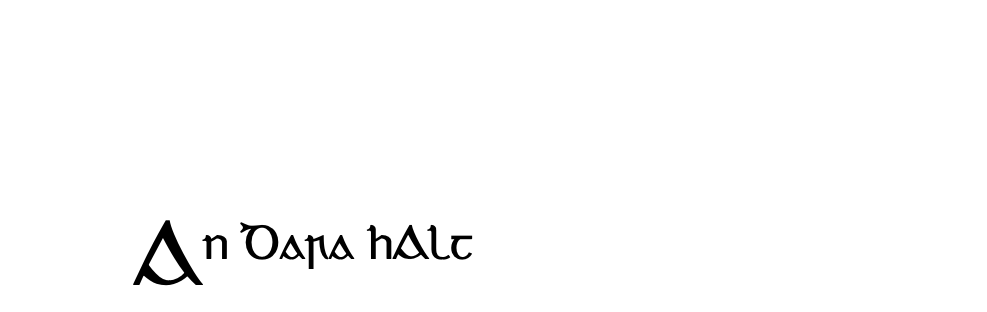
An Ancient Religious and Ritual Vocabulary
Celto-Semitic Discussions in Academia
Ancient Celto-Levantine Tin Trade
The Distant North-West in the Greco-Roman Psyche
The Imperial Dispossession of the Celts
An Interesting Twist
In Carthage and The Curragh
Ireland and Magic
Ireland, for all her associations with saints and scholars, has long had an intimate association with magic, and an inherited, near-pathological affinity for the magical. From tales of giants, fairies, druid-warrior-kings, enchanting music, lands of perpetual youth and magical transformation of humans to swans and salmons,4 the Irish lore could be said to be steeped in a rich array of magical motifs, all permeating and interweaving the veil between the mundane and the transcendent. Each field, every hill has its own name, and it is not unusual to have the name of a field or hill bear a reference to an episode in the Irish myths, nor for that myth to have an appearance of a draoi and an incidence of magic.
Magic features in quite a number of entries in Dinneen's dictionary and they reveal the expansive landscape in the Irish psyche for the subject. The main entry on page 363 gives a good idea of the scope:
Draoiḋeaċt, -a, pl. id., f., the profession of druid, druidism ; druidic learning, magic, divination, enchantment, witchcraft ; a charm, glamour, spell ; uncanny ingenuity ; cajolery ;
luċt draoiḋeaċta, enchanters ;
slat (or slatín) draoiḋeaċta, a magic wand ; slat-ṁéaraiḋeaċt, f., control (1338)
coċall dealḃṫa draoiḋeaċta, a hood to use in magical practices ; ceo draoiḋeaċta, a magical mist ;
cárr draoiḋeaċta, a magic chariot ;
ceol draoiḋeaċta, entrancing music ; ḃíos le draoiḋeaċt [I was with those] who practice magic ; imrim draoiḋeaċt ar, I enchant ; ag corruiġe na draoiḋeaċta, beginning divination ; ḃí draoiḋeaċt air, he was the victim of enchantment ; an draoiḋeaċt ċum drúise, the love charm ; al. draoiḋeaċta (Don.)
Under the main entry are various related terms:
Draoiḋeaċtaċ, -aiġe, a., given to witchcraft, cajoling, magic, glamorous.
Draoiḋeadóir, -óɼa, -ɼí, m., an enchanter ; one who ferrets out information, a crafty person ; al., draoiḋṫeadóir
Draoiḋeadóireaċt, -a, f., witchcraft ; craftiness ; al. applied to any unusual method of life ; al. draoiḋṫeadóireaċt, draoideoireaċt.
Draoiḋ-ḟuaim, f., magical sound.Draoiḋreaċt, -a, f., witchery ; ná meallaḋ draoiḋreaċt ban tú, be not deceived by women's witchery.
Draoḋ-ġonta, p. a., bewitched, enchanted
Draoḋ-, draoiḋ-, druaḋ-, in compds., magic, druidic.
Draoiṫeaċ, -ṫiġe, a., learned, sage, mystical ; fond of druids or seers ; druidical.
The sole purveyor of magic and more in ancient Ireland was the Dɼaoi. They would have played the role, among others, of Royal Astrologer, as existed in previous centuries, famous occultist John Dee being an example. Dinneen's entry goes thus:
Draoi, g. id. and druaḋ, pl. -ṫe and druaḋa, m. a druid, a pagan priest, an augur, a dealer in natural magic ; a magician (astrologer, etc) attached to a king or chief ; a poet, a man of knowledge, an ingenious person ; ban-draoi, a druidess ; druaḋa agus draoiṫe, druids and magicians (O'Ra.) ; coire na ndruaḋ, the druids' caldron ; airḃe dɼuaḋ, a magical fence. See sean-draoi. Sean-draoi, an old druid or wizard, seer (common in folk, as the adviser of a monarch, al. a precocious, peevish child (sean-draoi caointeaċ cáinteaċ, a cry-baby).5
treoir luasca óir tara n-étna, three golden “luascs” over their (the druids') foreheads (early) 6
Fergus Kelly in his Early Irish Law notes:
“Tradition preserved in the sagas and saints' lives indicates that the druids of pre-Christian Ireland had a similarly high status to their British and Continental counterparts, the druides of Latin source. The druid (Old Irish druí) was priest, prophet, astrologer, and teacher of the sons of nobles. According to the 6th century First Synod of Saint Patrick oaths were sworn in his presence.”
They were also doctors and physicians capable of surgery, for example Dian Ceċt. However, “by the time of the law-texts (7th-8th centuries) it is clear that the advance of Christianity had reduced his position to that of sorcerer or witch-doctor.” These law texts form a legal system that was among the earliest in Europe and many of its fundamentals are at least 3,000 years old:
“It is clear from linguistic evidence that many of the essentials of the early Irish legal system go back at least as far as the Common Celtic period (c. 1000 B.C.). For example, the Old Irish legal term athgabál 'distraint' 7 corresponds to Old Breton adgabael and Medieval Welsh adauayl (adafael) of the same meaning.” 8
Some terms in Early Irish law date back even further, with two cognate terms in Celtic and Gothic.9
Myles Dillon, in his 1975 book on the correspondences between Irish and Vedic culture, languages and institutions Celts and Aryans: Survival of Indo-European Speech and Society quotes Strabo's account of the
“three classes of men held in special honour among the Celts of Gaul: the Bards, the Vates, and the Druids. The Bards are singers and poets; the Vates interpreters of sacrifice and natural philosophers; while the Druids, in addition to the science of nature, study also moral philosophy. They are believed to be the most just of men, and are therefore entrusted with the decision of cases affecting either individuals or the public; indeed in former times they arbitrated in war and brought to a standstill the opponents when about to draw up in line of battle; and murder cases have been most entrusted to their decision... These men, as well as other authorities, have pronounced that men's souls and the universe are indestructible, although at times fire or water may (temporarily) prevail.” 10
Diodorus Siculus writes of them:
“They have also lyric poets whom they call Bards. They sing to the accompaniment of instruments resembling lyres, sometimes a eulogy and sometimes a satire. They have also certain philosophers and theologians who are treated with special honour, whom they call Druids.” 11
Dillon notes Julius Caesar's tripartite division of Gaulish society into “druides, equites and plebs, thats is to say priests, warriors and common people” corresponds to the “brahman, kshatrya and vaishya of Hindu society.” 12 Julius Caesar described the druids thus:
“It is said that they commit to memory immense amounts of poetry, and so some of them continue their studies for twenty years. They consider it improper to commit their studies to writing, although they use the Greek alphabet for almost everything else. .. . They have also must knowledge of the stars and their motion, of the size of the world and of the earth, of natural philosophy, and of the powers and spheres of action of the immortal gods, which they discuss and hand down to their young students.”
Of this Dillon says that here the
“similarity in status and function between Celtic druid and Hindu brahman is evident, and points clearly to a common Indo-European inheritance. We shall see later that the fuller evidence of Irish sources shows a class of filid (poets) who have inherited the learned tradition of the druids, while they are, of course, no longer priests. They are, however, historians, genealogists and lawyers, professional poets who exact handsome rewards from the king, whom they praise for his generosity, and their satire is feared as much as their praise is valued.”13
The draoi were known and feared for their magic spells, much like the filid, or poets, and an 8th century hymn “asks God for protection from the spells of women, blacksmiths and druids.” They may also have been involved in making love-potions.14
There are some native rituals ascribed to the druids, and many rituals found in Frazer's very important work The Golden Bough – A Study in Magic and Religion could conceivably have been performed and presided over by a druid into the murky reaches of Irish prehistory. Some of these rituals will be discussed in more detail later in 'The Ritual Year'. The most famous druidic ritual is where mistletoe is harvested from an oak tree with a golden sickle (possibly under full-moonlight). It is interesting to note that mistletoe is known to be a broad-spectrum pharmacological agent with immuno-modulatory, anti-diabetic, anti-oxidant, anti-microbial, anti-hypertensive, anti-tumor, anti-inflammatory and sedative effects.15
Regarding usage of plants and herbs in medicine, Kelly writes: “The sagas and law-texts agree in stressing the medical importance of herbs. Táin Bó Cúailnge describes a poultice of healing herbs was placed in Cú Chulainn's wounds. Bretha Crólige states that the purpose of herb-gardens is the care of the sick, and refers to the great service by garden herbs in nursing.” 16
Aside from the manuscript sources for information on what came under the purview of the druids, the National Archives has a treasure trove of information relating to different indigenous beliefs in Ireland. Among these reports are nuggets of information relating to magic, medicine, and what would have come under the work and cognitive sphere of the druid, as practiced in the centuries since the fall of the Gaelic Order. These come under headings like : leiġseanna (medicines/cures), piseóga (superstitions), and seanḟocail (proverbs), and were collected from schools across the country under the Folklore Commission.
Three Things Required of a Draoi
This spell [discussed in more detail later] recalls the second of the three things that qualify a druid, a series of triads relating to the professions in the Old Irish legal treatise Brethe Nemed Taoisech. These are listed as:
victory against an unequal number, concealing a track, and hostility of territories.
The analogy between concealing a track and the spell described in our tale seems evident. Speaking more broadly, it's striking that all three of the things that grant nemed or status to a druid are here associated with war. This is certainly appropriate to their role in former stronghold but seems curiously narrow, given the range of functions that are attributed to druids in other sources. A possible explanation seems worth mentioning: Rather has been dated to the first half of the 8th century. By this time, although it's evident that druids still existed, most of the functions which they had once exercised had been taken over by the Christian clergy.
There was, however, one very important aspect of Irish life from which the Church, at least in theory, held itself strictly apart, condemning its practitioners in terms that overlapped with its condemnations of paganism: warfare. Warfare would accordingly be one field in which the druids could continue to exercise more or less unchallenged influence. And so it may have been in military terms that a druid of the 8th century would have had the best opportunities to prove himself.
“Todays historic building of interest”
“The upper room is used for the secretive practices of the Masons which includes teaching the secret handshake of standing on one leg whilst shaking your partner’s hand with a vice like grip.” https://www.qlocal.co.uk/southport/news_list/SOUTHPORT_HISTORIC_BUILDINGS__Masonic_Hall_by_Wayne_Johnson-55064772.htm
Descendants of the Draoi
The Filid, or poet, occupies a relatively high place in Irish society up to modern times. Though not classified in law, as they were in Early Irish Law, they are still highly respected in Irish society. Their association with magic comes in the form of their ability to compose poetry. Poetry is integral to magic, for its psychological effect, for the ability of a well-turned phrase to disarm and uplift alike.
File, g. id. and -leaḋ, -lí, gpl. -e and -eaḋ, m., a poet, a professor, esp.of the native learning, contrasted with Laidneoir, a Latinist ; seven grades of file were : foċlaċ, mac fuirṁiḋ, dos, cana, clí, ánraḋ, ollaṁ ; bain-ḟile, a poetess, file mná, id. (al. a termagant) ; file caoċ, a fool, a confused or deceived person ; ḋein sé file caoċ díom, he stranded me, got the better of me ; rinne sé file agus bambairne ḋe agus ḃréagnuiġ sé é, he gave him the lie and made him out to be a silly romancer
Filiḋeaċt, -a, f., poetry, minstrelsy, art of poetry ; the lore of the file as distinct from léiġeann, Latin erudtion (Laws) ; a poem, poetic composition ; act of composing or writing poetry, describing in poetic or extravagant terms ; ag filiḋeaċt ar an lá do ḃí aca, glowingly describing the outing they had had, composing poetry about it.
Fileaṁail, -aṁla, a., poetic ; imaginative ; fileaṁlaċ, id.
Fileaṁlaċt, -a, f., poetic tendency, poeticism.
Fileata, indec. a., poetic, pertaining to a poet or poetry ; focal fileata, a poetical word.
Fileoir, -eora, -rí, m., a poetaster ; a lover ; al. a craftsman (Br.) ; a crafty man.
A poet named Kathleen Raine, who was deeply influenced by noted practicing and apparently high-ranking ceremonial ritual magician, Irish poet W.B. Yeats, has said:
“For Yeats magic was not so much a kind of poetry as poetry a kind of magic, and the object of both alike was evocation of energies and knowledge from beyond normal consciousness.”17
Magic, and especially the magic of the druids, figures in Irish narrative from the earliest period, but indications of how that magic was performed are very scarce before the 9th century, and such accounts as we have relate mainly to the obtaining of knowledge by supernatural means. This bias in favor of the mantic persists in later sources as well. I have suggested that it may be explained by the fact that the Filith, a class of poet-scholars who enjoyed exceptionally high status in early Christian Ireland, were themselves originally seers and retained strong links with this aspect of their identity. In the later Middle Irish period and on into the early modern Irish period, there are more detailed descriptions of magical rituals. A particularly rich source of these is the tale For Ramadavkara.
It seems that with only a few exceptions, writers of tales in the old Irish period refrained from describing magical practices unless it entailed the gaining of knowledge. Why should magic of this kind have received a different treatment?
An answer can perhaps be found in the special position of the phillies, a class of poet-scholars who were accorded exceptionally high status in early Irish society. While the filith of the historical period were clearly, and indeed inevitably, Christians, and were moreover closely associated with the institutional church, their origins lay in the pagan period, and their office was traditionally bound up with supernatural powers of perception. Not only did the word fili itself originally mean seer, while its synonym aegis, going back to a different root, originally meant one who sees within, but the possession of imbus feronzi, the clairvoyant faculty already mentioned, was held to be a requisite for the highest rank of fili, and imbus ferusme belonged unequivocally to the native supernatural.
Thus, one Old Irish treatise on the nature of poetic inspiration, while speaking of the inspiration that comes from the Holy Spirit, derives imbus by contrast from the siḋe, the hollow hills, which, as already mentioned, were the dwellings of the spirits of the land. Against this background, it's not hard to see why manic practices linked with the Filiḋs should have had a place in literature, while other sorts of magic, although leaving traces in the laws and elsewhere, should not have been regarded as appropriate elements for stories.
W.B. Yeats was a disciple of the founder of the controversial Theosophical Society Madame Bravlatski. He later joined the infamous occult order O.T.O where he and other ceremonial magicians of the late 1800s and early 1900s, including Aleister Crowley and Arthur E. Waite, co-creator of the Rider-Waite-Smith Tarot deck, met and performed ritual Kabbalistic magic. W.B. Yeats, though, seems to have preferred the written word over the theatrical ritual as the medium for his magic, visions and inspirations.
Three Things Required of a File
As we said, there are, in the native law texts that stretch back about 1,500 years, described three things required of a poet / Filiḋ, which are: Teinm Laedo, Imbas Forosnai and Díċetal di Ċeannaib. 54 There are of course several books available detailing the structure of the poets' training and payment rates, but also students' primers and extensive grammatical texts, not to mention the philosophical triads, the historical annals and the richly composed mythology, not that Sir Frazer may have been inclined to suggest that the laudable Gaelic literati, much less the “peasant class”, could be in possession of keen intellects and simultaneously engage in inexplicable ritual. The three things required of a poet are:
Teinm Laedo: “solving by means of a poem, one of the streams or functions of poesy” 55. Teinm Laedo was a later substitution of anamain, a type of metre, and reflected technical expertise. Irish rap artists like Kneecap and Dyrt are in keen possession of this aspect56 as is the artist Seamus O'Súilleabháin (Súil Amháin) who also wields knowledge of older metres and technical requirements of Gaelic poetry.57 58
Anaṁain, -mna, f. See fanaṁain.
Fanaṁaint, -e, f., act of remaining, staying, stopping, waiting.Teinm, g. -eanma (?), m., breaking up, cracking, crushing, gnawing (Dav.), dissolving, analysing, solving, understanding ; teinm laoḋa, solving by means of a poem (Pokorny), one of the streams or functions of poesy (the others being díċeadal and iomas), equated to Old Norse teinar laegdhir by Marstrander (teinm laega) ; ag teinm duar, analysing or explaining words (Mulc.) ; al. tinm (Mulc.) ; vl. of teinnim (tinnim).
Laoḋ, m., pulp (O’R.).
Laoḋan, laoḋán, laoḋanaċ. See laoidḋean, laoiḋeanaċ.Laoiḋ, -e, pl. laoiṫe, -ḋṫe, -ḋeanna, f., a lay, poem, or lyric ; a song or hymn ; laoiḋ ċumainn, a love lay ; laoiḋ luin, the blackbird’s song ; laoiḋ luascaċ, name of an early metre ; laoiḋ suain, a lullaby ; ní ċuirfiḋ tú aon laoiḋ suain orm-sa, you will not succeed in deceiving me (R.O.) ; laoiḋ ná litir, no written evidence whatever ; ar deireaḋ laoiḋ, to wind up with.
Laoiḋeaḋ, m., act of inciting, exhorting, cajoling '; provocation ; laoiḋeaḋ na laoċ as na conaiḃ, the cry of the warriors urging the hounds.
Laoiḋean, -ḋin, m., pulp, pith, marrow ; the portion of the potato left after “eyes” are cut for sowing ; a centre, a nave (laoiḋean roṫa, id., O’R.) ; al., laoḋan (-án), luiġean.
Laoiḋreaċ, -riġ, m., poesy, lyric ; i bprós agus i laoiḋreaċ, in prose and verse.
Laoiḋṫeaċ, -ṫiġe, poetical.
Laoiġceoir, -eora, -rí, m., a logician ; al. loiġceoir (O’Molloy).
Díċetal di Ċeannaib: “an incantation”, 59 “the best of the heads” (possibly“off the top of one's head” improvisational facility). The composition of Early-Modern Irish 'Aisling' poetry involves this facility, as does the composition of rap. A modern example of both is “Aisling Fhéile” by Súil Amháin,60
Díċeadal, -aill, m., an incantation.
Céadal, -ail, pl., id., m., singing, a song ; a story, detraction, malicious invention ; deceit, conflict, battle ; al. céideal (Br.) ; old vl. of canaim ; al. ceadal, in compds. e.g. claisċeadal, choir-singing ; foirceadal, instruction ; tairċeadal, prophesy ; díċeadal, incantation ; foiċeadal, lampoon ; coigeadal, harmonising, symphony.
Díċeall, -ċill, m., effort, endeavour ; one’s best ; ar a ḋíċeall, doing his best ; fá n-a ḋíċeall, up to his power ; déan do ḋíċeall, do your best or worst (according to context), I defy ; b’é a ḋíċeall é, it was as much as he could do ; ba ḋíċeall dam, it was as much as he could do ; ba ḋíċeall dó gan, he had almost ; ag déanaṁ díċill ar., 7c., doing one’s best to, etc., ; ar ċnáṁ (or lán) a ḋíċill, making his utmost endeavour ; ar a ċroiḋe díċill, ar a ḋíċeall báis, id. ; ní ḟéadfaḋ do ḋíċeall é ċur amaċ, your best endeavour could not eject him ; le bárr díċill, through force of best endeavour ; is leor ó Ṁóir a díċeall, Mor can only do her best.
Aisling, -e, pl. -ṫe, and -í, f., a dream, a vision, an apparition, a poetical description of an apparition ; aisling draoiḋeaċta, a druidical vision ; tré m’ aisling, in the course of my vision ; ċonnac aisling, I saw a vision ; Aisling Eoin, the Apocalypse of St. John ; a scene or picture called up by the imagination in waking hours ; al. aislinge.
Aislingim, -iuġad, v. tr., I dream ; (constr. with go).
Aislingṫeaċ (aislingeaċ), -ṫig, -ṫiġe, m., a dreamer, a visionary ; a., visionary, dreaming, dreamy.
Imbas Forosnai: “an alleged ritual where the fili puts his palms (basa) around (im) his face before experiencing a visionary sleep: a concluding sentence appears to state that this ritual is not or should not be performed because it involves the invocation of demons.” 61 Dinneen has the following entry for Imbas Forosnai:
Iomas, -ais, m., intuition, inspiration, manifestation, a guess ; iomas forasna, the knowledge that enlightens (early), al. name of a deiḃiḋe metre ; iomas gréine, sun-inspiration, a sun-bubble caused on herbs which if eaten gives the gift of poetry (Dav.) ; iomais agus cuill na h-éigse, the intuitions and inspirations (lit. hazels) of poetry ; sreaṫ iomais is one of the sixteen divisions of poetry ; gan iomas 'na n-aistiḃ, whose compositions lack inspiration ; éad is iomas, jealous passion.”62
Foras, -ais, m., basis, foundation, substance, depth ; a principle ; an institution ; a rest or stop, gravity, patience, steadiness, ease, balance ; fig. one who supports, a scholar, etc. ; foras feasa, a general or fundamental account, an encyclopaedia, a history ; Foras Feasa ar Éirinn, a survey of Irish history, the name of Keating’s History ; foras focal, an etymological dictionary ; foras a ḃfeasa, their source of knowledge, their teacher ; ċuaiḋ sé ṫar foras, he went beyond his depth in the sea ; gan ḟoras, bottomless, unbased, unsteady ; ní raiḃ aon ḟoras aige, he had no patience, was a man of impulse ; glac foras, a ġaisciḋiġ óig, be steady, O young champion ; taḃair foras dó, let him take his time ; gan aoiḃ ná foras, without stop or stay ; béim forais, the first part or initial stage, of a piece of work, al. a principle (early) ; foras tuaṫa, a local institute, hospital, etc. (Laws) ; al. forus.
Foras, -ais, m., certain knowledge, true information ; reason, understanding ; is cian ó tá i ḃfios agus i ḃforas do ṫeaċt, long has your coming been known.
Both Imbas Forosnai and Teinm Laedo were outlawed by Patrick for being too pagan. Only Díċetal di Ċeannaib was seen as having any virtue. According to Carney, that these two were so slighted by Patrick
“represents a significant departure, at least as far as imbas forosnai is concerned, from the position taken by most earlier sources. As we have seen, both Bretha Nemed and the introduction to the Senchas Már saw imbas as an essential qualification for the highest rank of fili, a figure both highly esteemed and fully integrated in Christian society. The testimony of the so-called 'Caldron of Poesy', another eight-century treatise, is also instructive in this connection. In this arcane work's classificatory system the most exalted of three allegorical cauldrons is the Coire Sofhis63, the 'Cauldron of Knowledge', which can be attained either through 'divine joy' or 'human joy'. 'Divine joy', not surprisingly is the result of grace; 'human joy' is further subdivided, the last of these divisions being imbas from the Otherwordly sources of the Boyne. Imbas is thus, by an interesting distinction, both secular and supernatural: subordinated to the gifts of God, but still good in its own right and a legitimate source of inspiration.”64
The Limerick poet Shane 'Dyrt' Davis has recently written and produced an excellent, award-winning short film dealing with the topic of Imbas Forasnai.65
In it he references the practice of the 'chewing on flesh' that is said to be featured in the ritual.
An Coire Sofhis, The Cauldron of Knowledge
Rituals of the Draoi ⁊ Filiḋ 18
First we will look at examples brought forward by John Carey in his lockdown lecture Prof John Carey, 'The Performance of Magic in Medieval Irish Narrative'. Then we will look at purported examples of actual Irish/Gaelic/Celtic rituals as they have been documented in recent centuries.
….. …… ….. ……
….. …… ….. ……
For purported examples of actual Irish/Gaelic/Celtic rituals as they have been documented in recent centuries, some of these have been richly detailed, with interesting commentary, in The Golden Bough – A Study in Magic and Religion, by Sir James George Frazer, from 1923. In this extensive treatise Frazer outlines the foundations, history and practice of magic. Clearly an accomplished thinker and academic, his approach to the issue is from a scientific position, rubbishing the practice of magic as “the bastard art” of “barbarians”, “still resorted to by cunning and malignant savages in Australia, Africa and Scotland”. As materialist and rationalist as his approach may be, his palpable contempt is clearly borne of the colonialist mindset that has characterised the Western privileged classes for many hundreds, if not thousands, of years. He does however admit that “we may detect a germ of the modern notion of natural law”, which germ is 'sympathetic magic'.
He describes sympathetic magic as being composed of two different streams; first 'The Law of Similarity' 19, that is that like produces like, or an effect resembles its cause, and second, 'The Law of Contact/Contagion', that is that two things which have once been in contact continue to act upon one another even after the contact has ended. Frazer mentions the supposed 'mechanism' for this remote action “as a kind of invisible ether, not unlike that which is postulated by modern science [in 1923] for a precisely similar purpose”. One might be forgiven for seeing echoes of Newton's Third Law of Thermodynamics, 'every action has an equal and opposite reaction' in the Law of Similarity, as well as with the Law of Contact/Contagion's presage of Einstein et al's phenomenon of 'Quantum Entanglement', the famous 'spooky action at a distance', which was published in 1935, some 12 years after Frazer's analysis.
Particularly notable in the context of the druids and their eponymous association with the oak, it appears the “Worship of the Oak” was common too in ancient Greece and Rome: “the oldest and certainly one of the most famous sanctuaries in Greece” was at Dodona, “where Zeus was revered in the oracular oak”, “in the oak-clad highlands of Greece”, where thunderstorms were “said to rage more frequently than anywhere else in Europe”. There was a practice of the construction and consecration of sanctuaries to 'Zeus the Descender' on spots where lightning had stuck. These spots were fenced in, an altar set up and sacrifices offered. “Such places are known from inscriptions to have existed in Athens.”20
A professor Gerontas in Germany has related the following to me via private message regarding an Irish connection to Dodona:
“To summarise, the Danaans of Greece had myths concerning an island if the Godess Iris, where priests of the same stock of the ones of Dodona served (“drys” in Greek is the oak tree, the holy tree of Zeus, that in Dodona it could speak = druids), and they claimed that the High Kings of Ierne (land of Iris = land of rainbow?) were of the blood of Argos.”
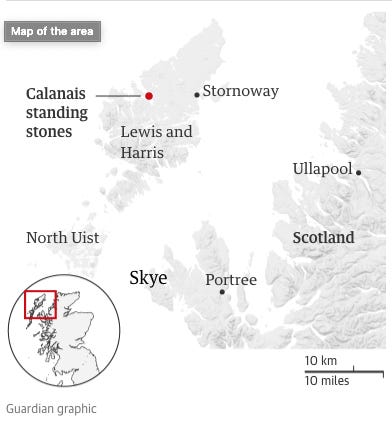
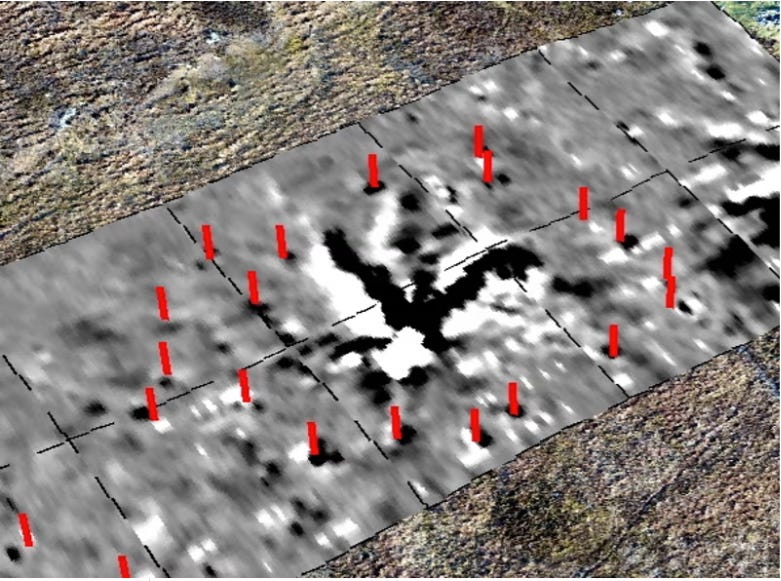
'The King as Jupiter' section in The Golden Bough describes the king embodying the power and attributes of the 'great god' – imitating thunder, and that “priestly king Numa passed for an adept in the art of drawing down lightning from the sky”. 21 It is worthy of note that a neolithic stone circle in Calanais, Scotland, shows evidence of a lightning strike or strikes, with geomagnetic anomalies in the soil around the the circle, and in particular a certain standing stone with a 'star-shaped' anomaly: “lightning may have struck a tree or rock no longer present at the site, or the monument itself may have attracted lightning”. 22
“Like their kinsmen the Irish kings, they were expected to be a source of fertility to the land and of fecundity to the cattle ; and how could they fulfill these expectations better than acting the part of their kinsman Zeus, the great god of the oak, the thunder, and the rain ? They personified him, apparently, just as the Italian kings personified Jupiter.”
“When we pass from southern to central Europe we still meet with the great god of the oak and the thunder among the barbarous Aryans who dwelt in the vast primaeval forests. Thus among the Celts of Gaul the Druids esteemed nothing more sacred than the mistletoe and the oak on which it grew ; they chose groves of oaks for the scene of their solemn service, and they performed none of their rites without oak leaves. “The Celts,” says a Greek writer, “worship Zeus, and the Celtic image of Zeus is a tall oak.” The Celtic conquerors, who settled in Asia in the third century before our era, appear to have carried the worship of the oak with them to their new home ; for in the heart of Asia Minor the Galatian senate met in a place which bore the pure Celtic name of Drynemetum, “ the sacred oak grove”, or “ the temple of the oak.” Indeed the very name of Druids is believed by good authorities to mean no more than “ oak men.” 23
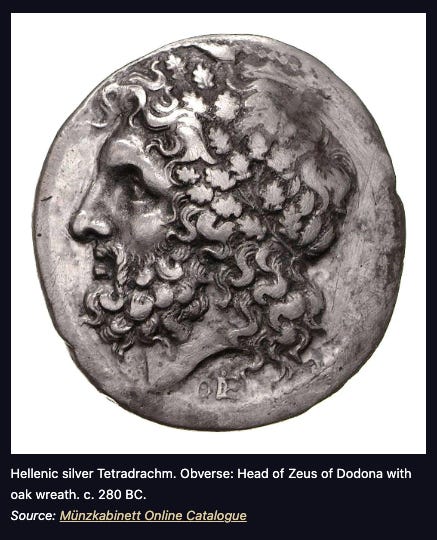
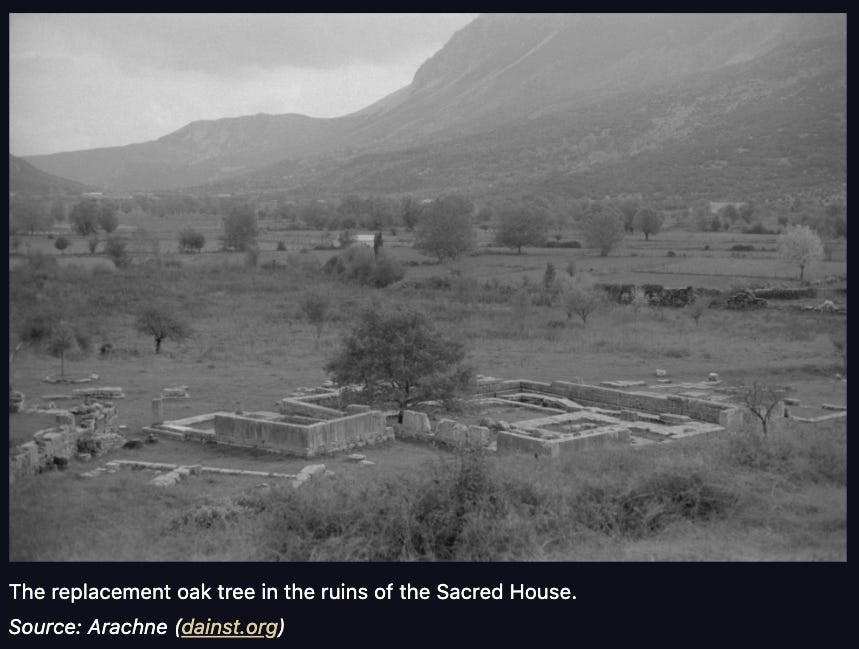
[Images: https://www.vroracle.co.uk/db/2/3/]
The Ritual Year - Féilí na Bliaḋna

Frazer suggests that some stories
“belong to a class of myths which have been dramatised in ritual, or, to put it otherwise, which have been performed as magical ceremonies for the sake of producing those natural effects which they describe in figurative language. A myth is never so graphic and precise in its details as when it is, so to speak, the book of the words which are spoken and acted by the performers of the sacred rite.” 24
These rites and rituals are often performed on regular festivals throughout the year, the 'Fire Festivals of Europe'. The two main festivals being Bealtaine (May Day, May 1st), and Saṁain (Hallowe'en, October 31st). These two festivals seem to have originated as pastoral year markers, the former indicating the time to bring the herds out to pasture at the start of the summer, the latter marking when they are to be brought back to the homestead before the winter. The division of the year into four and eight seems to have occurred later and in connection with the solar year. 25 26
These fires would have been lit on prominent hilltops, within view of each other, in a line throughout the Irish countryside, to function as beacons to signal the new phase to the whole extended community. There are reports of the fires in Scotland being timed by the fires in Ireland, whose northeast coast is visible from Scotland, and whose east coast is visible from Wales, as indeed, from the Isle of Man. 27
In the Burren, in such a different environment, the farming methods are different too: “it's the opposite to transhumance”. In conventional farming the livestock go out for the summer and back for the winter. In the Burren “they go up the last day in October and they come down in March/April when it's ready for calving. All those mountains are called the 'Winterage'. Any upland area in the Burren is called the 'Winterage'.” 28
We begin our ritual year as Frazer reckons:
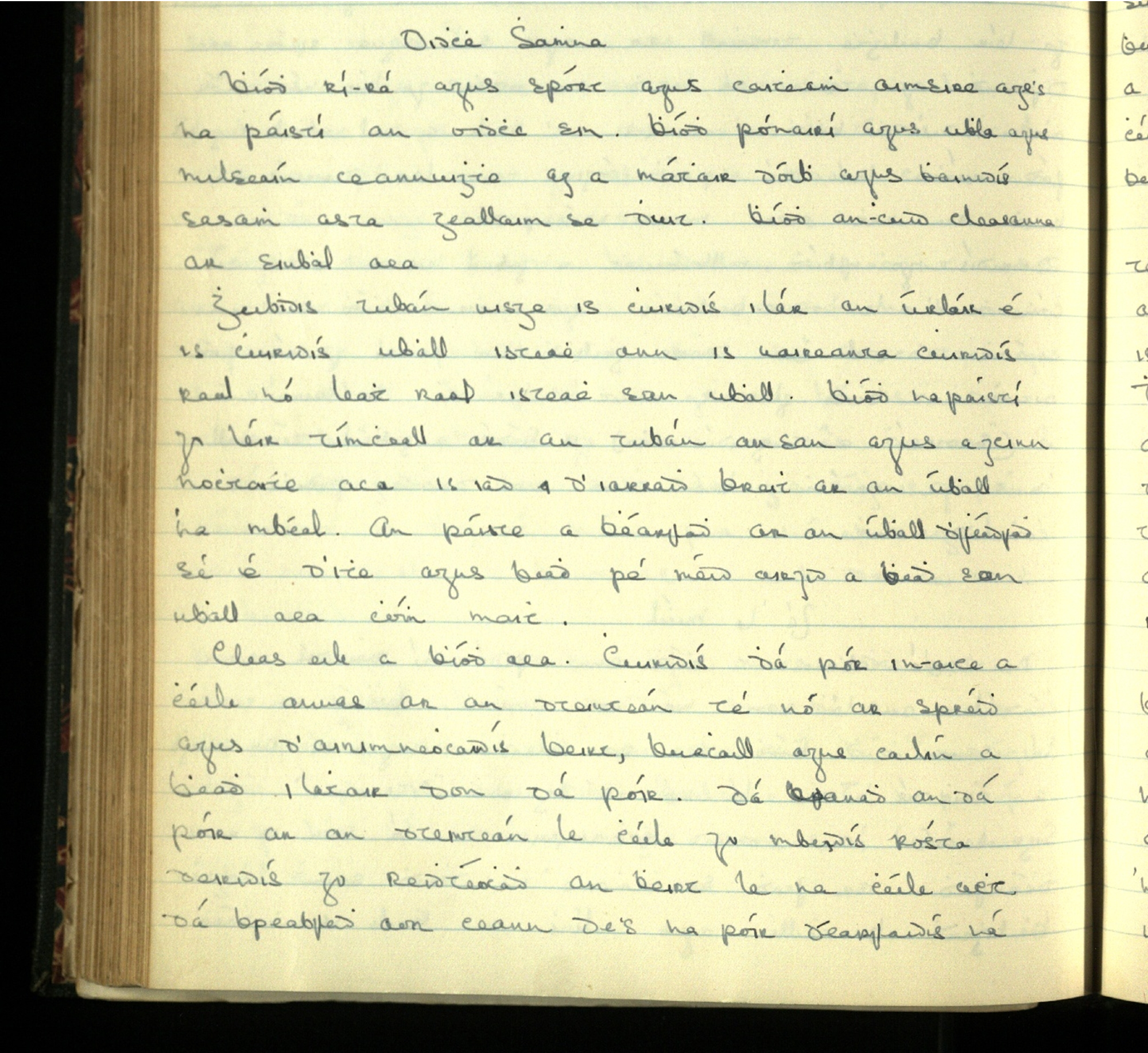
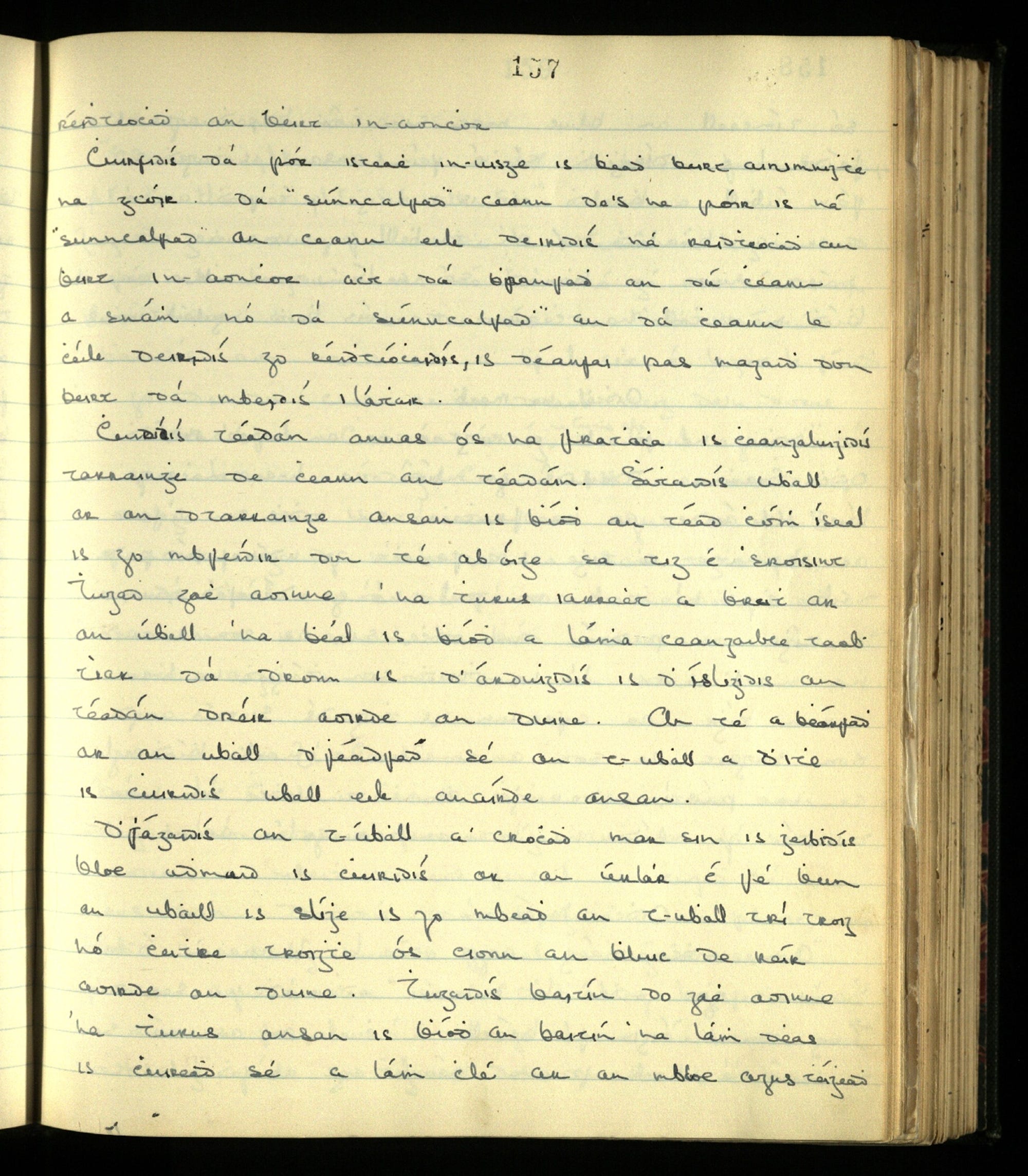
“Of the two feasts [of Bealtaine and Hallowe'en] Hallowe'en was perhaps of old the more important, since the Celts would seem to have dated the beginning of the year from it rather than from Beltane. In the Isle of Man, one of the fortresses in which the Celtic language and lore longest held out against the siege of the Saxon invaders, the first of November, Old Style, has been regarded as New Year's Day down to recent times. Thus Manx mummers used to go round on Hallowe'en (Old Style), singing, in the Manx language, a sort of Hogmanay song which began “To-night is New Year's Night, Hogunnaa!” In ancient Ireland, a new fire used to be kindled every year on Hallowe'en or the Eve of Samhain [on the Hill of Uisneaċ], and from this sacred flame all the fires in Ireland were rekindled. Such a custom points strongly to Samhain or All Saints' Day (the first of November) as New Year's Day.”29
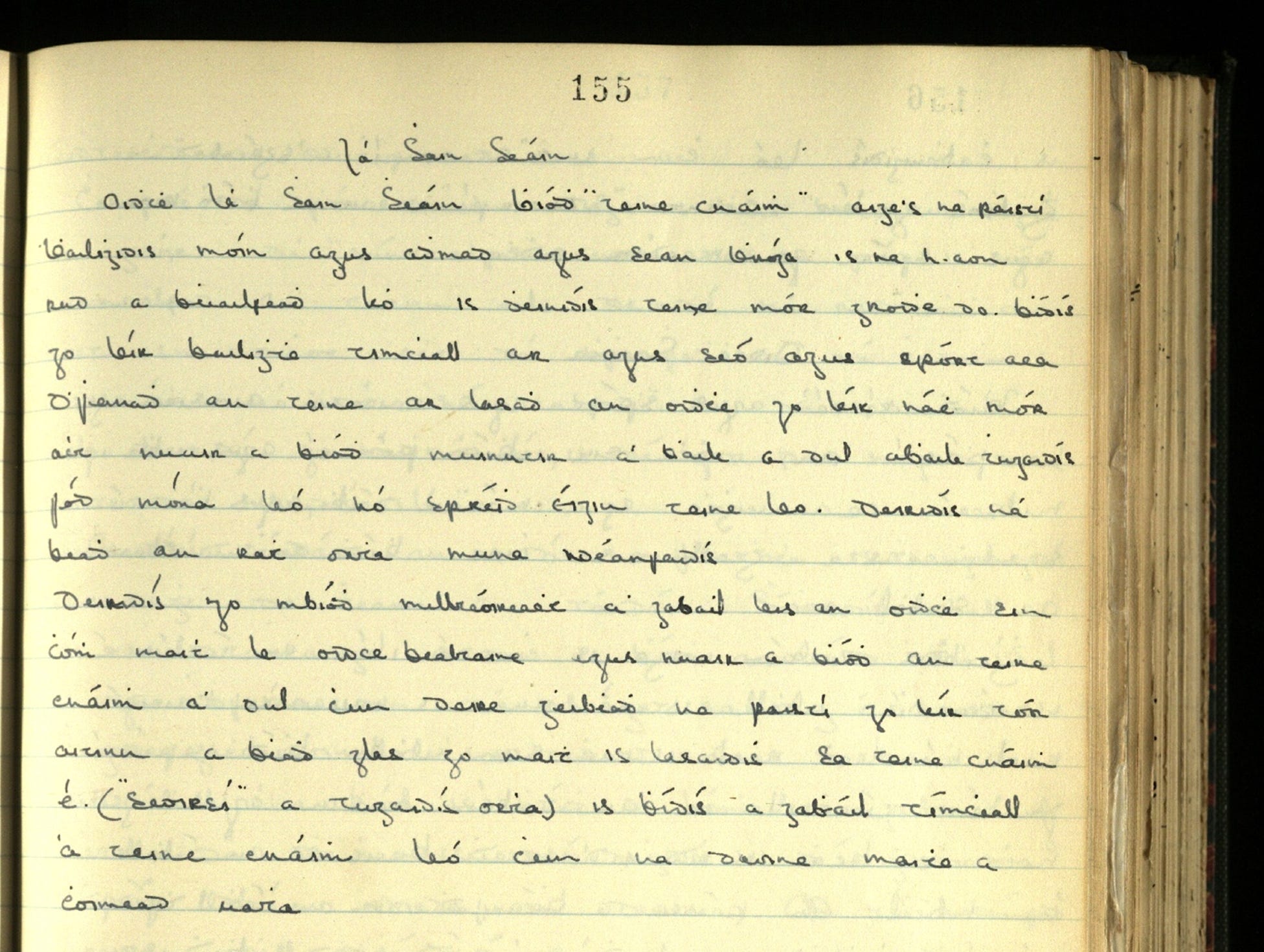
Saṁain November
The word Saṁain comes from the word:
Saṁ, m., summer (early) ; in compds. saṁ-ḟuin, summer's end (= Saṁain) ; saṁ-lá, a summer's day ; saṁ-stad, summer solstice ; saṁ-ċarġas, summer fasting time.30
The entry31 for the festival itself goes thus:
Saṁain, -mna, f., All-Hallowtide, the feast of the dead in pagan and Christian times, signalising the close of harvest and the initiation of the winter season lasting till May, during which troops (esp. the Fiann) were quartered, the fairies (aos síḋe) were imagined as particularly active at this season, from it the half year is reckoned ; al. called Féile na Marḃ and Féile Mongḟinne (snow goddess)32 ; lá Saṁna, 1st November ; lá síṫeaċ siaḃraċ síḋeogaċ Saṁna, the weird fairy elfin first of November ; oiḋċe Ṡaṁna, All-Hallow Eve, oiḋċe Alamaise, id. ; mí na Saṁna, the month of Novermber ; banḃ Saṁna, a November bonham ; luċt na Saṁna, the Hollantide good-things ; brollaċ na Saṁna, the beginning of November, bórd na Saṁna, id. ; Cnoc Saṁna, Knocksowna (Limerick) ; um Ṡaṁain., at Hallowtide ; 'sé an scéal ó Ṡaṁain go Bealtaine é, it is a very long story ; miſe an buaċaillín ṡocróċas Saṁain is Bealtaine leo, I am the lad to “square accounts” with them ; Saṁain ḟuar an áir, dreaded November (P. C. T.).
In the Highlands of Scotland “on the last day of autumn
children gathered ferns, tar-barrels, the long thin stalks called gáinisg, and everything suitable for a bonfire. These were placed in a heap on some eminence near the house, and in the evening set fire to. The fires were called Samhnagan. There was one fro each house, and it was an object of ambition who should have the biggest... When the fire had died down, the ashes were carefully collected in the form of a circle, and a stone was put in, near the circumfrence, for every person of the several families interested in the bonfire.”
From this they would divine their fate for the coming year.
“We can now understand why in Lower Brittany every person throws a pebble into the midsummer bonfire. Doubtless there, as in Wales and the Highlands of Scotland, omens of life and death have at one time or other been drawn from the position and state of the pebbles on the morning of All Saints' Day. The custom, thus found among three separate branches of the Celtic stock, probably dates from a period before their dispersion, or at least from a time when alien races had not yet driven home the wedges of separation between them.” 33
Saṁain in Ireland is still charaterised by the lighting of bonfires. The young lads around here used to, and still do, “go raiding”, which involves going on to farms and stealing tyres used to hold down the plastic covering the silage. This practice is reminiscent of the Cattle Raid of Cooley, where “raiding” was a common practice among young people in Gaeldom. Children go trick or treating, play bobbing for apples in water with their hands tied behind their back, turnips and latterly pumpkins are carved into gargoyle-like faces to ward off evil spirits. Witches, fairies, hobgoblins and the púca are all present at this liminal time of the year. The púca is commonly known as a ghost, but it has also been characterised as a white horse with a headless rider, or even just a white horse. The custom is common in Wales on St. Stephen's day, similar to the Wren Boys, where people go out in fancy dress, the leader usually wearing a skull of a white horse, reciting rhymes and cajoling the householders to let them in a give them food and drink in exchange for singing songs. This is identical to the practice of Corca Ḋuiḃne long ago where St. Stephen's night was known as 'Lá an Ċapaill Bán', or 'Day of the White Horse', where the 'Wren Boys' continue the singing and performance duties to this day all over Ireland. In areas with 'púca' in the name, like my own townland of 'Gleann a' Ṗúca', a white horse with a headless horseman can sometimes be seen riding near the misty river valley. Yet another interpretation for púca exists, however. Dinneen's entry is as follows:
Púca, g. id., pl. -aí, m., a pooka, a hobgoblin or bogey, a sprite or ghost ; a snail (Kild.) ; fig. a surly fellow ; púca an duiḃ-ré, Jack o' the lantern, the sprite of darkness, cf. púca ré, a temporiser (Br.) an rud a scríoḃann an púca léiġeann sé féin é, what the pooka writes he deciphers himself ; a ċeann púca ar bata, thou bogey-head on a stick. 34
In the following part of this entry, a clearer picture of the practical significance of the púca comes into view, that of describing fungus:
púca na sméar, the blackberry sprite, supposed to contaminate blackberries, etc. on the approach of winter ; púca Ṡeain, John's ghost ; púca sean-duine, a grumpy old fellow ;
gs. as a., fairy (as in fungus names, etc.) ; cosa púca, stink-horn fungus; cáise púca, a large tree fungus ; méaracán púca, a variety of fungus; Old Norse puki, imp., púcán beireaċ, a toad stool.35
“In parts of Norland on St. John's Eve the bonfires are lit at cross-roads. The fuel consists of nine different sorts of woods, and the spectators cast into the flames a kind of toad-stool (Bäran) in order to counteract the powers of the Trolls and other evil spirits, who are believed to be abroad that night.”
The word púca may be related to the Latin word fungus, by seeing the 'f' in fungus as a 'ṗ' in 'a' ṗúca (genitive case of the púca), and the the 'ng' of fungus represented by a 'c' in Irish. This is interesting, considering the association of Saṁain and psychedelic imagery with fairies and ghosts etc. Saṁain is used as a temporal marker by Irish foragers of the native psilocybe, after which they would not be picked, or more particularly, they should be picked 'before the first frost'. Here in Gleann a' Ṗúca, which is currently a council estate, and was formerly a large field on the outskirts of Listowel town, psilocybe semilanceata, as well as several other fungi, can still be found appearing in gardens at summer's end, saṁ-ḟuin.
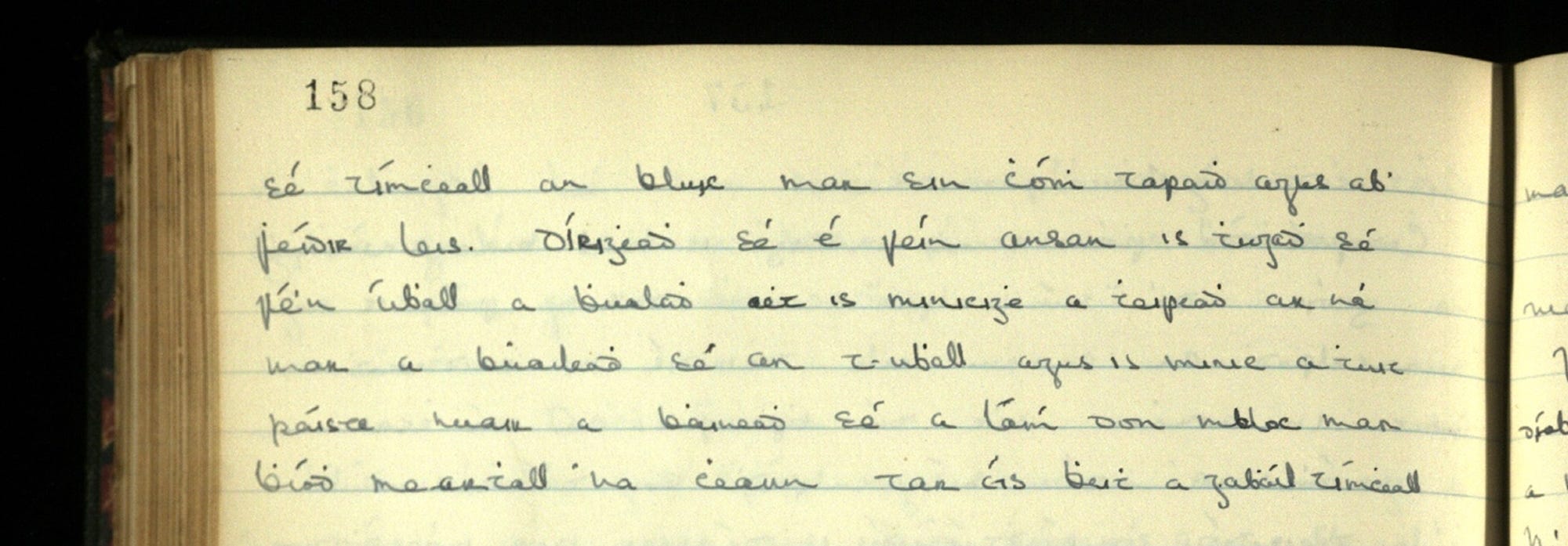
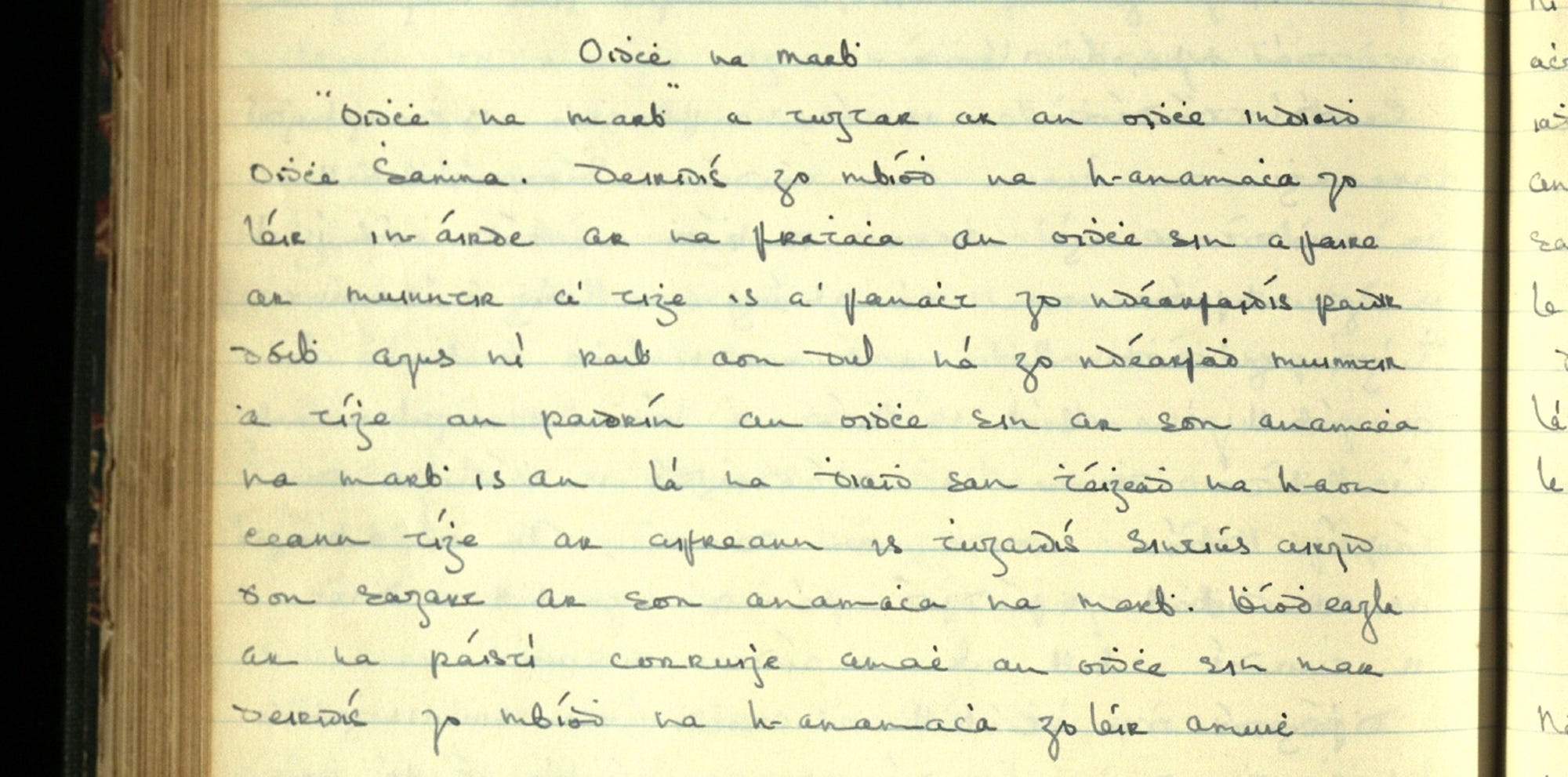
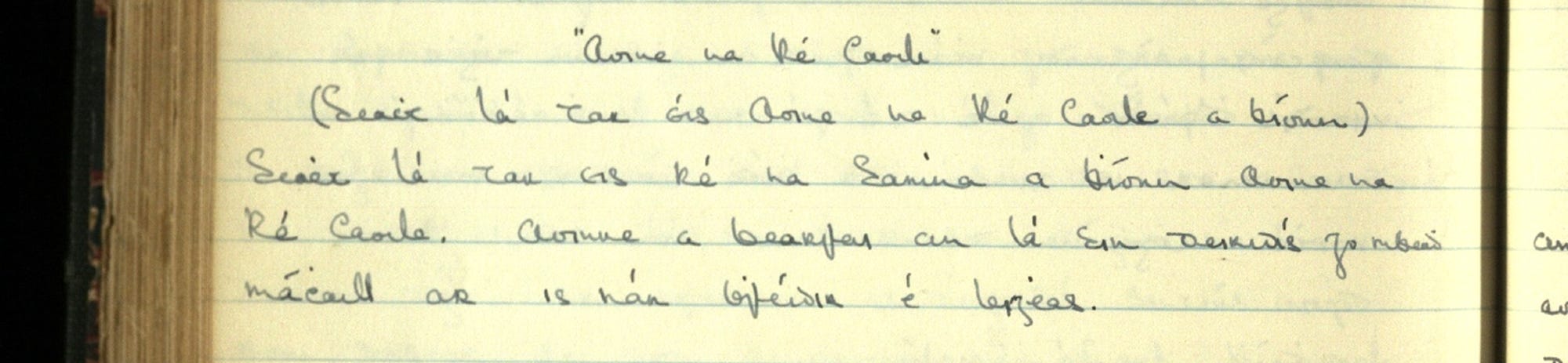
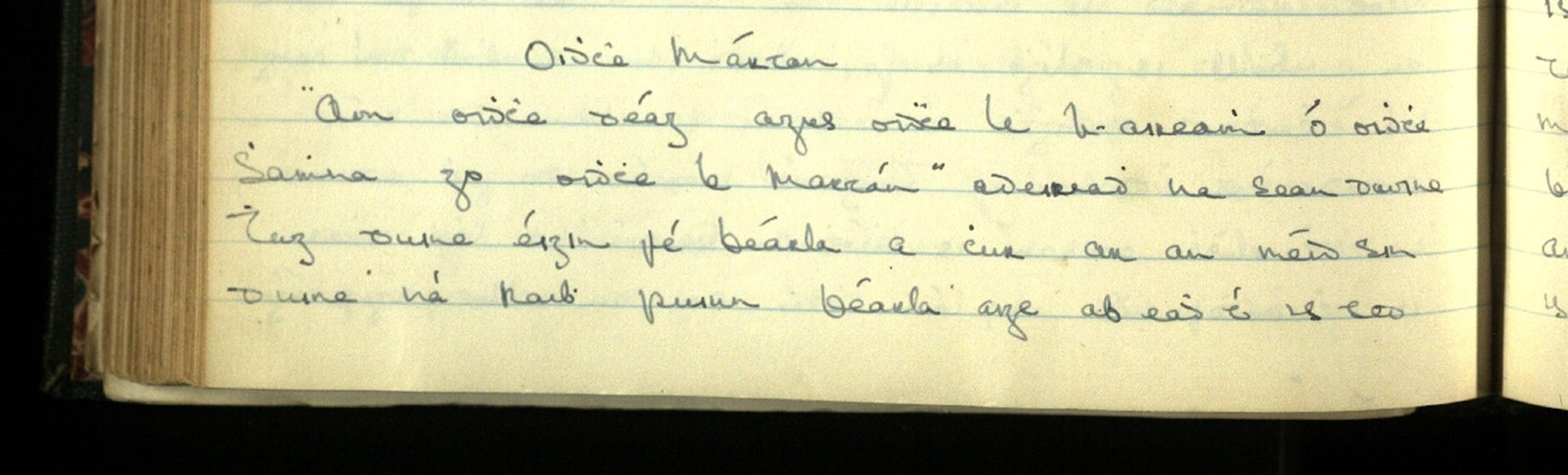
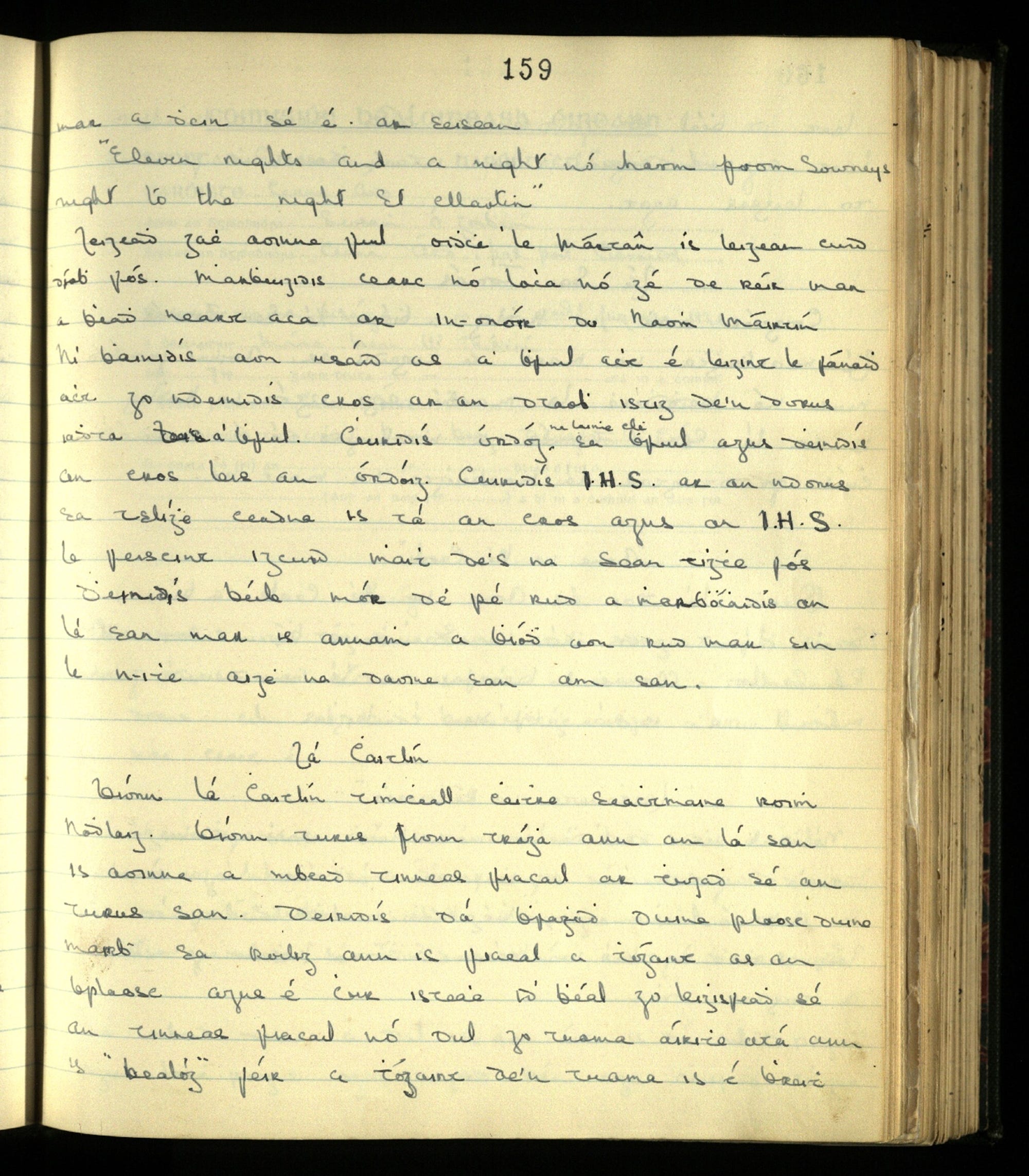
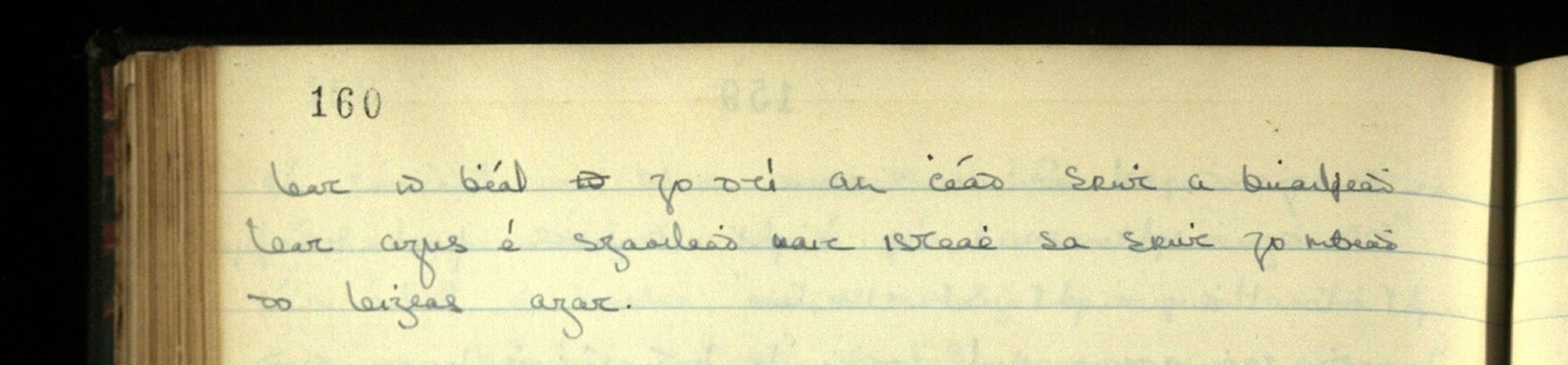
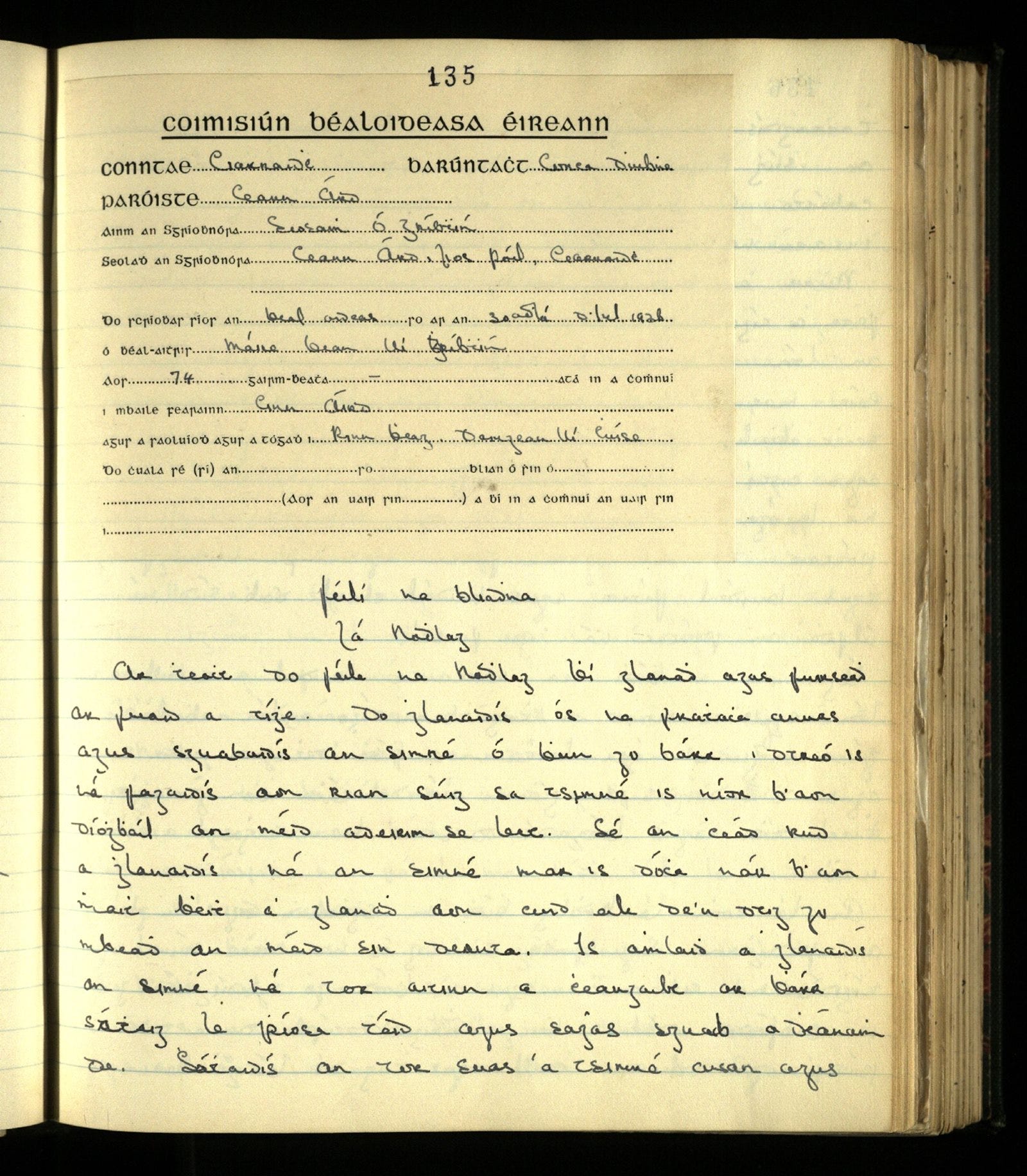
Grianstad an nGeiṁriḋ / Nodlag December
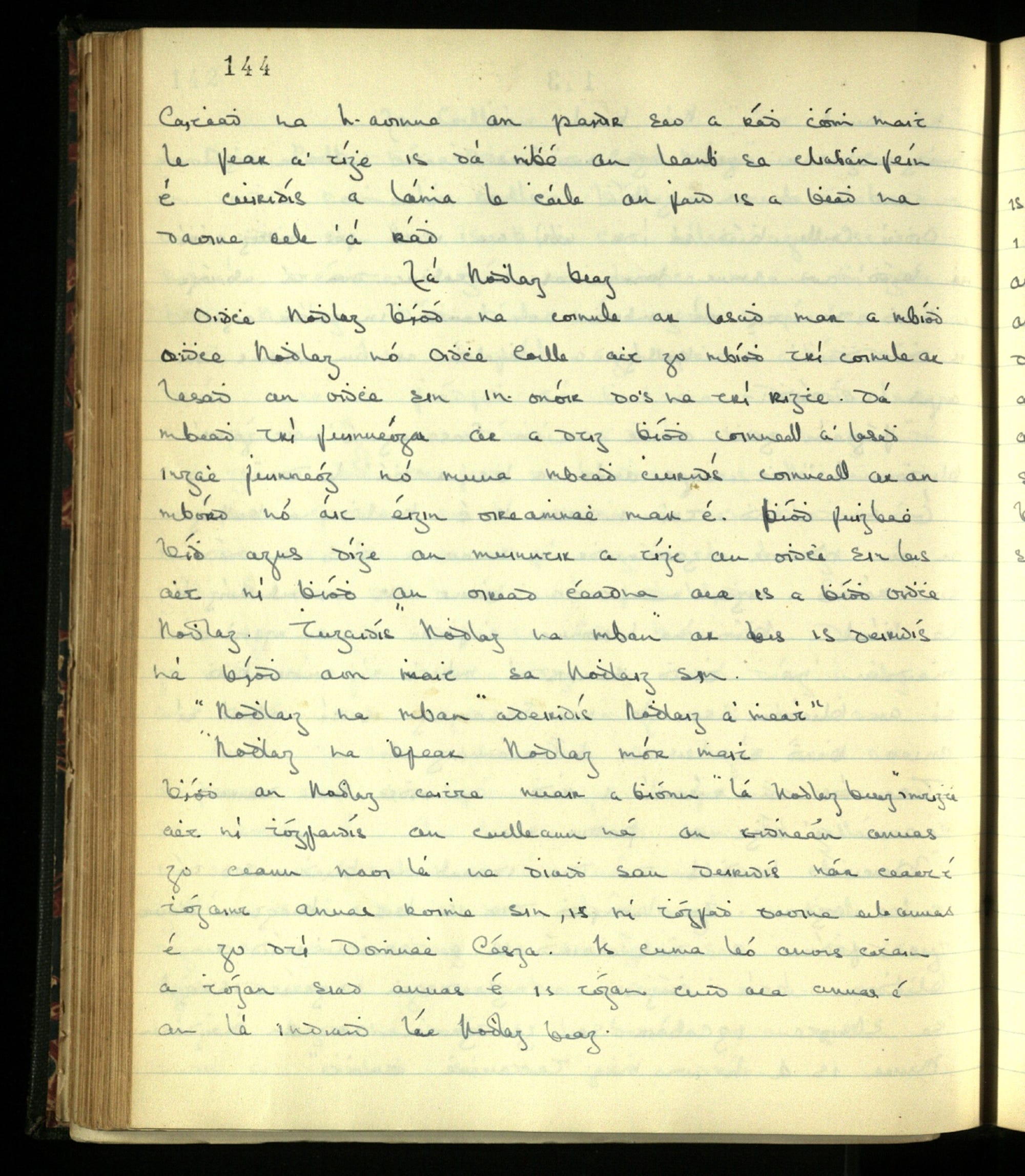
Nodlaig, -lag, pl. -í, f., oft. with art., Christmas ; Lá Nodlag,
Christmas day ; Oiḋċe Nodlag, Christmas Night ; Maidean Lae Nodlag, Christmas Morning ; Mí na Nodlag, December ; Nodlaig Ḃeag, Little Christmas, al. the Feast of Epiphany (6th Jan.) (M.) and the Feast of the Circumcision or New Year's Day (U., Con. See oiḋċe ; Nodlaig na mBan, [Women's Christmas] Little Christmas, Nodlaig Stéille, id., Nodlaig Ṁór, Great Christmas or Christmas proper ; idir ḋá Nodlaig, between Christmas and Epiphany ; Nodlaig ṁaiṫ ċuġat, I wish you a happy Christmas ; ní fuaċt go Nodlaig, at Christmas the real cold weather begins ; ceapaire, putóg, bloc, féirín na Nodlag, the Christmas cake, pudding, log, box ; Lat. natalicia
Easbaiḋ, add. : Easbiaḋ Fuilt, December
Midwinter fires – pg. 636
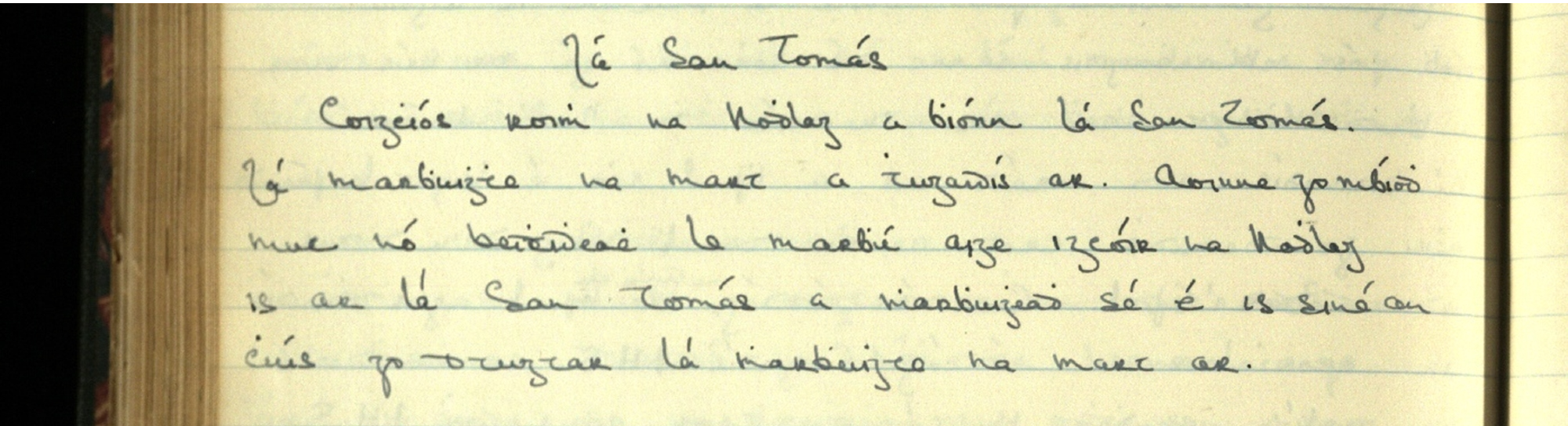
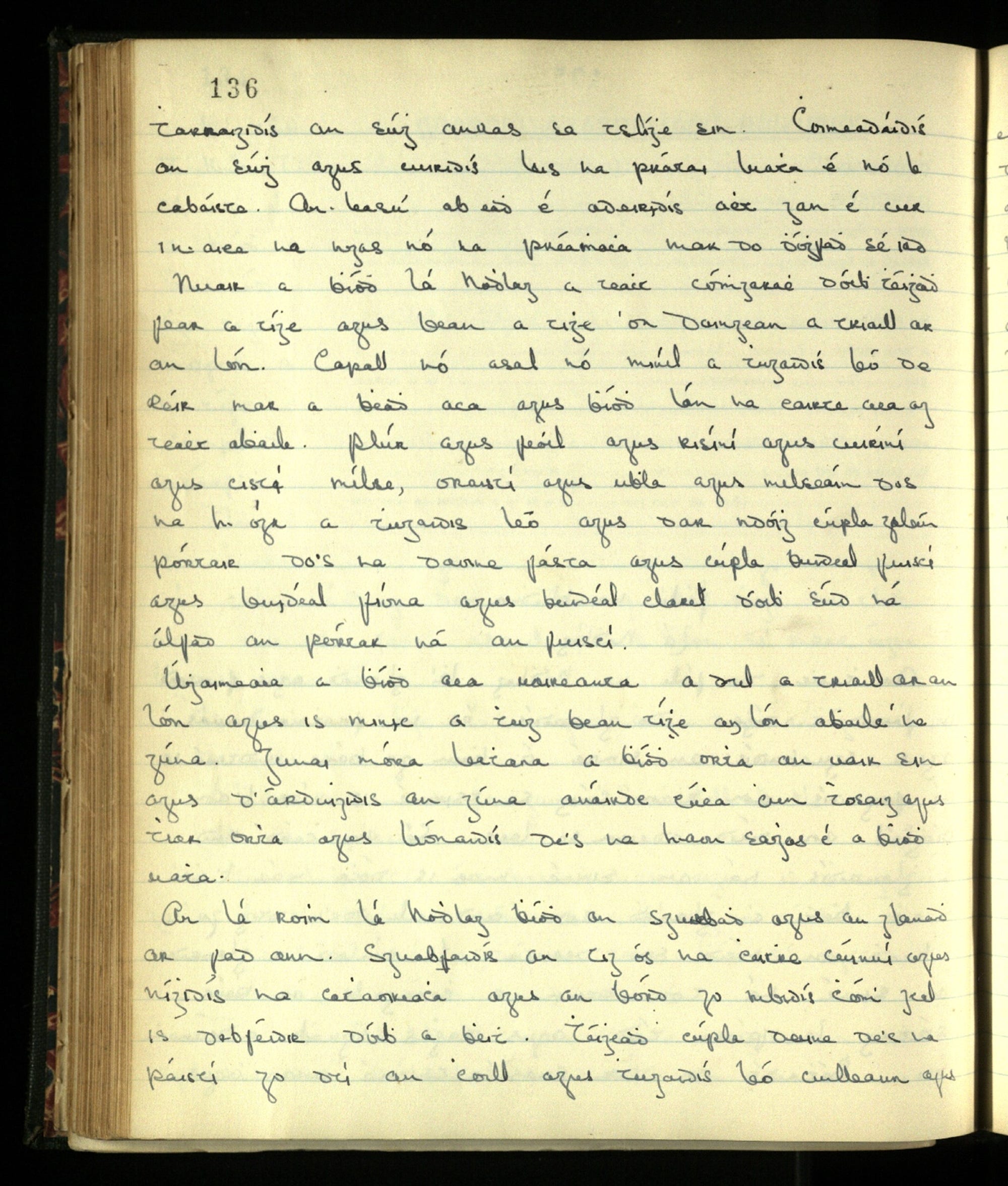
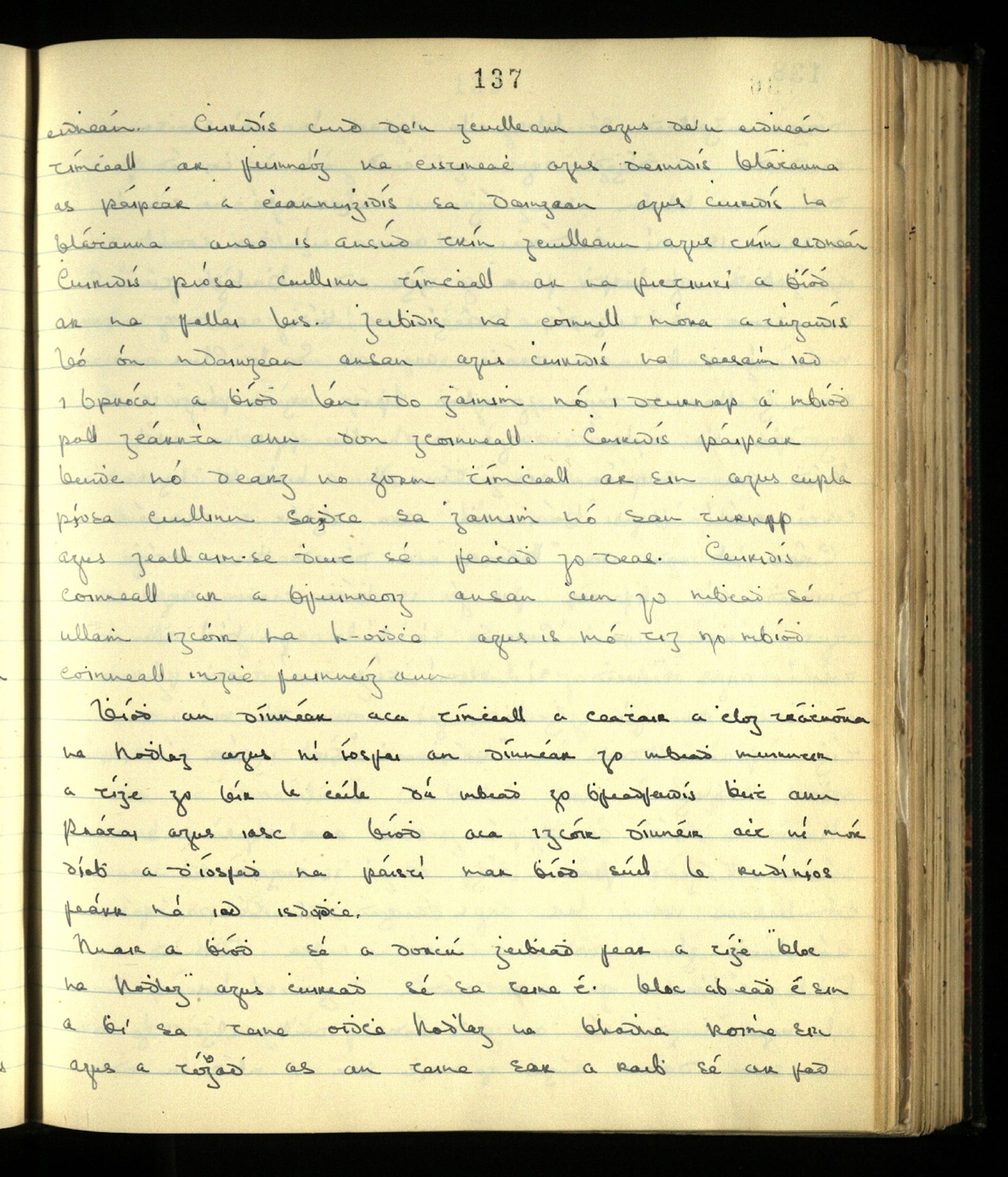
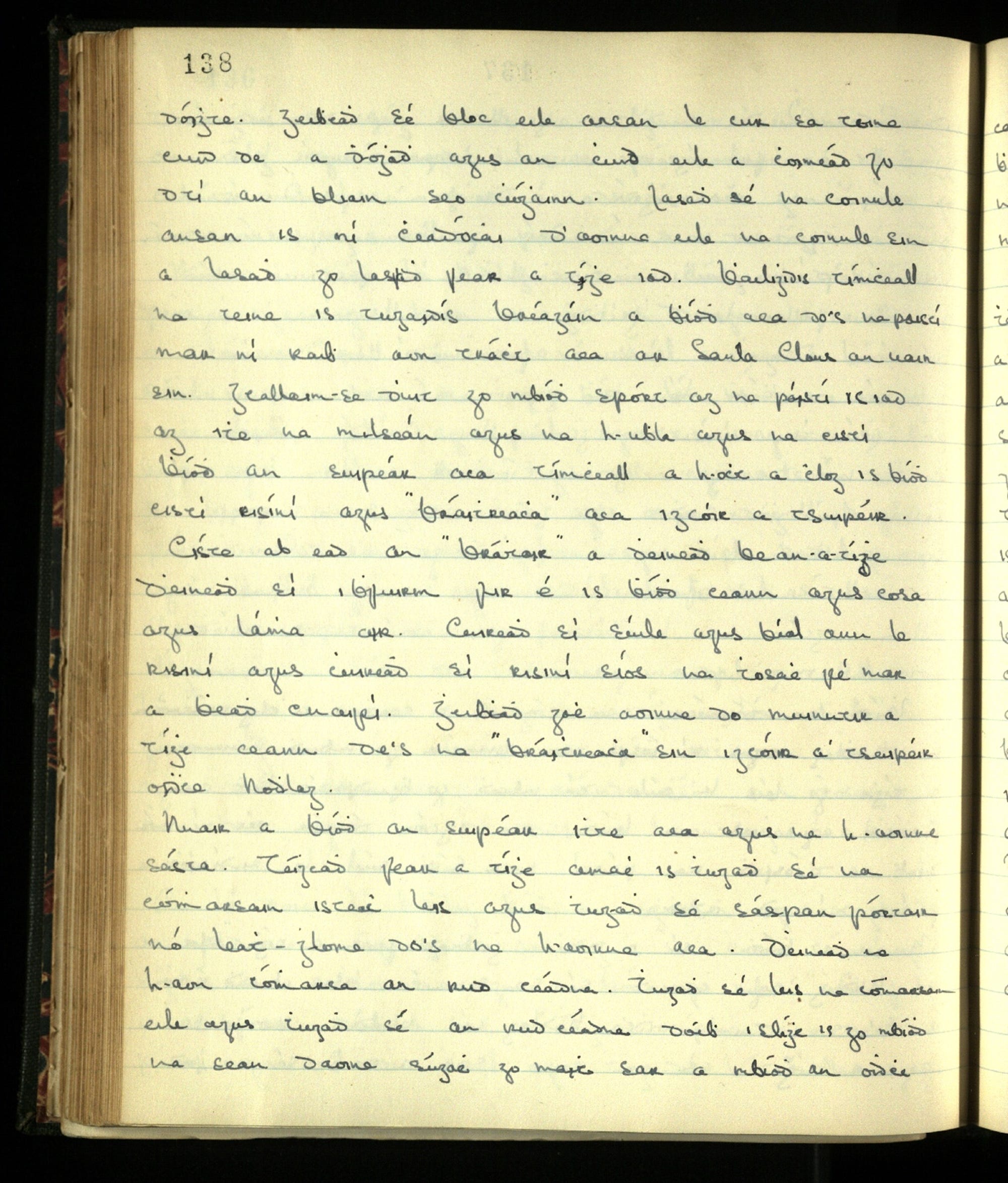
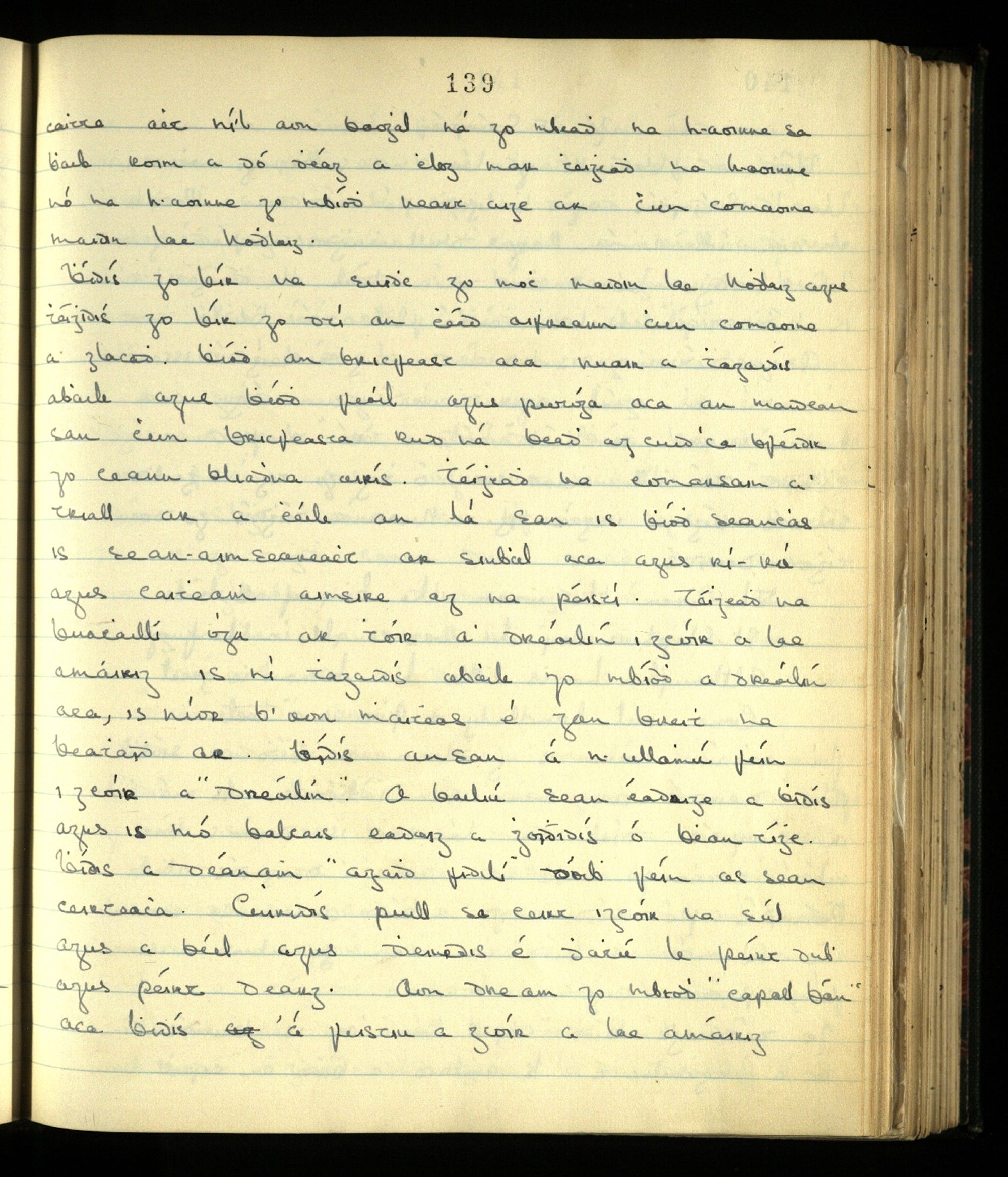
Lá le Stíoṗáin - Lá Ḟéile Stíoṗáin - 26ú Nodlag
St. Stephen's Day/Lá an Dreolín/Lá an Ċapaill Bán
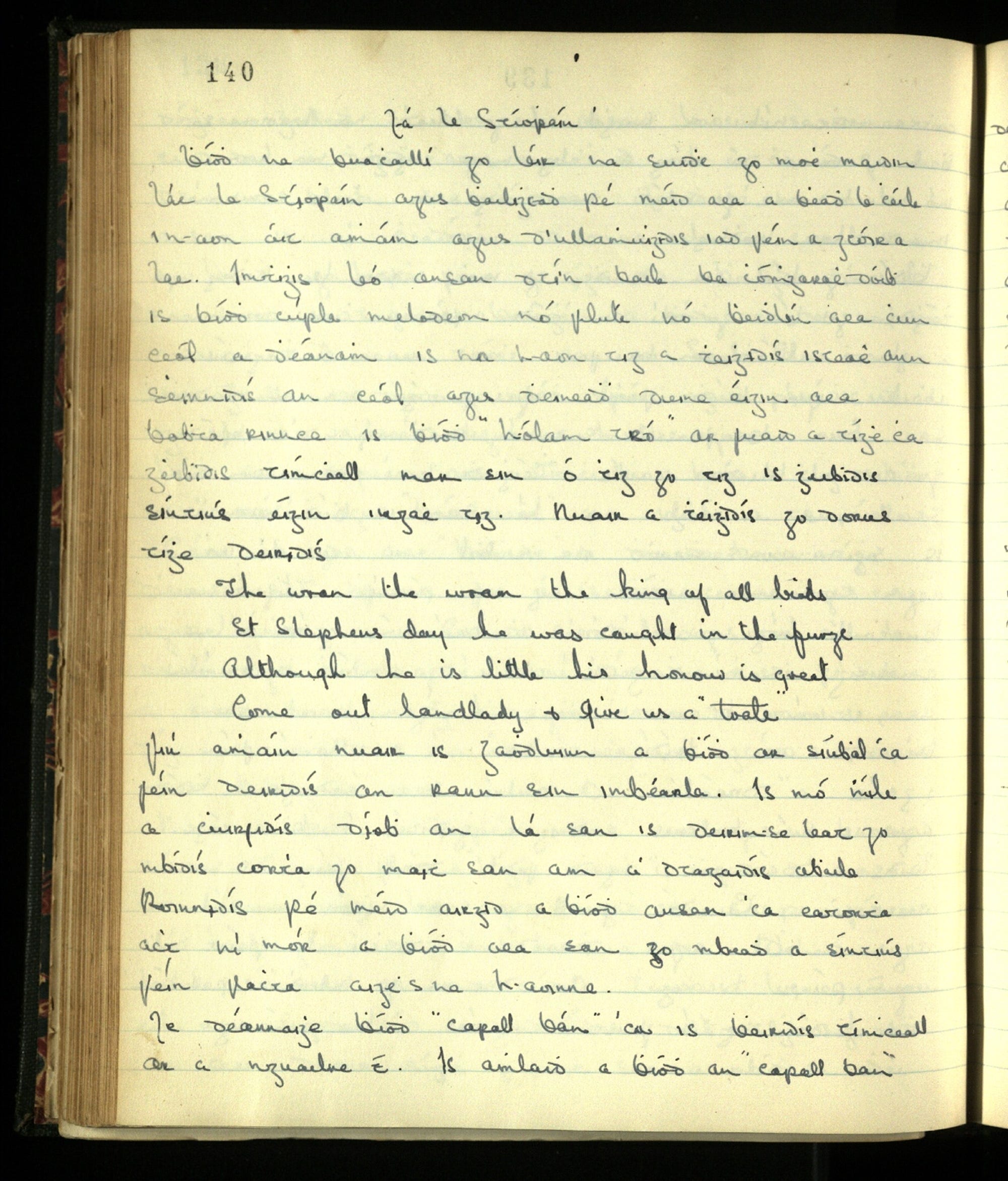
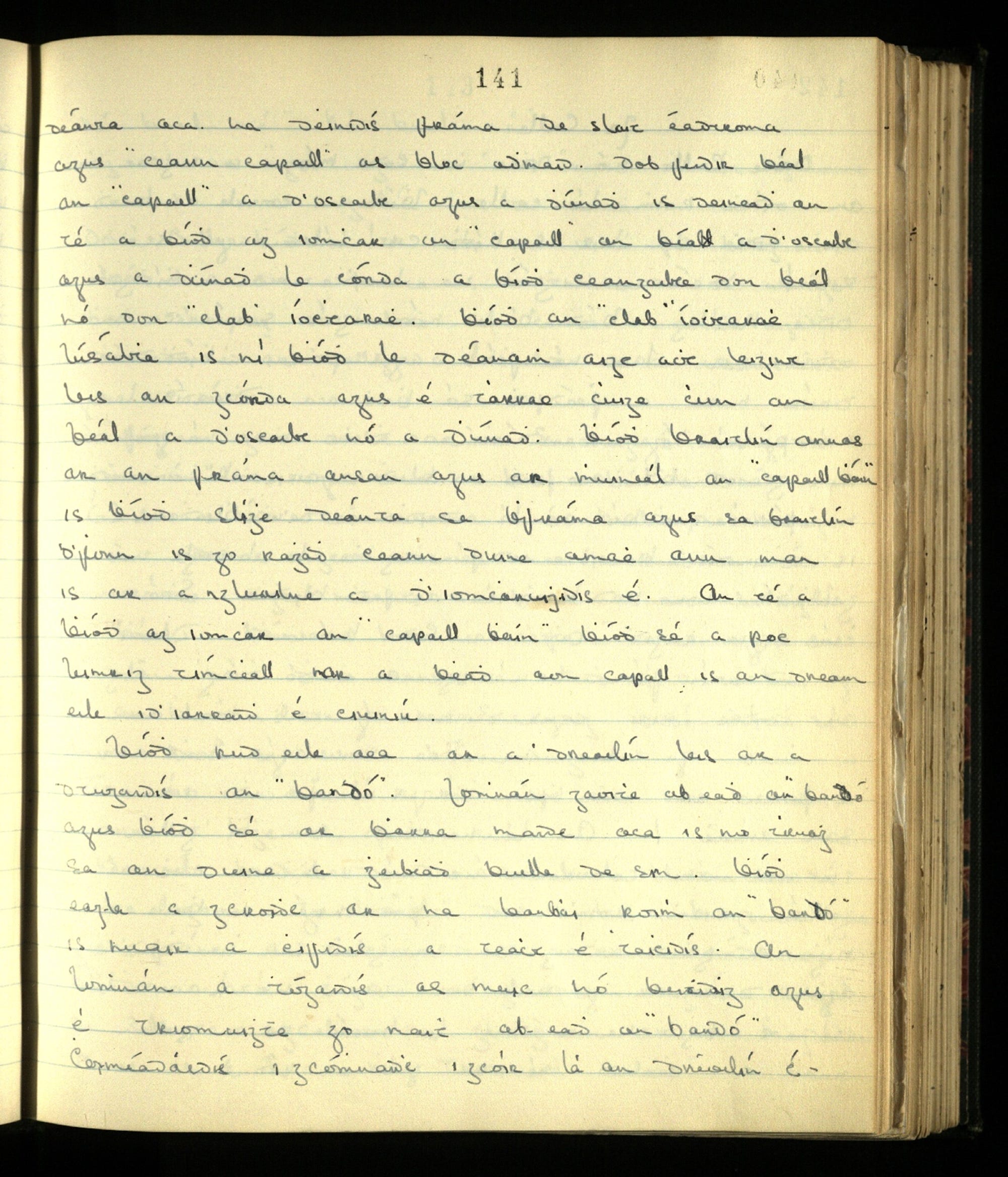
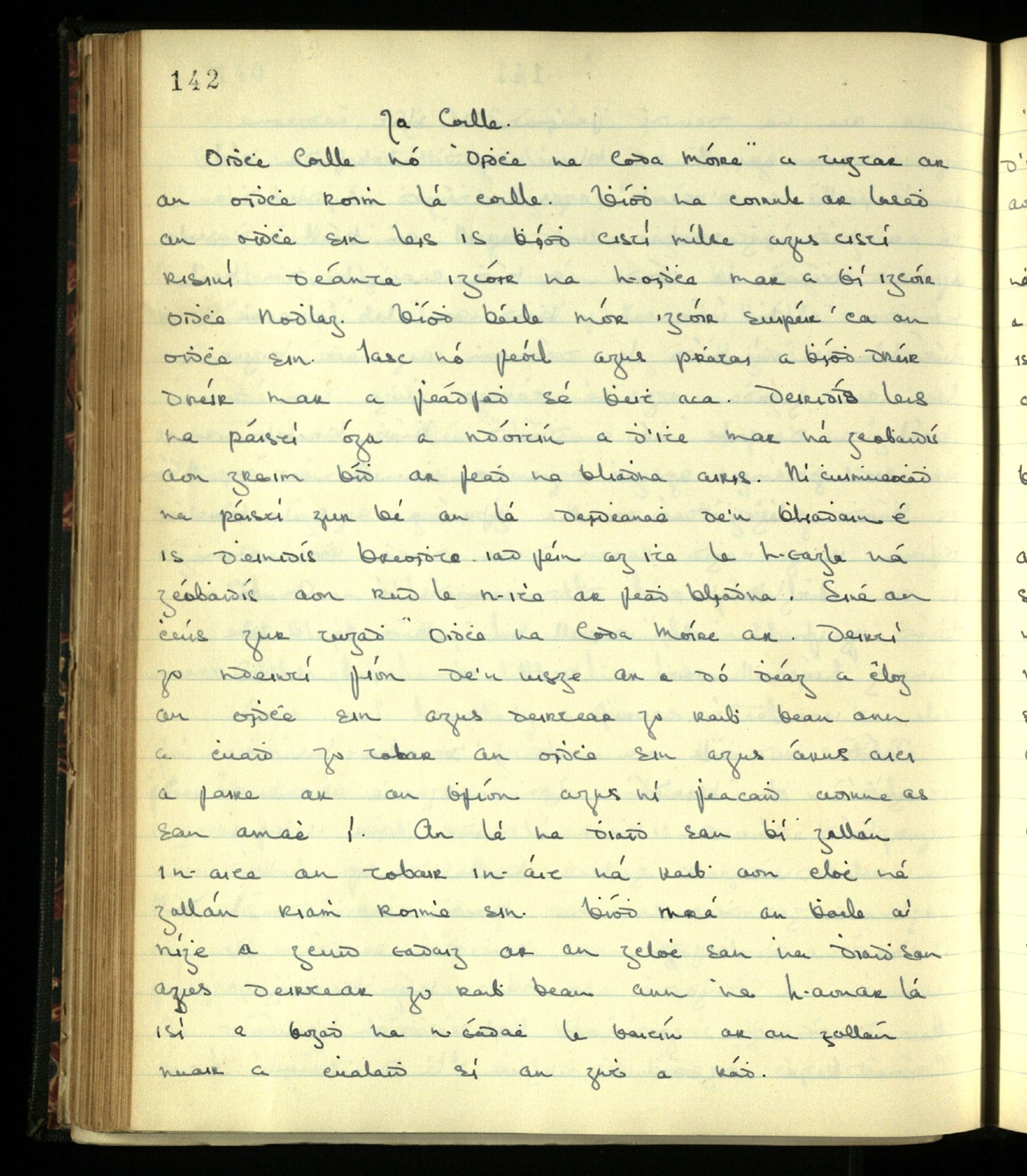
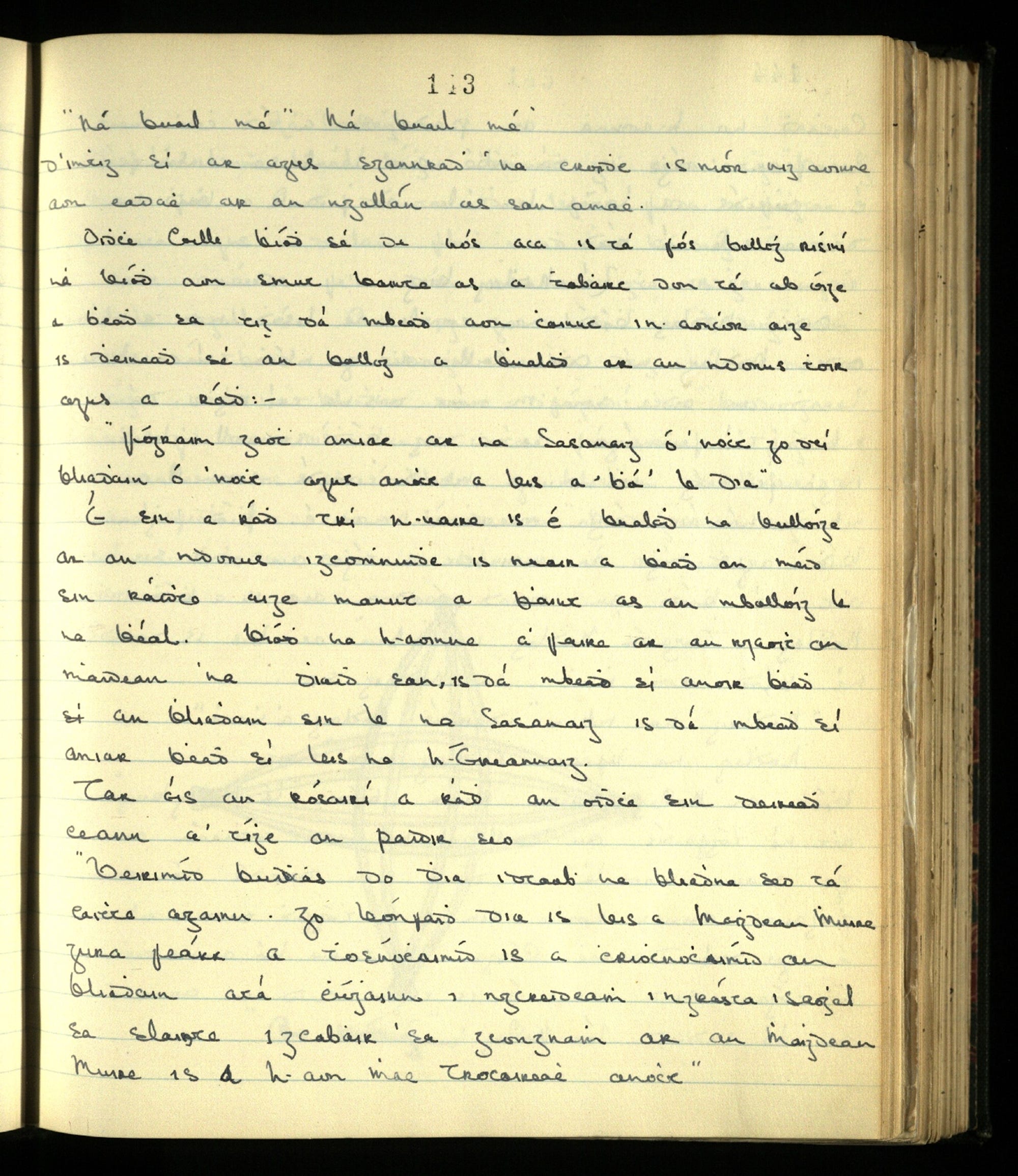
Lá Noḋlag Beag January
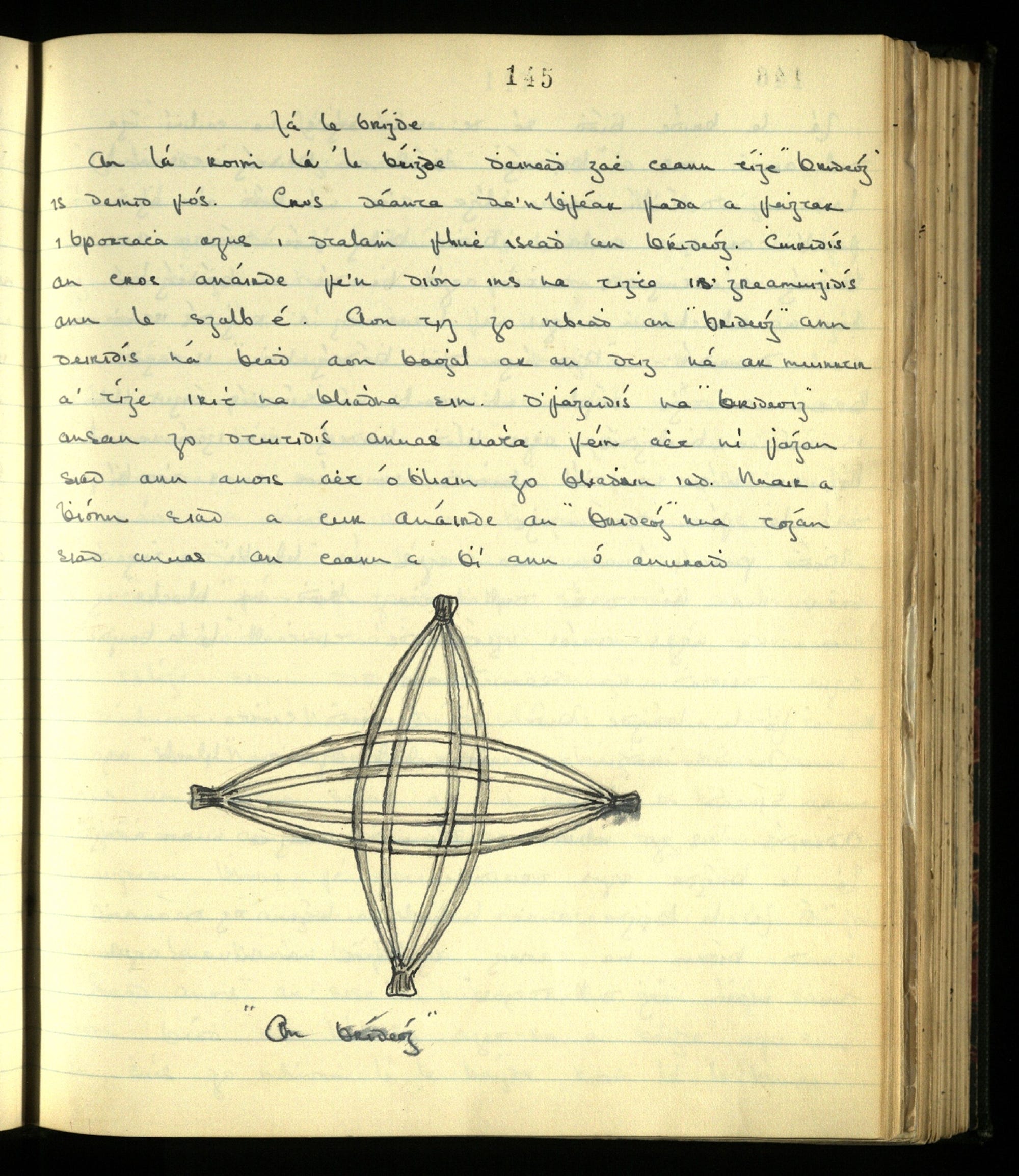
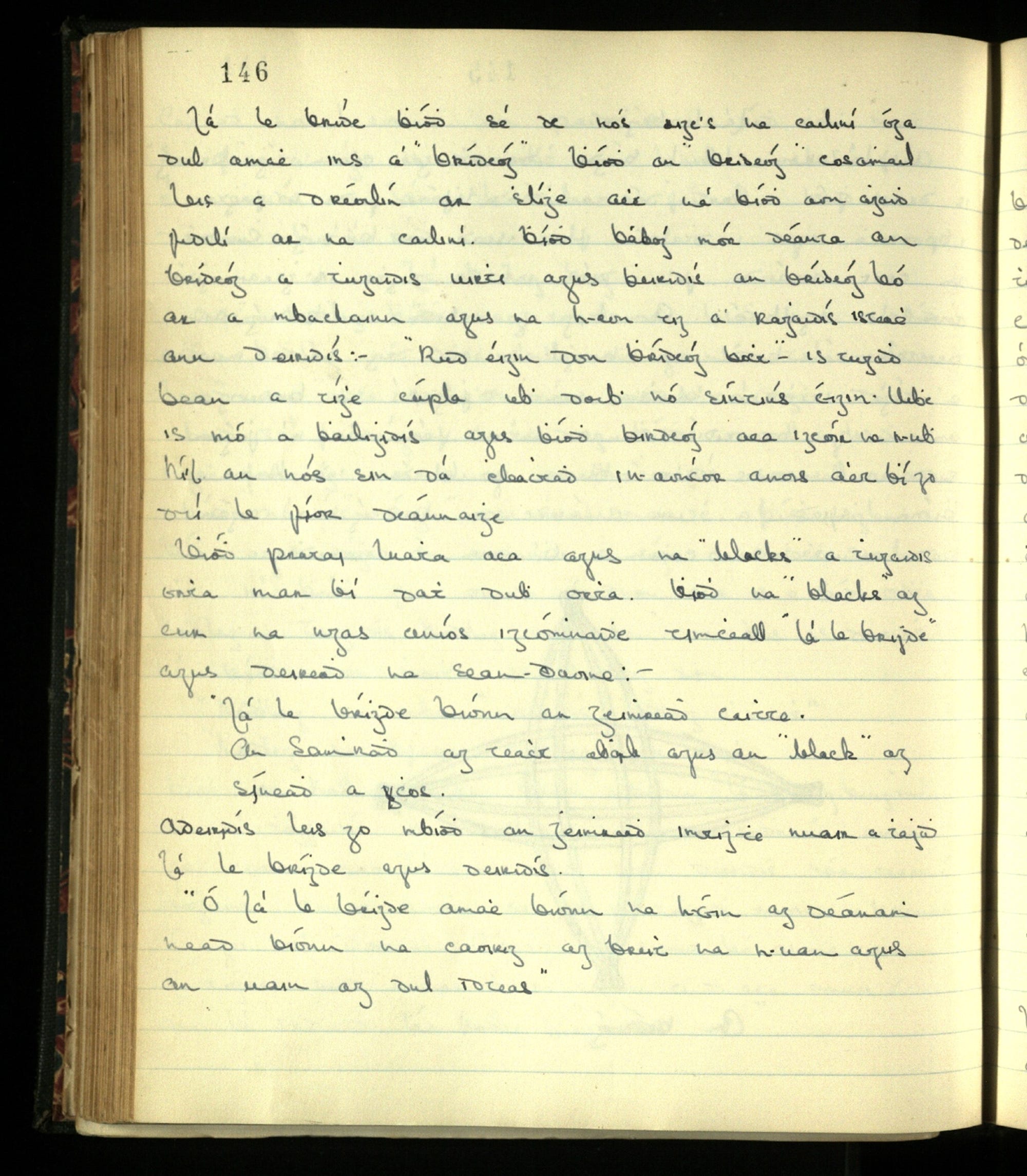
Imbolc / Lá Ḟéile Ḃriġde February
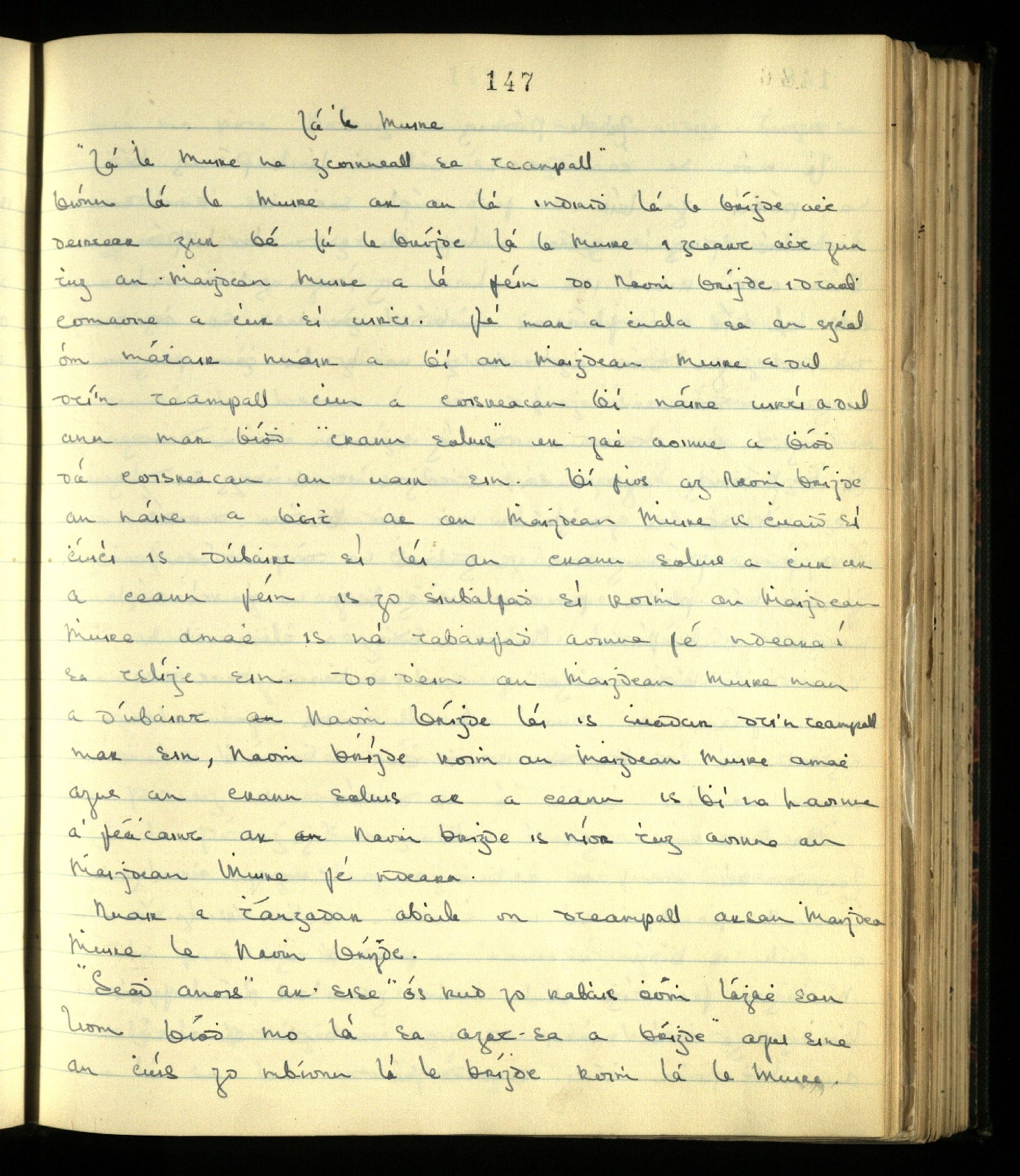
Cóṁ-noċt an tEarraċ March
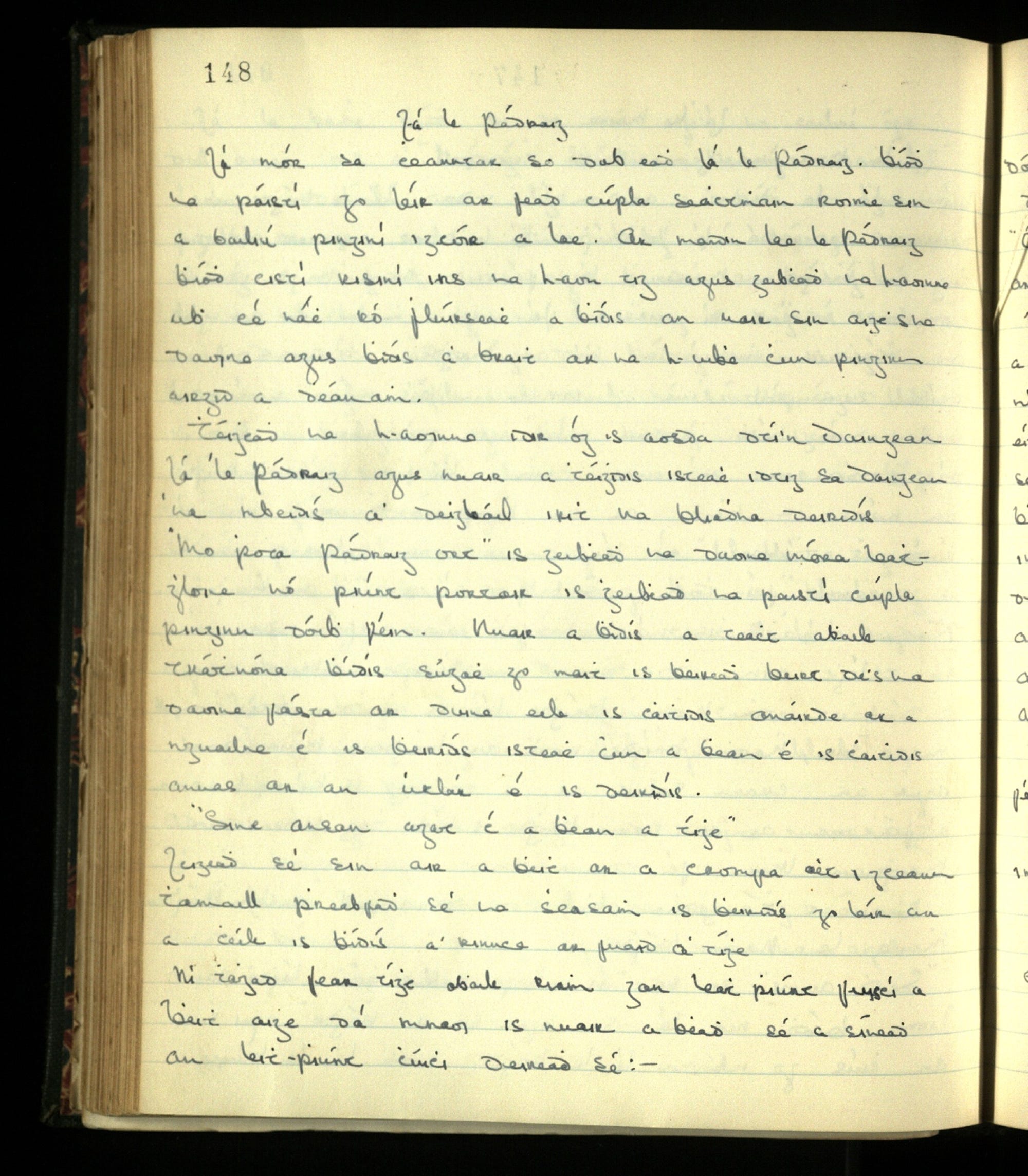
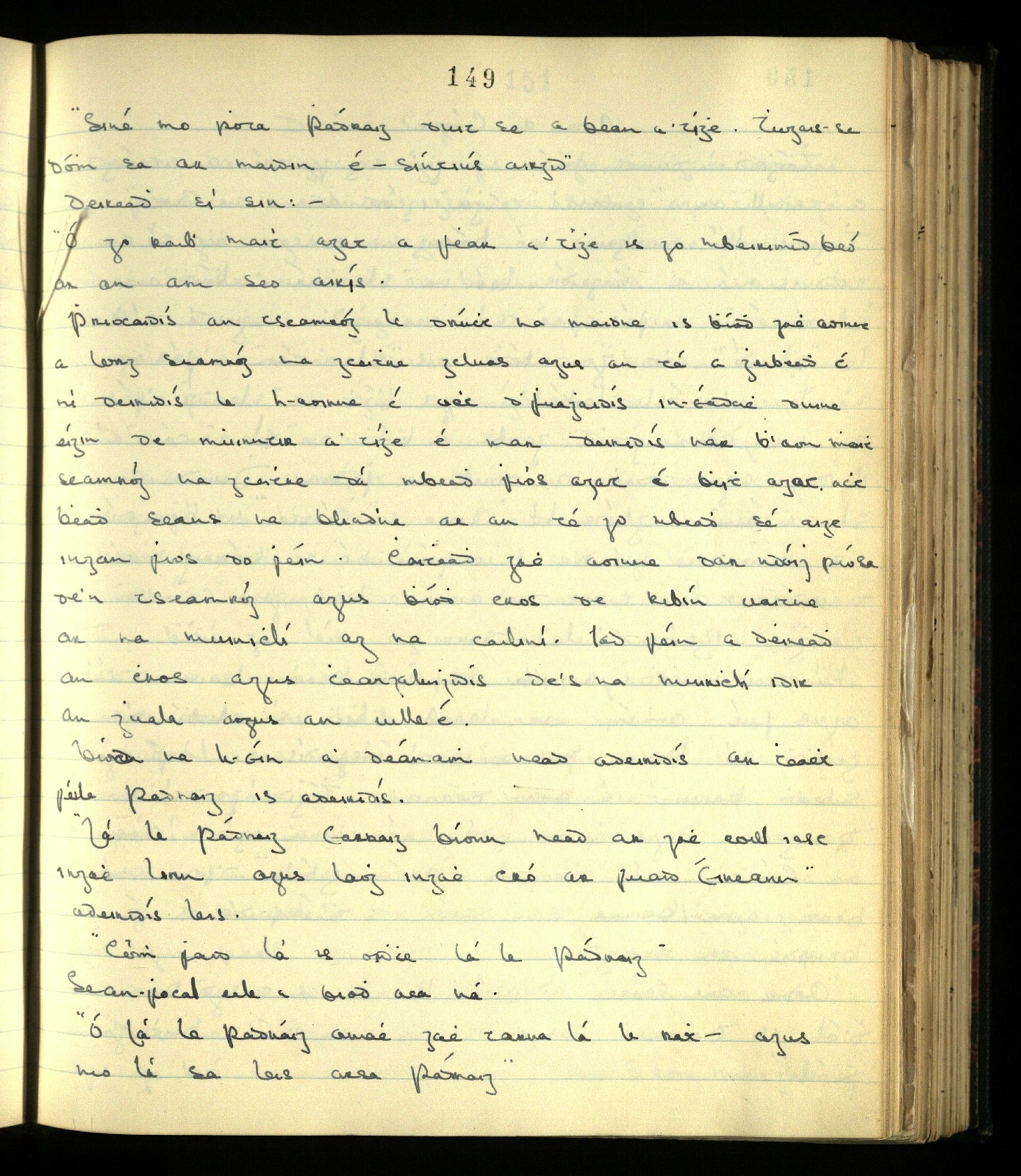
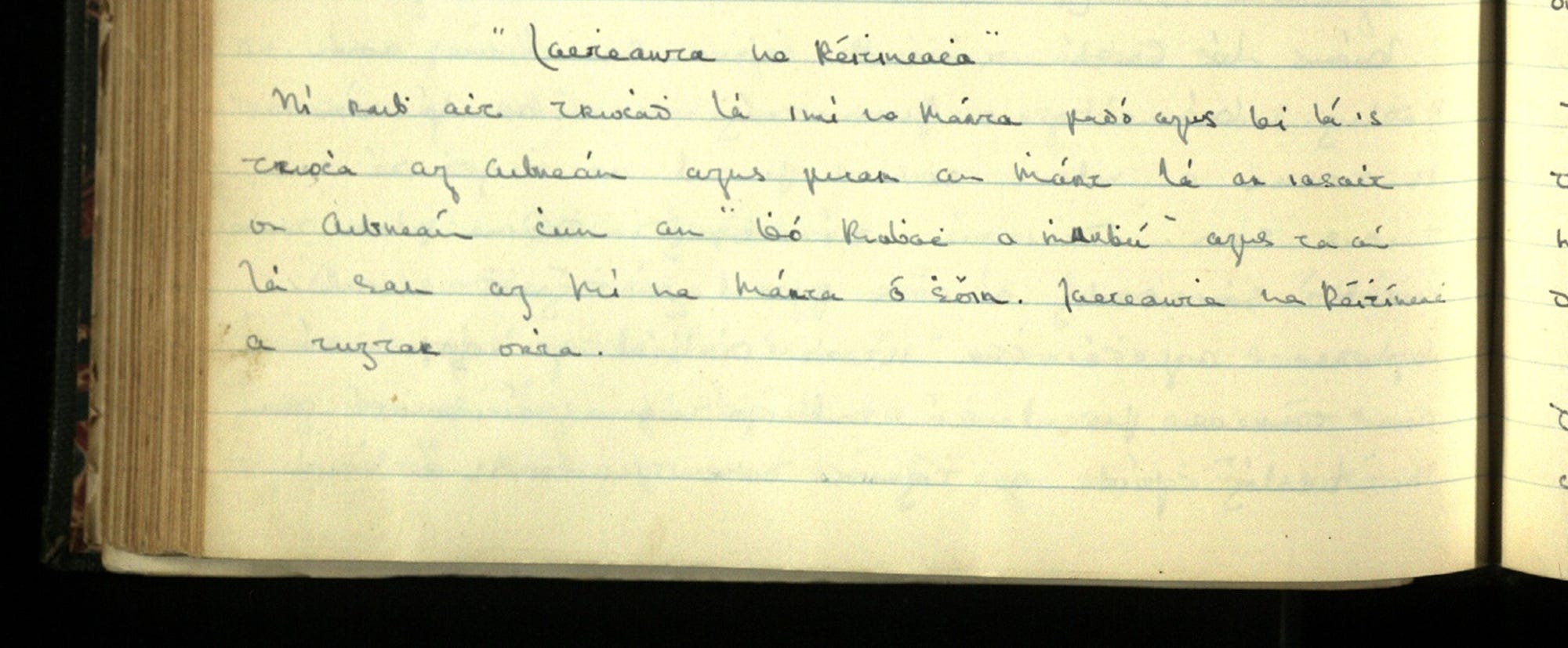
Aoine an Céasta - Good Friday . March/April
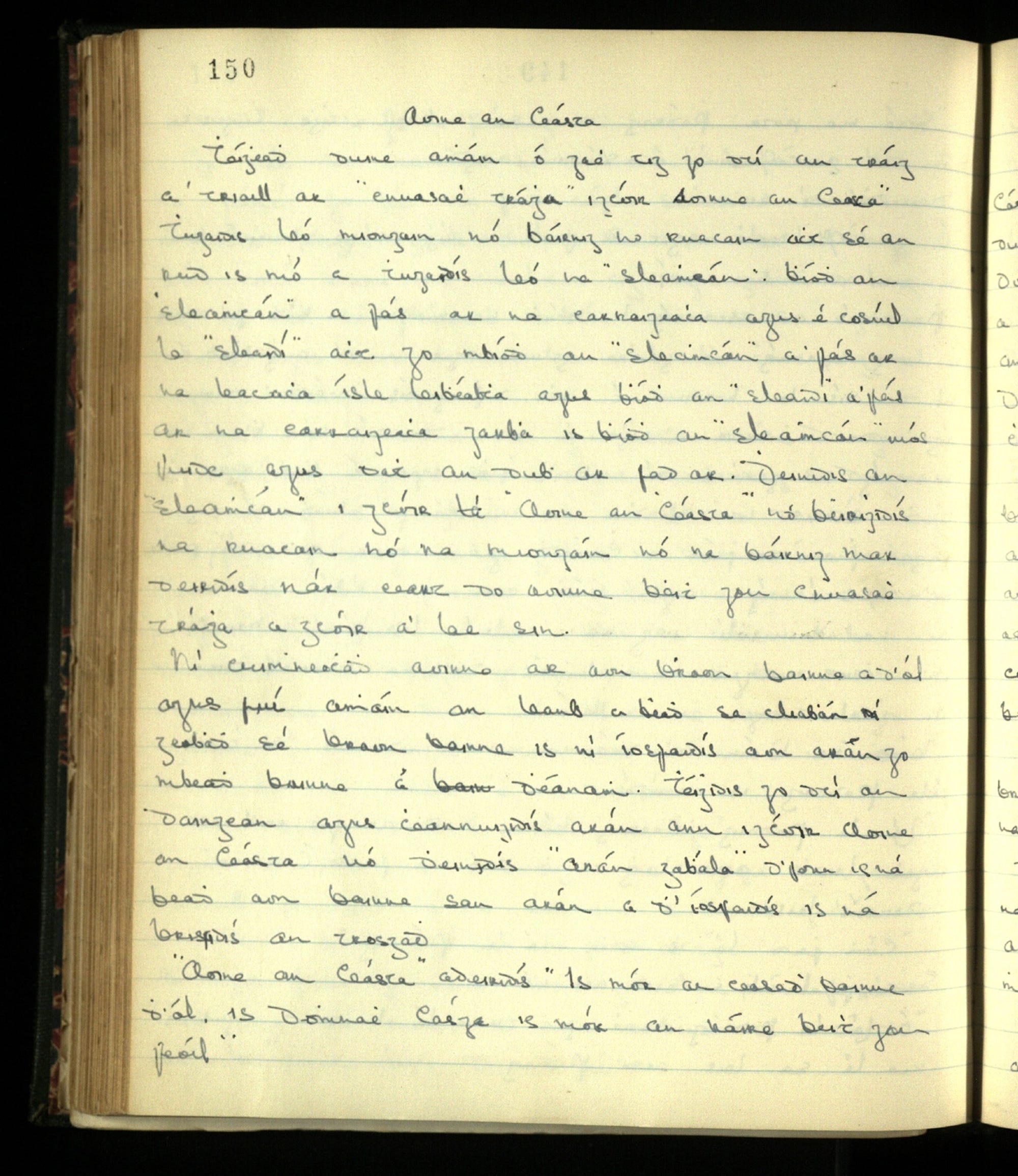
Bealtaine May
Frazer, in discussing the fire festivals of Europe, mentions 'Lenten fires' and 'Easter fires' taking place across Europe. He does not mention the Celtic festivals until we come to “The Beltane Fires”, .i. Bealtaine. 36
Dinnen has the following to say about Bealtaine:
Bealtaine, g. id., f. (oft. pron. Beallṫaine), the Irish May festival, the month of May ; lá Bealtaine, the first day of May ; mí na Bealtaine, the month of May ; oiḋċe Ḃealtaine, May eve ; Sean-Ḃealtaine, “Old May,” the month beginning about the 11th of May (Old Style) ; idir ḋá ṫeine (uisce) lae Bealtaine, in a dilemma, from the practice of driving cattle between two fires with a view to their preservation; dos Bealtaine, May bush ; crann Bealtaine, May-pole or tree ; in Om., etc., Béaltaine ; in Don. and Con., Beáltaine ; Bealtaine and Saṁain were the leading terminal dates of the civil year. See under Saṁain.
According to Dinnen also, food and drink were sometimes burnt in the 'Teinte Bealtaine'. Futher context for this festival is given in the following entry under 'Teine', on page 1200:
idir ḋá ṫeiniḋ Lae Bealtaine, between two (May) fires, in a dilemma,
idir ḋa ṫeiniḋ Ḃeil (Beal, ancient divinity, Bel, Contr.), id. (Ker.).
Inis Teineaḋ, Isle of Thanet (Inis Breatan id.). 37
Beal, -eil, m., name of a Celtic god ; cf. Welsh Beli.” 38
And Sir Frazer:
St. John's Eve, formerly called Balder's Balefires (Balder's Bǎlar), which are kindled at dusk on hills and eminences and throw a glare of light over the surrounding landscape [in Sweden].”
Norse Balder may be the equivalent of Balar and/or Beal of Irish myth, just as Norse Loki may be cognate with Luġ of Irish myth, and Lucifer (i.e. Phosphoros, the “light bearer, the morning/evening star”, the planet Venus). Beal may be an earlier/later/alternate form of Balar. This, and other examples of differing versions and reduplicated names or motifs in the myths, may indicate differing strata of mythological material inheritance from different periods of time, for example the Fir Bolg may have had a mythology similar to the Tuaṫa Dé Dannan, but a bit older, likewise the Tuaṫa Dé Danann’s mythology a bit older than the Gaels. The political waves of dominant or patronised mythology in different parts of the country (and, indeed, continent) by different peoples may account for at least some of the similarities and differences. Similarly, Balar/Balor may be related to Goliath, as Luġ may be to David.
The Welsh ancestral figure Beli Mawr, or 'Beli the Great' (Beal Mór), is according to Rachel Bromwich “a character rooted ... firmly in Welsh tradition” and is listed as the father of Llud Llaw Eraint, or Llud of the Silver Hand, a Welsh deity with references to Irish Luġ of the Long Arm and Nuada of the Silver Hand.. Beli is listed as husband of Dón, and “son or husband of Anna, cousin of Mary, mother of Jesus.” 39 Possibly related to this is this curious entry in Dinneen for Mór 40:
“Mór, -óire, d. -óir, f., a name for the sun, a woman's name, type of the average woman esp. the peasant woman in proverbs ; oft. Englished Martha, Mary or Agnes ; Mór Ḃuiḋe, Britannia ; Mór Muṁan, the beautiful wife of Caṫal mac Fionġaine ; Mór Cluana, a famous fairy of goddess ; Mór, Leor is Lorgan, three sisters of whom the last was the heroine 41, in Meath cat-decapitation folk-story. ; tá Mór 'na suiḋe, the sun is up ; in salutations : Mór ḋuit, hail ; reply Dia, Mór is Muire ḋuit ; Mór is Muire is Pádraig duit, Mór, Mary and Patrick bless thee ; Mór do ḃeaṫa, hail ; smt. Móra e.g., Móra ḋuit a éinín, hail little bird ; dims. Móróg, Móirín, which see : Móirín ní Ċuileannáin, a poetic name for Ireland ; dim. of Mór.” 42
The ‘Lorgan’ heroine sister mentioned above may be related to the native name for Galway Bay, Loċ Lurgain. It is the case that Galway Bay was actually a lake up until about 1,700 BC, and the Aran Islands part of the mainland. Another estimate puts the formation of Galway Bay only 1,000 years ago when the sea level rose to its current height.
A mention of the Semitic/Canaanite god Baal, or “Ba'al” 43, complete with the customary, and questionable, references to human sacrifice, appears alongside copious descriptions of the fire festival of Bealtaine in Scotland, also in Frazer's The Golden Bough.
He gives the complete accounts of these festivals according to aristocratic antiquarians in Britain in the 17th and 18th centuries. A few of these are included here.
The first, according to Frazer, is “the fullest of the descriptions”, and comes from “John Ramsay, laird of Ochtertyre, near Crieff, the patron of Burns and the friend of Sir Walter Scott.” Ramsey says:
“But the most considerable of the Druidical festivals is that of Beltane, or May-Day, which was lately observed in some parts of the Highlands with extraordinary ceremonies . . . . Like the other public worship of the Druids, the Beltane feast seems to have been performed on hills and eminences. They thought it degrading to him whose temple is the universe, to suppose that he would dwell in any house made with hands. Their sacrifices where therefore offered in the open air, frequently upon the tops of hills where they were presented with the grandest views of nature, and were nearest the seat of warmth and order. And, according to tradition, such was the manner of celebrating this festival in the Highlands within the last hundred years. But since the decline of superstition, it has been celebrated by the people of each hamlet on some hill or rising ground around which their cattle were pasturing. Thither the young folks repaired in the morning, and cut a trench, on the summit of which a seat of turf was formed for the company. And in the middle a pile of wood or other furl was placed, which of old they kindled with tein-eigin44–i.e., forced-fire or need-fire. Although, for many years past, they have been contented with common fire, yet we shall now describe the process, because it will hereafter appear that recourse is still had to the tein-eigin upon extraordinary emergencies.
“ The night before, all the fires in the country were carefully extinguished, and the next morning the materials for exciting the sacred fire were prepared. The most primitive method seems to be that which was used in the island of Skye, Mull, Tiree. A well-seasoned plank of oak was procured, in the midst of which a hole was bored. A wimble of the same timber was then applied, the end of which they fitted to the hole. But in some parts of the mainland the machinery was different. They used a frame of green wood, of a square form, in the centre of which was an axle-tree. In some places three times three persons, in others three times nine, were required for turning round by turns the axle-tree or wimble. If any of them had been guilty of murder, adultery, theft, or other atrocious crime, it was imagined either that the fire would not kindle, or that it would be devoid of its usual virtue. So as soon as any sparks were emitted by means of violent friction, they applied a species of agaric which grows on old birch-trees45, and is very combustible. This fire had the appearance of being immediately derived from heaven, and manifold were the virtues ascribed to it. They esteemed it a preservative against witchcraft, and a sovereign remedy against malignant diseases, both in the human species and in cattle ;and by it the strongest poisons were supposed to have their nature changed.
“ After kindling the bonfire with the tein-eigin the company prepared their victuals. And as soon as they had finished their meal, they amused themselves a while in singing and dancing round the fire. Towards the close of the entertainment, the person who officiated as master of the feast produced a large cake baked with eggs and scalloped round the edge, called am bonnach beal-tine – i.e. the Beltane cake. It was divided into a number of pieces, and distributed in great form to the company. There was one particular piece which whomever got was called cailleach bel-tine – i.e., the Beltane carline, a term of great reproach. Upon this being known, part of the company laid hold of him and made a show of putting him into the fire ; but the majority interposing, he was rescued. And in some places they laid him flat on the ground, making as if they would quarter him. Afterwards, he was pelted with egg-shells, and retained the odious appelation during the whole year. And while tge feast was fresh in people's memory, they affected to speak of the cailleach beal-tine as dead.”
An interesting version of this festival is also described which features elements of animism. Frazer writes:
“Thomas Pennant, who traveled to Perthshire in the year 1769, tells us that “ on the first day of May, the herdsmen of every village hold their Bel-tein, a ritual sacrifice. They cut a square trench on the ground, leaving the turf in the middle ; on that they make a fire of wood, on which they dress a large caudle of eggs, butter, oatmeal and milk ; and bring besides the ingredients of the caudle, plenty of beer and whisky ; for each company must contribute something. The rites begin with spilling some of the caudle on the ground, by way of libation ; on that every one takes a cake of oatmeal, upon which are raised nine square knobs, each dedicated to a particular being, the supposed preserver of their flocks and herds, or to some particular animal, the real destroyer of them ; each person then turns his face to the fire, breaks off a knob, and flinging it over his shoulders, says, ' This I give to thee, preserve thou my horses ; this to thee, preserve thou my sheep; and so on.' After that, they use the same ceremony to the noxious animals : ' This I give to thee, O fox ! Spare thou my lambs ; this to thee, O hooded crow ! This to thee, O eagle !' When the ceremony is over, they dine on the caudle ; and after the feast is finished, what is left is hid by two persons deputed for that purpose ; but on the next Sunday they reassemble, and finish the reliques of the first entertainment.”
“In the Hebrides “ ... the Beltane customs seem to have been the same as elsewhere. Every fire was put out and a large one lit on the top of the hill, and the cattle driven round it sunwards (dessil) 46, to keep off murrain all the year. Each man would take home fire wherewith to kindle his own.”
In Wales the holders of the brown bits of the bannock cake, or the charcoal-covered bit of the bannock had to leap
“three times over the flames, or ran three times between the two fires.”
“The belief of the people that by leaping thrice over the bonfire or running thrice between them they ensured a plentiful harvest is worthy of note. The mode in which this result was supposed to be brought about is indicated by another writer on Welsh folk-lore, according to whom it used to be held that “ the bonfires lighted in May or Midsummer protected the lands from sorcery, so that good crops would follow. The ashes were also considered valuable as charms.” Hence it appears that the heat of the fires was thought to fertilise the fields, not directly by quickening the seeds in the ground, but indirectly by counteracting the baleful influence of witchcraft or perhaps by burning up the persons of the witches.”
Frazer goes on the mention Bealtaine:
“The Beltane fires seem to have been kindled also in Ireland, for Cormac, “ or somebody in his name, says that belltaine, May-day, was so called from the 'lucky fire,' or the 'two fires,' which the druids of Erin used to make on that day with great incantations ; and cattle, he adds, used to be brought to those fires, or to be driven between them, as a safeguard against the diseases of the year.” The custom of driving cattle through or between fires on May Day or the eve of May Day persisted in Ireland down to a time within living memory.”
Far from being mere folk superstition, this practice may actually have been noticed by its practitioners to have had positive results. A 2007 paper 47 by Nautiyal et. al. titled Medicinal smoke reduces airborne bacteria, published in the Journal of Ethnopharmacology claims to represent “a comprehensive analysis and scientific validation of our ancient knowledge about the effect of ethnopharmacological aspects of natural products' smoke for therapy and health care on airborne bacterial composition and dynamics”. They observed that
“1 hour treatment of medicinal smoke emanated by burning wood and a mixture of odoriferous and medicinal herbs (havan sámagri = material used in oblation to fire all over India), on aerial bacterial population caused over 94% reduction of bacterial counts by 60 min and the ability of the smoke to purify or disinfect the air and to make the environment cleaner was maintained up to 24 h in the closed room.”
Further, it seems that the absence of several strains of pathogenic bacteria even after 30 days is “indicative of the bactericidal potential of the medicinal smoke treatment.” The abstract concludes: “We have demonstrated that using medicinal smoke it is possible to completely eliminate diverse plant and human pathogenic bacteria of the air within a confined space.” The constituents of this mixture are listed as
“havan samagri: wood of mango or pipal tree, kapoor kachari – kaempferia cheer guli, jaggery, nagarmotha – cypriol, bakuchi – psoralea seeds, chandan chura – sandalwood powder, kapoor – camphor, erandel tel – castor oil, bel gooda – wood apple, giloy – gulancha tinospora guggulu – Indian bdellium, joo – barley, cow's ghee, eucalyptus leaf, raktachandan – red sandalwood, and sugandh kokila – berry oil” in Samanth et al., 2018. 48
This article goes on further to explain the functions of the constituents:
“Camphor purifies the air in the atmosphere and attains various medicinal benefits when we inhale. It acts as a germ killer, mosquito and fly repellent and limits spreading of the virus in that place. The main ingredient in havan is mango wood which when burnt releases formic aldehyde a gas which kills harmful bacteria thus purifies the atmosphere. The jaggery burnt in the havan also releases the formic aldehyde gas. The cow's ghee the very important ingredient of havan has been referred as an antidote to the poison in vedas. Its fragrance purifies the physical atmosphere. The aromatic herbs when burnt remove the foul odor in the atmosphere by their fragrance.”
Saṁ-stad (Grianstad an tSaṁraiḋ)/ Teine Ḟéil' Eoin June
The European Midsummer ritual fire, St. John's Eve bonfire (Eoin Baiste, John the Baptist). Again, Frazer's account is worth repeating:
“But the season at which these fire-festivals havebeen mostly generally held all over Europe is the summer solstice, that is Midsummer Eve (the twenty-third of June) or Midsummer Day (the twenty-fourth of June). A faint tinge of Christianity has been given to them by naming Midsummer Day after St. John the Baptist, but we cannot doubt that the celebration dates from a time long before the beginning of our era. The summer solstice, or Midsummer Day, is the great truening point in the sun's career, when, after climbing higher and higher day by day in the sky, the luminary stops and thenceforth retraces his steps down the heavenly road. Such a moment could not but be regarded with anxiety by primitive man so soon as he began to observe and ponder the courses of the great lights across the celestial vault ; and having still to learn his own powerlessness in the face of the vast cyclic changes of nature, he may have fancied that he could help the sun in his seeming decline – could prop his failing steps and rekindle the sinking flame of the red lamp in his feeble hand. In some such thoughts as these the midsummer festivals of our European peasantry may perhaps have taken their rise. Whatever their origin, they have prevailed all over this quarter or the globe, from Ireland on the west to Russia on the east, from Norway and Sweden on the north to Spain and Greece on the south. According to a mediaeval writer, the three great features of the midsummer celebration were the bonfires, the precession with torches round the fields, and the custom of rolling a wheel. He tells us that boys burned bones and filth of various kinds to make a foul smoke, and that the smoke drove away certain noxious dragons which at this time, excited by the summer heat, copulated in the air and poisoned the wells and rivers by dropping their seed into them ; and he explains the custom of trundling a wheel to mean that the sun, having now reached the highest point in the ecliptic, begins thenceforward to descend.
The main features of the midsummer fire-festival resemble those which we have found to characterise the vernal festivals of fire.” 49
An interesting account with Greek overtones comes, not entirely unexpectedly, from Marseille:
“At Marseille also on this day one of the guilds chose a king of the badache or double axe ; but it does not appear that he kindled the bonfire, which is said to have been lighted with great ceremony by the préfet and other authorities.” 50
I have included the following account of the Berbers in recognition of their place in the western Atlantic culture, as well as the similarities in language to be discussed later.
“Berbers of the Rif province, in Northern Morocco, make great use of fires at midsummer for the good of themselves, their cattle, and their fruit-trees. They jump over the bonfires in the belief that this will preserve them in good health, and they light fires under fruit-trees to keep the fruit from falling untimely. And they imagine that by rubbing a paste of the ashes on their hair they prevent the hair from falling off their heads. In all these Moroccan customs, we are told, the beneficial effect is attributed wholly to the smoke, which is supposed to be endued with a magical quality that removes misfortune from men, animals, fruit-trees, and crops.” 51
In addition to this, Frazer gives the composition of the the material gathered for their fires:
“The custom of kindling bonfires on Midsummer Day or on Midsummer Eve is widely spread among the Mohammedan peoples of North Africa, particularly in Morocco and Algeria ; it is common both to the Berbers and to many of the Arabs or Arabic-speaking tribes. In these countries Midsummer Day (the twenty-fourth of June, Old Style) is called l'ánṡára. The fires are lit in the courtyards, at crossroads, in the fields, and sometimes on the threshing-floors. Plants which in burning give out a thick smoke and an aromatic smell are much sought after for fuel on these occasions ; among the plants used for the purpose are giant-fennel, thyme, rue, chervil-seed, camomile, geranium, and penny royal. People expose themselves, and especially their children, to the smoke, and drive it towards the orchards and the crops. Also, they leap across the fires ; in some places everybody ought to repeat the leap seven times.”
In Malta, the Grand Master of the Order of St. John used to set light to a heap of barrels of tar or pitch “in front of the sacred Hospital”. In Calymnos the tradition of casting a stone into the embers is also present, whereafter “they make crosses on their legs and bathe in the sea.”52
I am privileged to report that I have been present at a teine Naoṁ Éoin, with my friend Séamas at tiġ Ṗiarais, where indeed there was a bonfire, on a quay made by the grandfather, on the shores of Con na Mara. There was music, and drinking, and singing and dancing, jumping over the bonfire, dancing on the bonfire, and bonfires alight across the water, all along the surrounding hills, under a full moon.
Iúil July
coirce i gcraoḃ, oats in stalk about July (Don.), Craoḃ, pg 259
Luġnasa August
“You go to high ground and break bread” 53
Lugnas, -a, m., the Kalends of August ; the August or Harvest Games, held in honour of Luġ (which see) in ancient times, even on the continent, esp. At Lyons (Lugudunum) ; Mí Luġnasa, August, Mí na Luġna, id. ; Lá Luġnas, Lammas Day, the first of August ; Oiḋċe Luġnasa, Augest Eve, Oiḋċe Luġna, id. ; al. Luġna (f.), Luġnasaḋ (m., aurtach nó cluiche Logha maic Eithne, Wind.).
The Need-fire – pg. 638, 640, 641
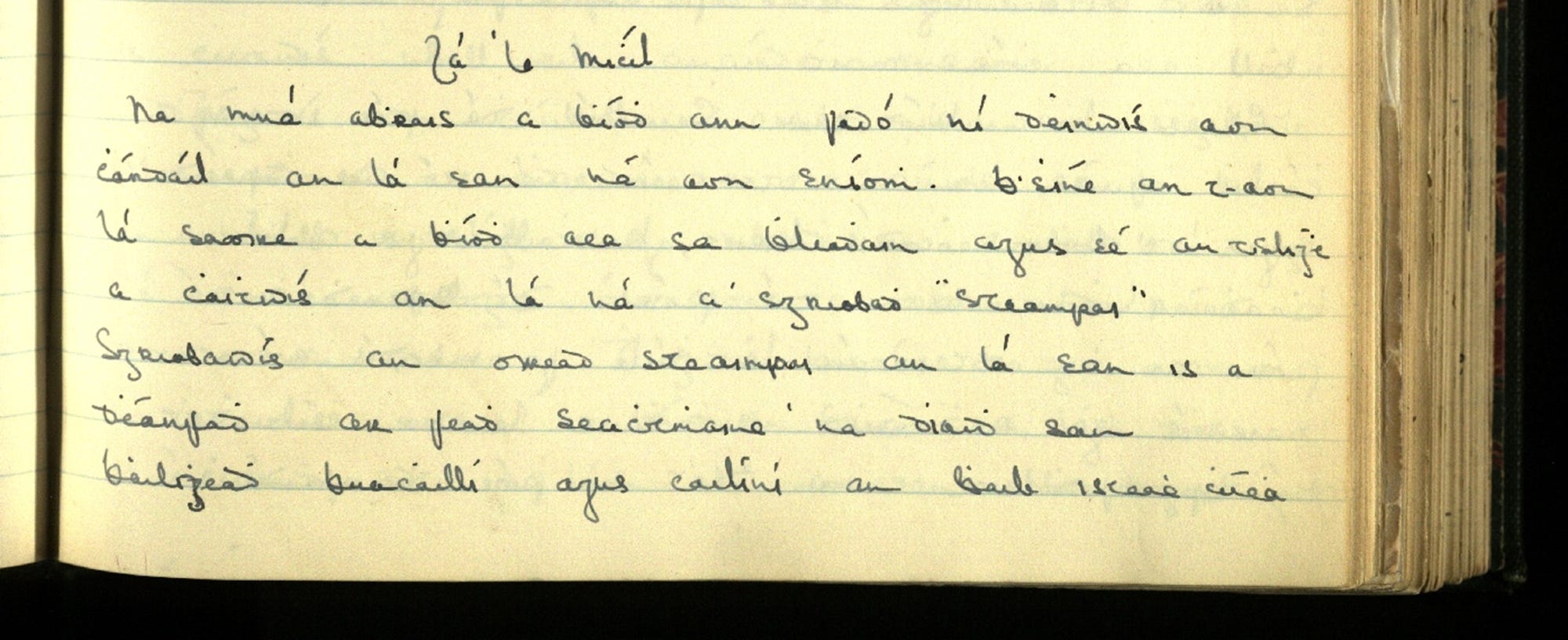
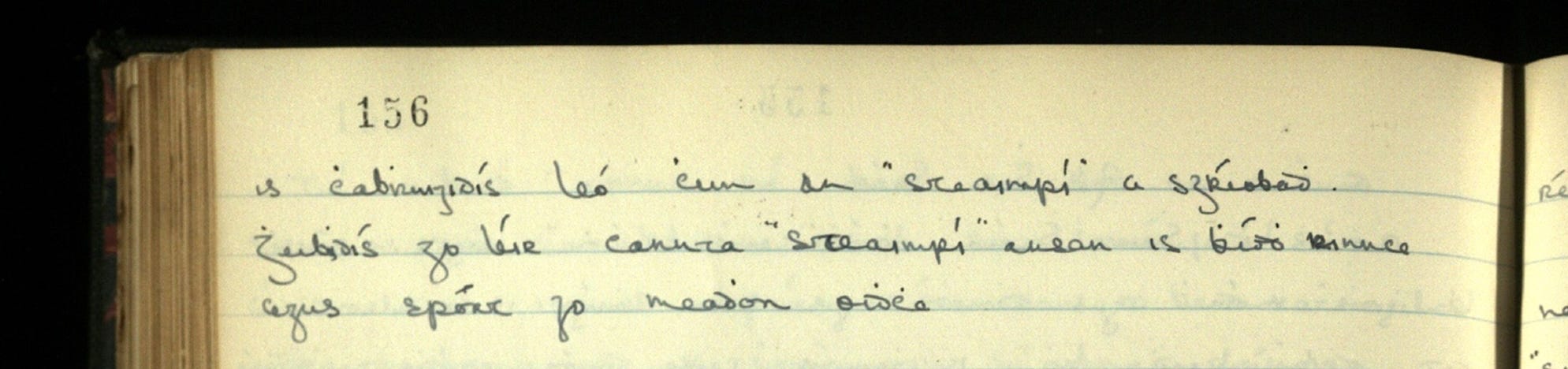
Cóṁ-noċt an ḃFoġṁair - Lá ‘le Miċíl September
The Philosophical Triads
Soṁnaiṫe, g. id., f., teachableness (Triads)
Soṁnaṫ, -naiṫe, a., teachable (Triads); sm. a teachable person ;
is saoi gaċ soṁnaṫ, he who can be taught is a scholar.
That is the 'gospel' according to Sir Frazer. According to the native Irish law-texts, there are few rituals described, and it is therefore difficult to comment either way on Sir Frazer's conclusions as to the intelligence, or lack thereof, of the Gaelic heathens still, in the late 1800s, practicing their ancient rituals. There are, however, in the native law, texts that stretch back about 1,500 years, containing treatises on the structure of the poets' training and payment rates, students' primers, extensive grammatical texts, philosophical triads, historical annals and mythology. These have been covered in detail elsewhere so, aside from including more from the philosophical triads here at a later date, I will deal with two aspects of the Irish manuscript tradition that touch on magic, that is The Irish Zodiac, and the Three things required of a poet,
The Irish Zodiac
“Asarlaide – g. id., pl., -ḋṫe, m. an astrologer, a magician, a conjurer (prop. astrolaiḋeaċt)
Asarlaiḋeaċt, -a, f. (prop. astrolaiḋeaċt), astrology, magic, divination by herbs, intoxication ;
tá asarlaiḋeaċt ag na daoiniḃ a ḃíonns ag cruinniuġaḋ luibeanna l'aġaiḋ leiġis,
the people who collect herbs for curing purposes practice divination (Aran).”
p.62, Dinneen, 1927
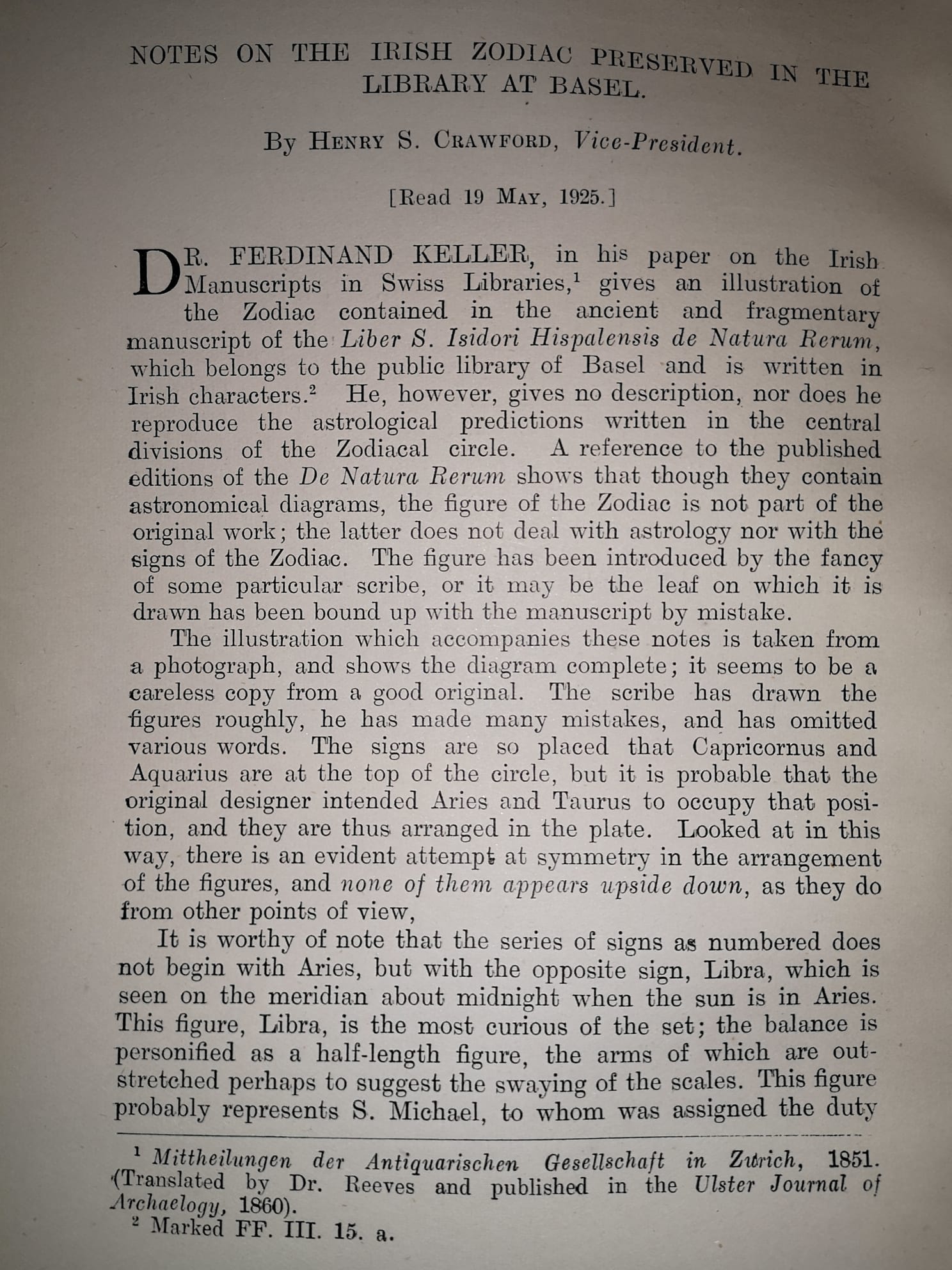
In the 31 December 1925 issue of The Journal of the Royal Society of Antiquaries of Ireland there appears an article by H. S. Crawford, the Vice-President, called Notes on the Irish Zodiac preserved in the Library at Basel. It contains a description of a Zodiac written in Irish characters in Switzerland. It goes through the signs, and says at one point:
It is pleasant to see that the results are mostly fortunate, and that those born under no less than nine of the signs may expect to be healthy or long-lived.
The article is reproduced here in full:
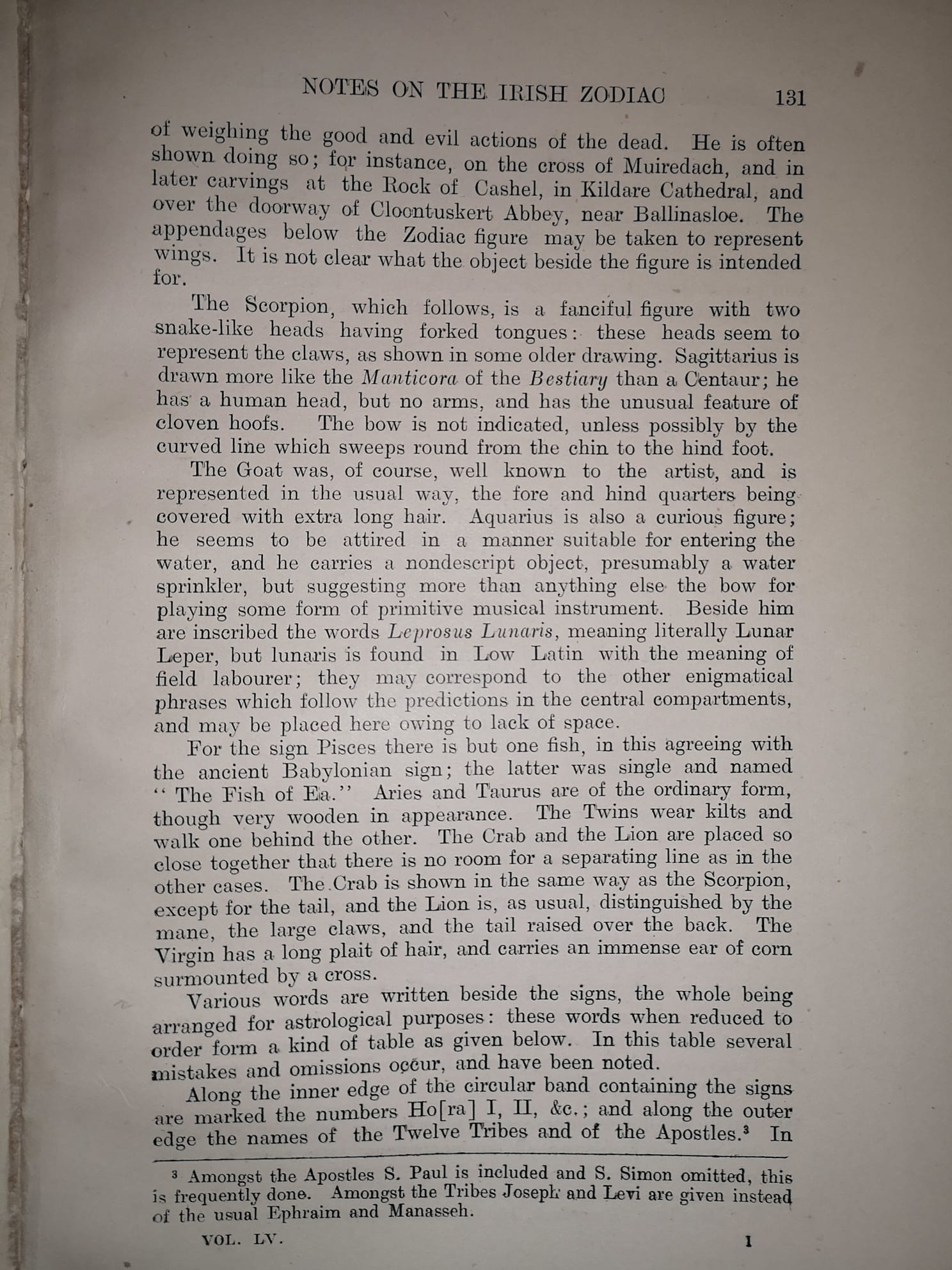
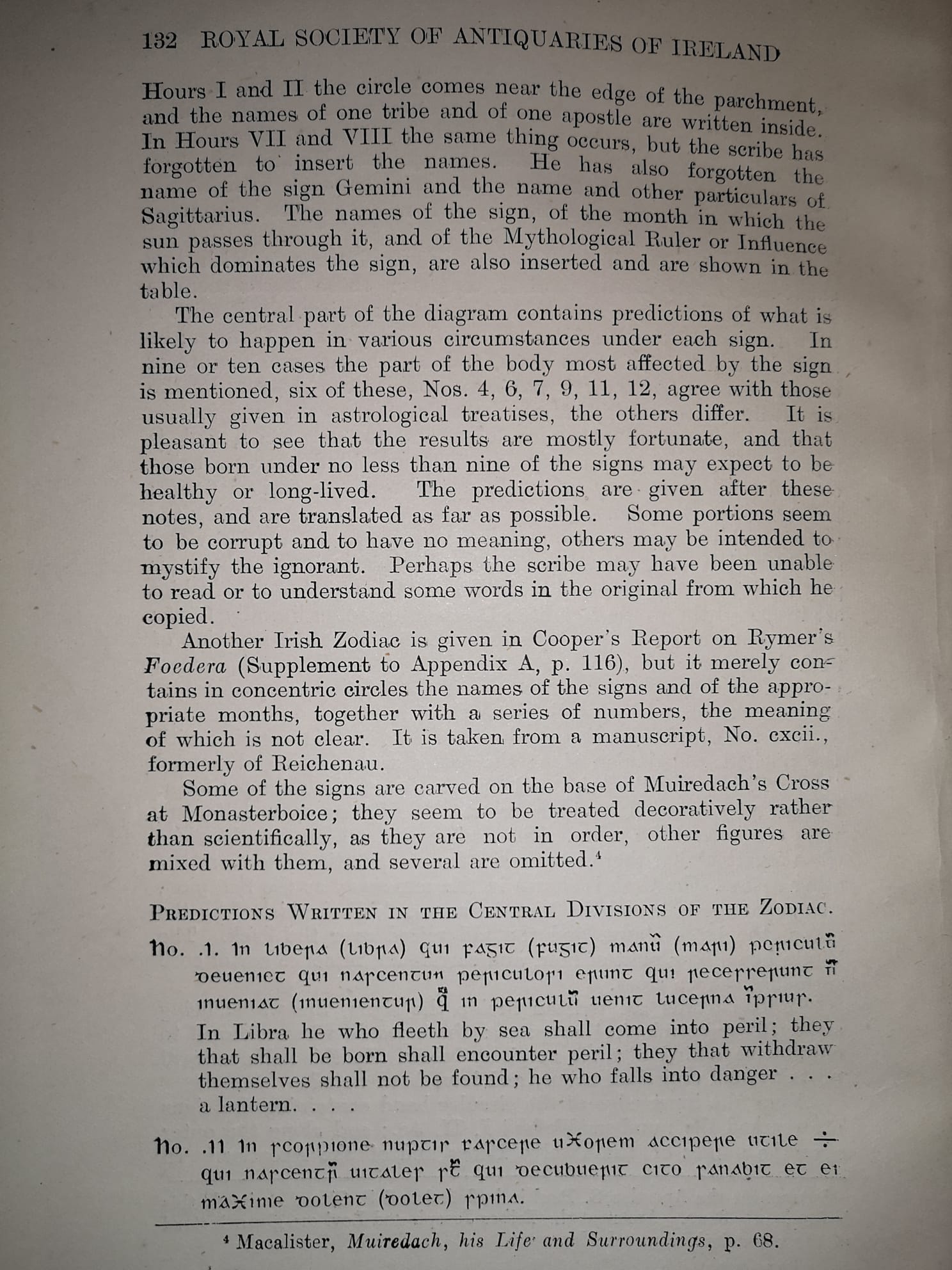
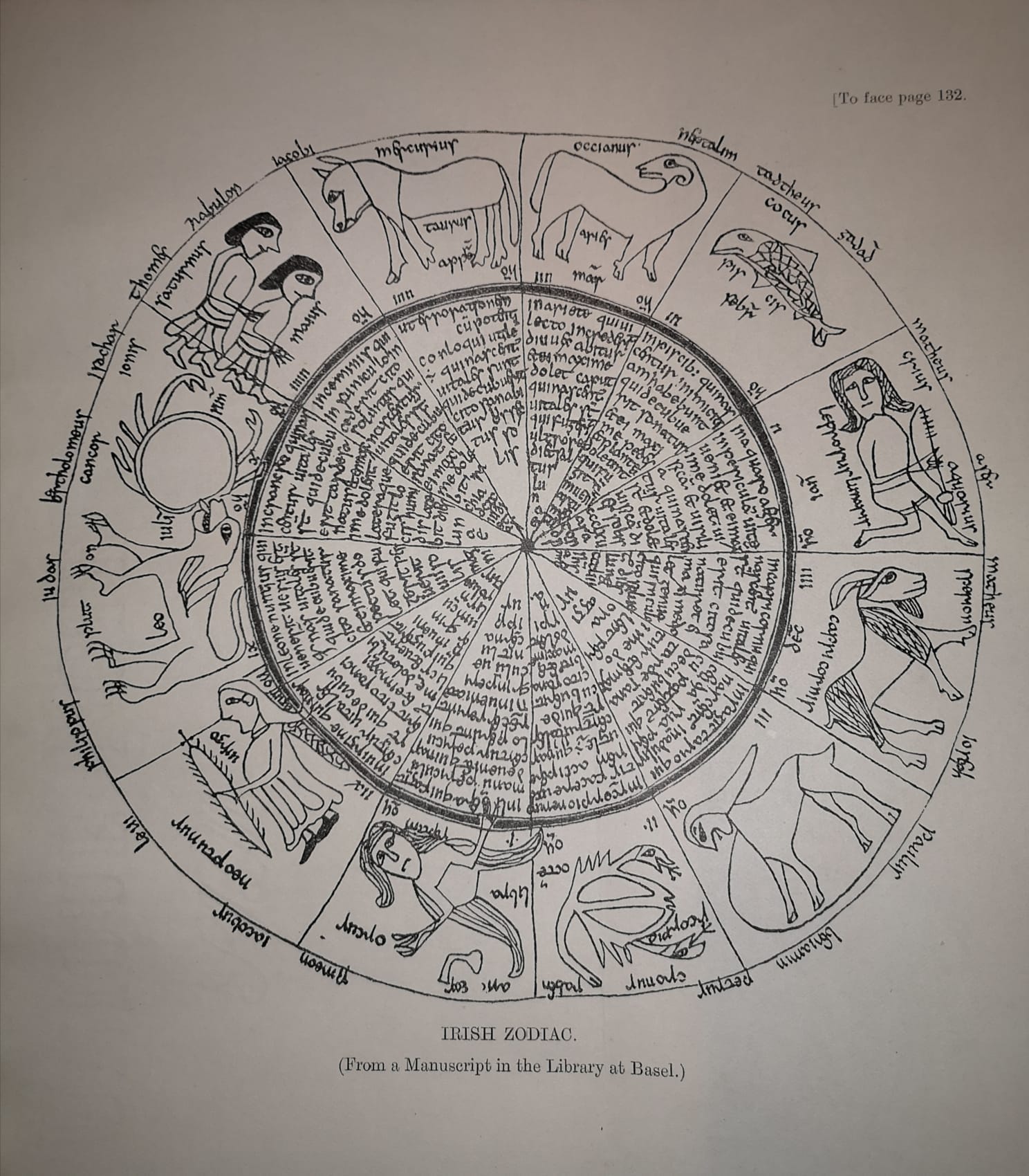
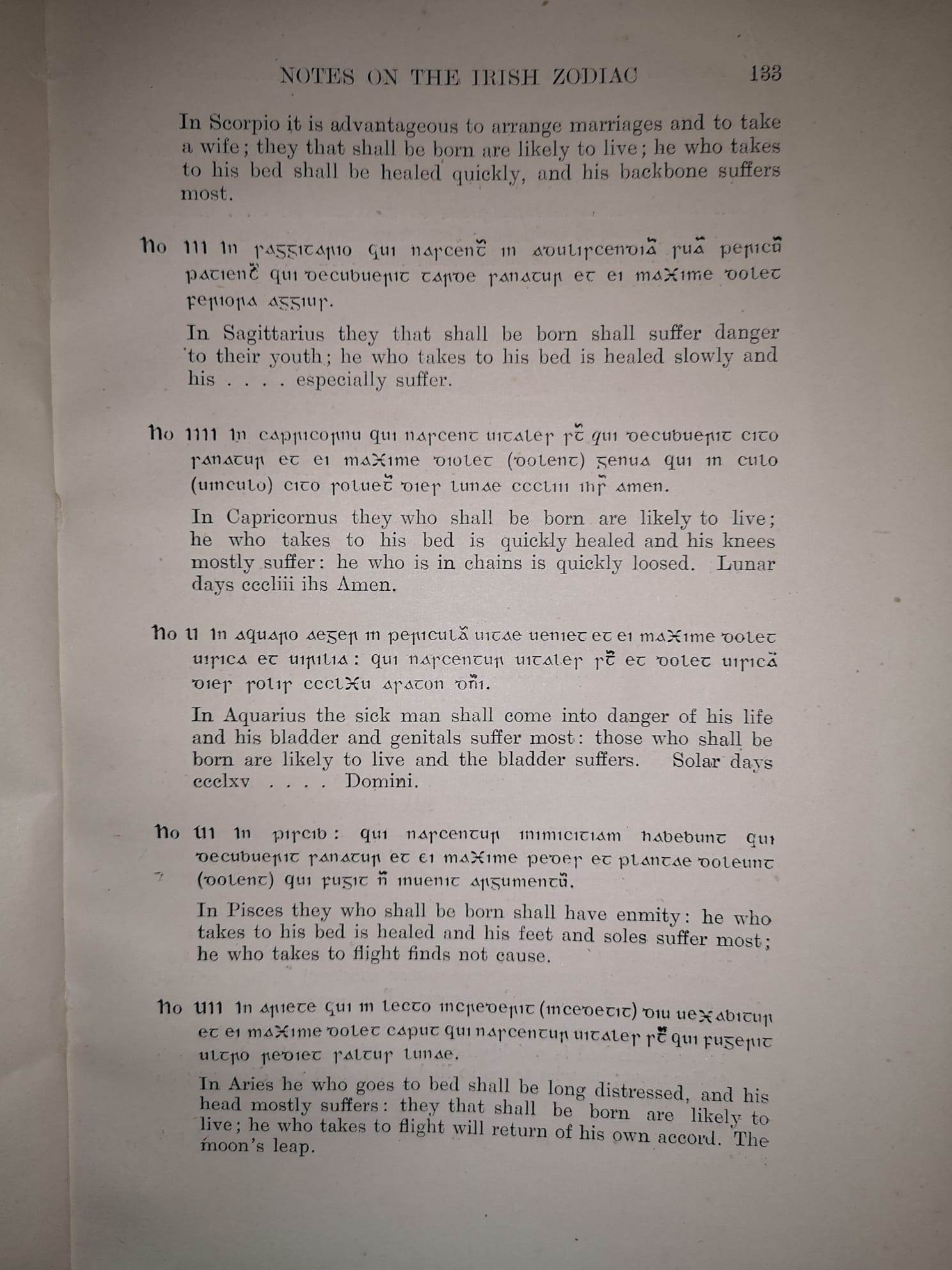
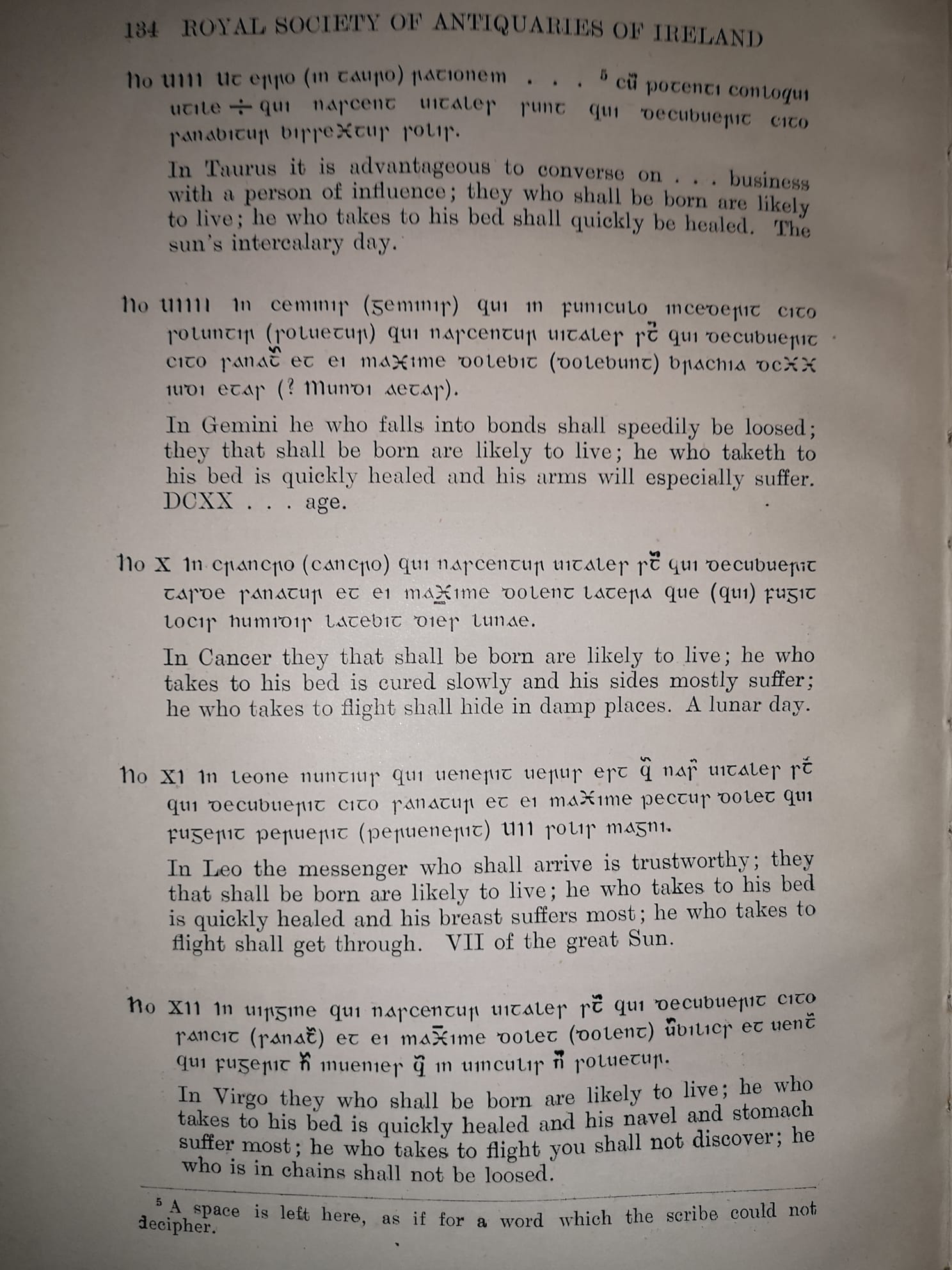
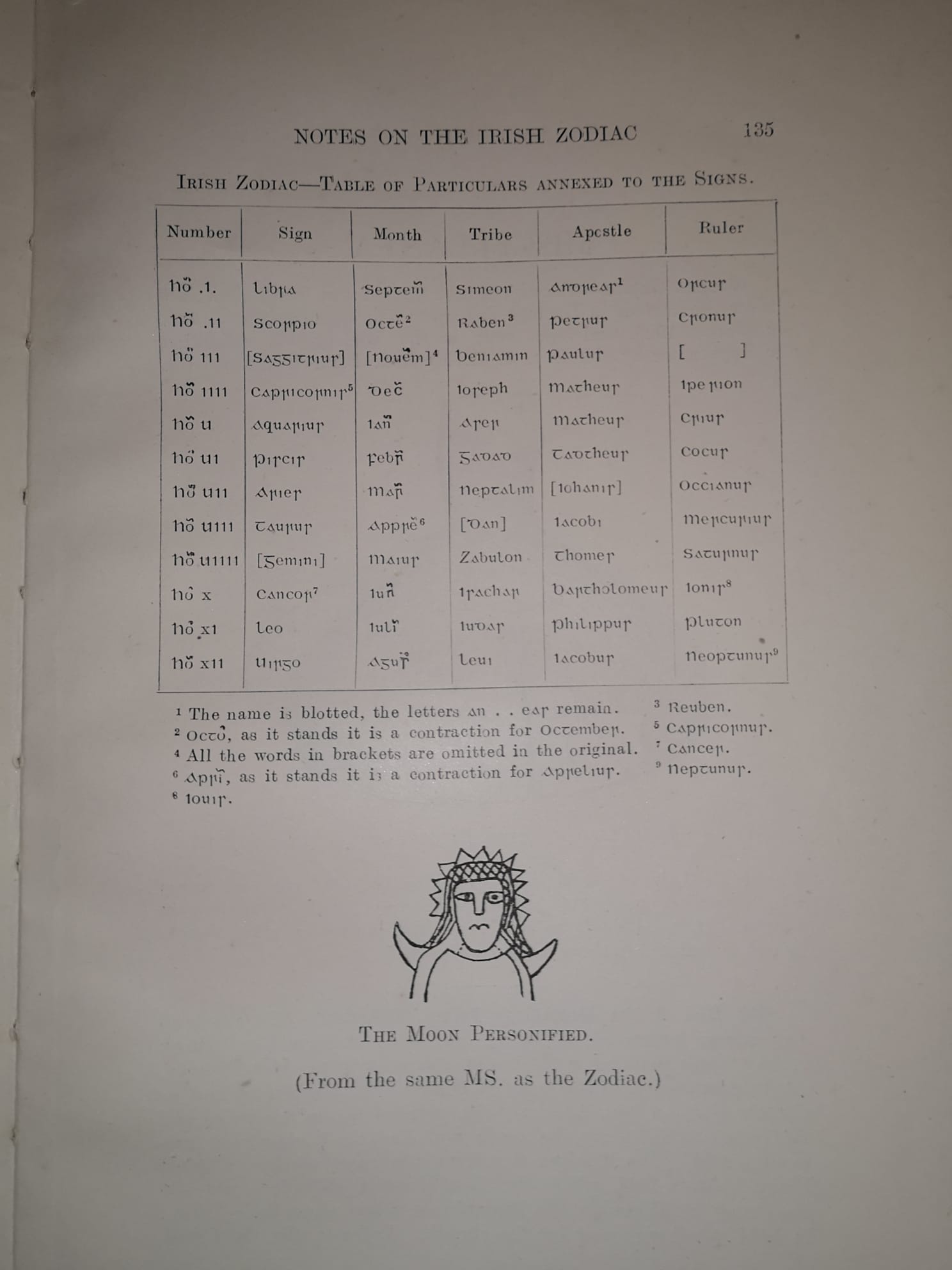
Hallucinogenic Heritage
The 'by mouth' elements or motifs in the ritual of Imbas Forosnai (the edible “sun-bubble”/iomas gréine which grants the gift of poesy, the 'chewing of flesh'), as well as the motifs of dreams, apparitions and druidical visions in the aisling, also feature in an instance of Teinm Laedo: Fionn MacCuṁail burns his thumb on the Salmon of Knowledge being cooked by Finn Éices, instinctively puts his thumb in his mouth and sucks it to cool it and is immediately imbued with all the knowledge of the world.
Not only did the word fili itself originally mean seer, while its synonym aegis, going back to a different root, originally meant one who sees within, but the possession of imbus feronzi, the clairvoyant faculty already mentioned, was held to be a requisite for the highest rank of fili, and imbus ferusme belonged unequivocally to the native supernatural.
Thus, one Old Irish treatise on the nature of poetic inspiration, while speaking of the inspiration that comes from the Holy Spirit, derives imbus by contrast from the siḋe, the hollow hills, which, as already mentioned, were the dwellings of the spirits of the land. Against this background, it's not hard to see why mantic practices linked with the Filiḋs should have had a place in literature, while other sorts of magic, although leaving traces in the laws and elsewhere, should not have been regarded as appropriate elements for stories. (Carey, 2021)
These motifs could be compared to ancient beliefs of expulsion from the Garden of Eden for eating the fruit of the tree of the knowledge of good and evil, as well as to the modern hypothesis put forward by acclaimed linguistics scholar involved in the translation of the Dead Sea Scrolls John M. Allegro in his controversial book 'The Sacred Mushroom and the Cross', wherein he asserts that Christian texts are the writings of an arcane religious sect in first-century Roman Levant whose sacrament included psychoactive mushrooms. This hypothesis is furthered in a book called 'The Immortality Key' by Brian C. Murarescu, where he investigates residue on the inside of ancient Mediterranean amphorae and ware for chemical traces of the consumption of psychoactive herbal wine at festivals/rituals like the Eleusinian Mysteries at sites like Minoan-Canaanite66 Tel Kabri in Israel and Phoenician Iberia. The opening page reads:
Αν πεθάνεις πριν πεθάνεις, δεν θα πεθάνεις οτάν πεθάνεις67
which means
“If you die before you die, you won't die when you die.”
A lecturer in Modern Irish at University College Cork, Tomás L. Ó Murchú, published a paper called “An Sáspan Dubh agus Deocha Seirce Eile (The Black Saucepan and Other Love Potions)” that features in the 2025 edition of Old Moore’s Almanac. It describes the practice, up the late 19th century at least, of women making love potions with maingilín meidhreach (early purple orchid, Ochis Mascula) and míol na mbualtach (‘liberty cap’ or ‘magic’ mushroom, Psilocybe Semilanceata, “worm of the patties”).
This practice was not limited to women, though. A friend of mine, a Listowel native, told me that his grandmother once told him about a practice that used to happen at the céilí dances when she was young. The men would, on occasion, go over to ask the ladies to dance with these small mushrooms in their hand, and if you liked him, you could take them, and dance. She recounted to my friend how her parents weren’t at all happy that she had stayed out all night once as a consequence.
Stories of dancing fairies, fairy rings, water-horses, púcas, bean síḋes, changelings and phrases like “away with the fairies” has often conjured speculation of the usage of magic mushrooms in the spiritual and ritual life of pre-Christian Ireland. We are reminded of the stories of Siberian shamans living in the forests and Amanita Muscaria (Fly Agaric) being widely available. The story goes that the reindeer would consume the Fly Agaric, who was immune to its poisonous compounds, and excrete the psychedelic compound for consumption by the shamans. The colours of the amanita muscaria mushroom, as well as the association of Santa, magic, reindeer and snow seem to point to an indigenous psychoactive origin to some of our most popular modern myths.
As such, the preponderance of Psilocybe Semilanceata68 (Liberty Cap, or Phrygian Cap) near grass, cattle and sheep in Ireland, and across North-Western Europe69 in the weeks preceding and around Saṁain, Hallowe'en, raises the possibility that cultures from Listowel to Lithuania, and as far afield as Svalbard and Halifax, engaged in similar practices of the incorporation of psychoactive plants and fungi into religious and ritual activity. To this day their identification, collection, preparation and responsible, conscious, respectful consumption is still practiced by those who would. Personally, I have received numerous anecdotal reports of spiral-shaped hallucinations reminiscent of Neolithic art. 70
Indeed, according to Frazer, “the Huichol Indians of Mexico treat as a demi-god a species of cactus which throws the eater into a state of ecstasy.” pg. 23
That magic mushrooms in particular might have been used in a ritual and religious context should not surprise too many people any more given the use of psychoactive mushrooms in modern clinical settings. Psilocybin is now known to promote neurogenesis (growth of new brain/nerve cells) and is being used in the treatment of SSRI-resistant depression and PTSD. These psychoactives, psychedelics and entheogens like MDMA are, after many valuable decades wasted with their academic and social ostracisation, now becoming successful and effective adjuvants to psychological therapy. PTSD is particularly relevant to the Irish as it is now widely claimed that intergenerational trauma from the 'Famine' affects us still.
Carl Jung, the Hero's Journey & 'An t-Aon Scéal'
There is an interesting parallel to be drawn at this juncture from the work on the human subconscious undertaken by psychologist Carl Jung. He speaks about a primeval myth common to many cultures across the world known as “The Hero's Journey”.
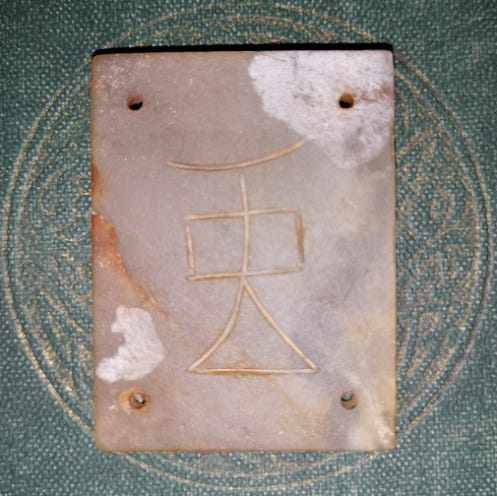
In it the hero is called to adventure. He refuses the call at first, but when asked again he accepts and embarks. He meets various characters and undergoes various trials and challenges in this journey until he confronted with his ultimate challenge, emerges victorious, wins the heart of the fair maiden and returns home from his quest with the spoils of his success. This has its counterpart in Irish and Scottish folklore in the story “an t-Aon Scéal”, “The One Story”.71 In this the hero is called to go on a quest for
An Claiḋeaḃ Solais, “The Sword of Light”. This could, of course, be the ultimate inspiration for the ‘lightsaber’ in the Star Wars saga.
In various versions of the story our hero encounters werewolves and helpful animals, in others the narratives follow a bridal-quest pattern, and in still others, the quest is believed to be for the 'truth [“an t-Aon Scéal”] about women' or the “secret about women”, similar to the quest of “What is it that women most desire?” in the Arthurian tale Arthur and Gorlagon.
This concept of a quest for An Claiḋeaḃ Solais, or the sword of light has its parallel in the Kabbalistic mystical concept of “the path of the flaming sword” 72, which represents a journey from the Divine at the top of the 'Tree of Life', to the the physical plane at the bottom. An Cúiġeaḋ hAlt: Caiṫ Béaloideas below will give a broader exploratory treatment of the mythologlical correspondences, and the task of creating syncretic spiritual tools from Irish mythology and Kabbalah.
This obsession with words of the magicians and poets of Ireland and abroad is further explored in the next section
Dreams, the 'Evil Eye' & ‘Supernatural Heredity’ in Ireland
The 'Evil Eye' is a trope that is quite famous in the Mediterranean. It is primarily associated with the Minoan, Greek and Roman73 cultures, and pendants and key-rings are still sold there today as magical amulets to ward against bad luck.
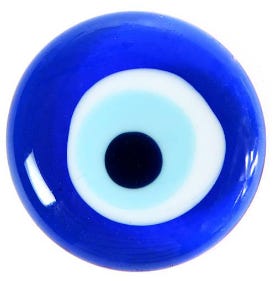
In Greece it is believed that the 'evil eye' can strike at any moment and that is can be caused by someone else's jealousy or ill-will towards them. This is the exact same belief in Ireland. Dinneen’s dictionary lists in the ‘Additions and Corrections’ section, page 1338 : “Súil (eye), add. : súil ḟiata, evil eye (Connacht)”. Moreover, it is believed here that the ability to cast the evil eye runs in families. This idea of 'supernatural heredity' is furthered by accounts of people, often apparently through the maternal line, experiencing vivid dreams, lucid dreams and even prophetic dreams. As difficult as it might be to believe, I have heard several anecdotal reports of people having dreams, only for them to match, detail for detail with secret events past or events in the future.
On an island as mythologically and magically rich as Ireland, with a language and culture that allows so much space for the conscious integration of the unconscious, and with an ancient reputation for a steadfast dedication to enlightenment, it would be remiss of us not to seize the opportunity to interact with our collective unconscious on and in our own terms.
An Ancient Religious and Ritual Vocabulary
Myles Dillon, in his book Celts and Aryans mentions a 'religious and ritual vocabulary'. He says that:
“Kretschmer long ago showed that Indo-Iranian and Italo-Celtic were linked together by a group of words peculiar to them, and Vendryes later explained some of them as belonging to a religious and ritual vocabulary which had been preserved by the brahmans in India and by the fiamens and druids in Italy and Gaul. The words in question are:
Skr. ṡraddadhaáti 'believes' : Lat. credo, Ir. cretim ;
Pahlavi parast 'devotee' : Ir. iress ' faith' (<*pare-sthá-);
Avestic yaoṡ 'pure' : Lat. iustus, Ir. uisse 'just' ;
Skr. vísrambhate' 'trust, confidence': Ir. crábur 'devotion' ;
Skr. ráh 'gift, treasure' : Ir. rath (W. rhad) ;
Skr. rát 'king' : Lat. rex, Ir. rí ;
Skr. aryah 'Aryan' : Ir. aire 'freeman' :
O.P. naiba 'beautiful, good' : Ir. noeb 'holy' ;
Skr. pibati 'drinks' : Lat. bibo, Ir. ibim ;
Skr. inddhé 'he kindles' : Ir. -andaim ;
Skr. mindá 'physical defect' : Lat. mendum, mendá 'blemish' : Ir. mend 'stammering', and a few others.
It has since become clear that there is a much wider measure of affinity between Celtic and Indo-Iranian than Vendreys perceived; and the list of common words has been extended:
Skr. badhirá- 'deaf' : Ir. bodar, W. byddar ;
Skr. dós- (gen. dosnáh) 'fore-arm' : Ir. doe (gen. doat) ;
Skr. druh- 'evil spirit', Av. druj : Ir. droch- 'bad' ;
Skr. vasati 'dwells'74 : Ir. foaid 'spends the night' ;
Skr. sasya 'corn' : G [s]asia 'barley' ;
Skr. Sindhu : Ir. Sinnae (gen. Sinann) 'Shannon'
Av. sru- 'horn, nail' : Ir. crú 'hoof' ;
Skr. tan f. 'time, while' : Ir. tan f.”
Dillon has more to say about the antiquity of the Irish language compared to Vedic. He says:
“That is to say that Irish is more conservative [in certain aspects of grammar] even than Vedic. .. .
Even if the Irish system were not the original system, the preservation of the old unmarked ('injunctive') form as a normal part of the present tense would be a strong link between Old Irish and the oldest parts of the Veda. And Irish has preserved this proto-Indo-European form as an integral part of the paradigm, whereas in Vedic it is already only a vestigial survival.
There are a few details of verbal inflexion which show exact correspondence between Irish (or Welsh) and Sanskrit : -ánac 'I reached' is identical with Sanskrit perf. sg. 1 ánamṡá 'I attained'.” 75 76
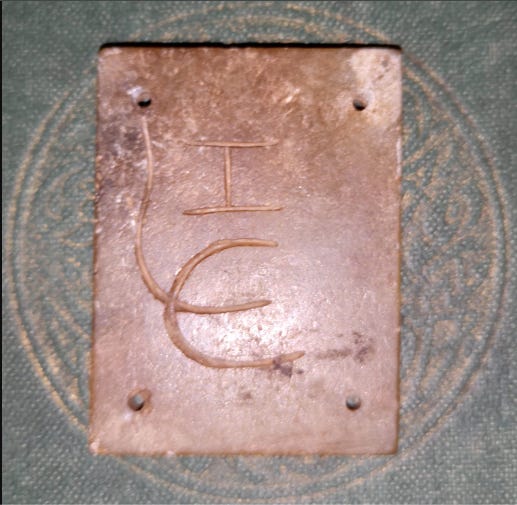
What we have here is a common vocabulary, similar, it seems, to the likes of what one would expect in a common trade. It raises the question of what, in the Bronze Age, territories as far removed as Ireland and the Levant, and indeed India and Iran, could have had in common.
Skr. Sanskrit
Lat. Latin
Ir. Old Irish
W. Welsh
Av. Avestic
O.P. Old Persian
G. Gothic (?)
Celto-Semitic discussions in academia
There have been many discussions about possible connections between the Hebrew/Semitic world and the Celtic world. There is the famous quest by the British Israelites for the Ark of the Covenant that led them to desecrate the royal site of Tara with their misguided excavations. However, conversations in scholars' cloisters surrounding the many curious and inexplicable linguistic correspondences between Semitic languages and Celtic languages have been revived in recent decades by some well-respected academics in the field.
Steve Hewitt, in his article 'The Question of a Hamito-Semitic Substratum in Insular Celtic' from the 2016 publication by John T Coch and Barry Cunliffe 'Celtic from the West 3', gives an informative history and overview of the Celto-Semitic linguistics conversation that is over 400 years old.
From Davies in 1621 who noted a number of similarities between Welsh and Hebrew, to an interesting 1818 essay by Lieut.-Col. Charles Vallancey, LLD called 'An Essay on the Antiquity of the Irish language; being a collation of the Irish with the Punic language. With a Preface proving Ireland to be the Thule77 of the Ancients', to John Rhys' suggestion in 1877 of a pre-Indo-European stratum in Goidelic and Brythonic, to Morris Jones in 1900 who laid out surprising resemblances between Welsh and Egyptian syntax.
Then Pokorny from 1927 to 1930 compiled a “discursive text with numerous examples”, reduced to 64 shared linguistics features by Venneman in 2002. This list of shared features was reduced to 20 by Pokorny in 1959, which table is included in Hewitt's article, and in the Appendix.
Wagner in 1959 deals with Celtic, Berber, Basque, English, and French together as a “North African-Western European linguistic stratum”. He says: “The linguistic structure of Insular Celtic compels me to assume that, long before the arrival of Celtic or Belgic tribes, these islands were populated by people, who spoke languages or dialects which, from the point of view of E. Lewy's typology could be described as Hamito-Semitic, languages not necessarily connected with but of a similar type as Berber and Egyptian and, somewhat more distantly, Hebrew and Arabic.”78
Hewitt published in 1985 in French on the structural resemblances in Breton and Arabic, some examples he gives of which are reproduced below. Gensler in his 1993 paper 'A typological evaluation of Celtic/Hamito-Semitic syntactic parallels' analyses 12 Insular Celtic or Hamito-Semitic (CHS) with a random sample of 58 other global languages and produces a set of “'exotic' structural features” shared by the CHS group but which are uncommon in world languages. He assigns scores to features in all 70 languages and comes to the conclusion that:
“Celtic is radically out of place in a European landscape, whereas the Hamito-Semitic languages simply intensify a structural trend seen over much of Africa. A weak CHS type, then, would appear to have a natural home in Africa, in particular Northwest Africa. Within Afroasiatic, the highest-scoring languages are on the Mediterranean; scores fall away in every direction. The diachronic evidence, too, argues that the (weak) CHS type is something quite old in Africa: the African and Arabian case studies all show stronger CHS-ness further back in time. All this, in conjunction with the blood-type agreement between the British Isles and Northwest Africa, argues for some sort of prehistoric scenario specifically linking these two regions.”79
In concluding his critique of Gensler's paper, Hewitt says:
“Nevertheless, with his thorough analysis and the sheer wealth of linguistic evidence he has marshalled, Gensler has certainly put the Hamito-Semitic substratum hypothesis back on the map; all authors on the subject will henceforth need to take due account of his arguments.”80
In 2000 Jongeling compared Welsh and Hebrew in what Hewitt describes as “an excellent, lengthy introduction to the history of the subject.” He surveys various features and articulates clearly the idea that
“Western Europe and Northern Africa once formed one great contiguous VSO [Verb-Subject-Object] area. This area was spilt by the incoming Indo-Europeans. The proportion of Indo-Europeans on the continent was so great that any influence of a pre-existing language was blotted out, while the number of pre-Indo-European inhabitants on the British Isles was such that their influence there was felt long after they were gone from memory.”
Vennemann's view in 2001 was that “the case was closed”, and that, “as Gensler has shown” the CHS thesis is “one of the most reliably established pieces of scientific knowledge there is in any empirical discipline.”81
On the following page are some examples given by Hewitt in his paper, including translations into Irish. They demonstrate different examples of shared features between Celtic and Hamito-Semitic languages.
VSO [Verb-Subject-Object] word order
This refers to the order in which words come in a sentence.
(A well known example is the order of words used by the character Yoda in Star Wars.)
Breton
e skrivas Yann ul lizher
AFF wrote John a82 letter
Arabic
kataba Yahya risála
wrote John letter
Irish
do- scɼíoḃ Seaġán litiɼ
Genitive Construction
('Construct State', [HEAD [THE-DEPENDENT]])
This refers to the way you could say “the house of the king” instead of “the king's house”.
Breton
ti ar roue
house [of] the king
tiġ an ɼiġ
Arabic
bait al- malik
(bét ham-melek, Hebrew, pg.416 CFTW3)
house [of] the king
boṫ 83 an ṁullaiġ 84; mol, molc, mulċán85
Predicative particle:
This is the form seen in Irish to describe occupations:
he is in his farmer.
This features especially in Welsh and Egyptian, has limited appearance in Breton, and is “marginal” in Arabic and Hebrew.
Prepositional periphrastic:
This is the form used to describe an activity, a practice, etc.:
he is at singing.
This feature appears in the insular Celtic languages and the Egyptian language.
Circumstantial clause (subordinating and)
This feature refers to the use of the word 'and' in places where 'when', 'while' or 'as' would be used in English: he saw me and I coming out.
This is typical of both Insular Celtic and Hamito-Semitic, featuring in Irish, Welsh, Breton, Arabic, Hebrew, Egyptian and Berber. In Berber it is possibly borrowed from Arabic.
More include “idiomatic genitive kingship constructions: son of X” in all above mentioned except Egyptian ; the distinction we have in Irish between is/tá is echoed in Breton, Egyptian and Berber ; “states/relations expression” in the form “Tá scilling agam oɼt, There is a shilling at me on you” is found in all of the above ; the Old Irish 'infixed pronoun' -d- is identical in Berber ;
and the 'prepositional relative: fronting of bare preposition - the bed in I slept – which is found in Irish and Berber alone.
One can see why heated debate has swirled around this issue for over 400 years: the evidence for the CHS hypothesis is fairly comprehensive and compelling, the circumstances under which this could have happened remain elusive and the implications of their discovery ominously unknown.
Ancient Celto-Levantine tin trade
It has been discovered in the last decade that one of primary sources of tin, a rare and essential element in the production of bronze, for the Aegean and the Levant before the Bronze Age collapse, around the year 1,300 - 1,200 BC, was Cornwall. This discovery throws into instability the previous assertion that all the tin required for bronze around the Mediterranean came from the Middle East, and that economic trade links between the proto-Classical Celts and the proto-Classical Aegeans and Semites were non-existent. Berger et al. (2019) explains:
“The origin of the tin used for the production of bronze in the Eurasian Bronze Age is still one of the mysteries in prehistoric archaeology. In the past, numerous studies were carried out on archaeological bronze and tin objects with the aim of determining the sources of tin, but all failed to find suitable fingerprints. In this paper we investigate a set of 27 tin ingots from well-known sites in the eastern Mediterranean Sea (Mochlos, Uluburun, Hishuley Carmel, Kfar Samir south, Haifa) that had been the subject of previous archaeological and archaeometallurgical research. By using a combined approach of tin and lead isotopes together with trace elements it is possible to narrow down the potential sources of tin for the first time.”
Their analysis leads them further to conclude that:
“Cornish tin mines are the most likely suppliers for the 13th–12th centuries tin ingots from Israel. Even though a different provenance seems to be suggested for the tin from Mochlos and Uluburun by the actual data, these findings are of great importance for the archaeological interpretation of the trade routes and the circulation of tin during the Late Bronze Age. They demonstrate that the trade networks between the eastern Mediterranean and some place in the east that are assumed for the first half of the 2nd millennium BCE (as indicated by textual evidence from Kültepe/Kaneš and Mari) did not exist in the same way towards the last quarter of the millennium.”
The authors say that the tin from the Israeli ingots likely came from the same deposit in Cornwall or Devon and that:
“Given this and the proximity of the sites, it even seems possible that the suspected ships belonged to a fleet that sank for example during a single storm event”86
To put this into a bit more context I have included a comparative historical timeline of the two regions in the next section. The paper above is highlighted in yellow. It gives reference to historical events from about 100 years before to about 500 years after this “single storm event” of the sinking of a fleet of ships bearing Celtic tin off the Levantine coast in the late second millennium.
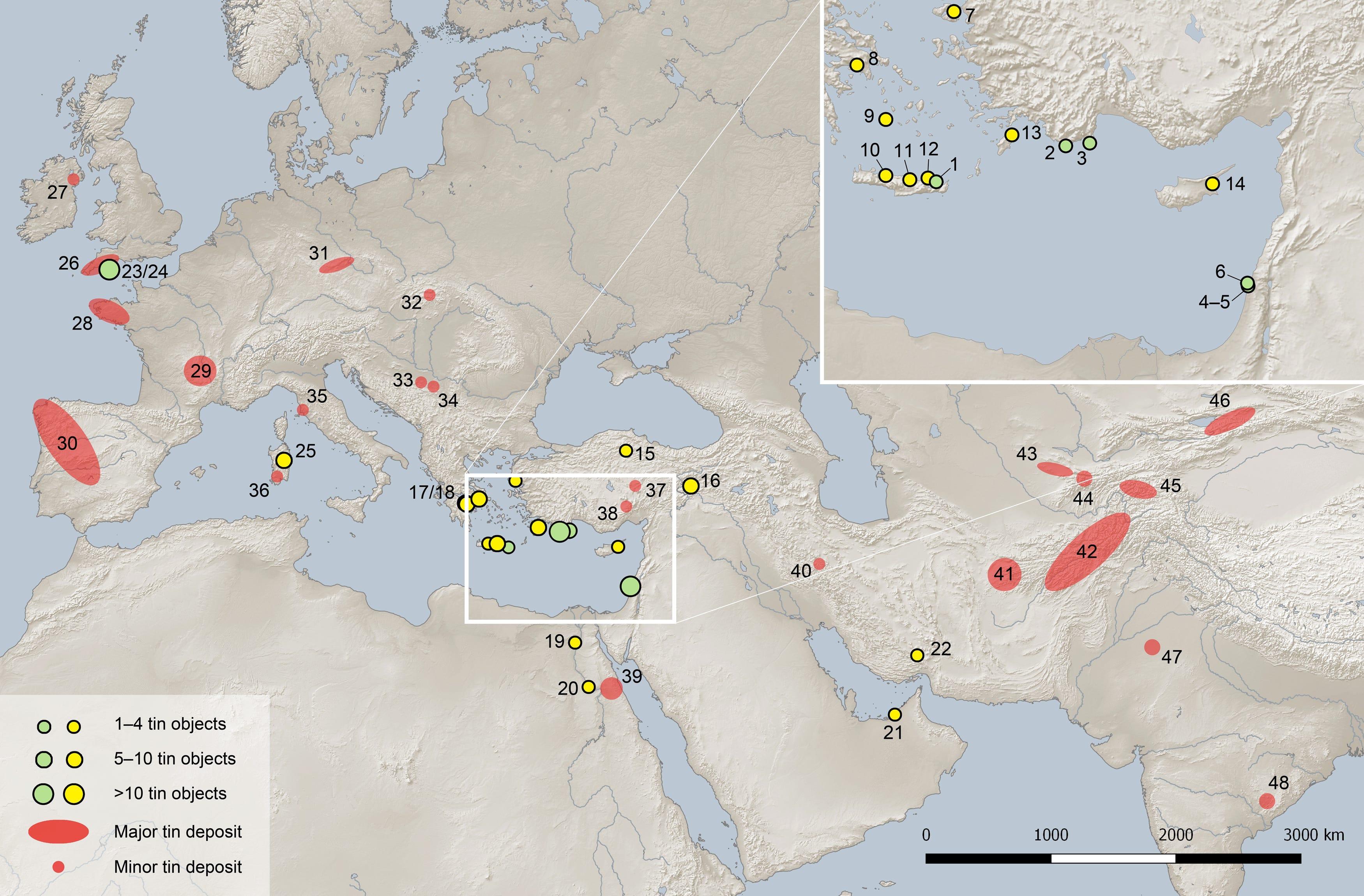
Fig 1. Map of Eurasia showing the locations of the tin ingots mentioned in the text (green dots), other tin objects in the eastern Mediterranean and the Near East before 1000 BCE (yellow dots) and major and minor tin deposits.
1: Mochlos (Crete), Greece, 2: Uluburun, Turkey, 3: Gelidonya, Turkey, 4: Hishuley Carmel, Israel, 5: Kfar Samir south, Israel, 6: Haifa, Israel, 7: Thermi (Lesbos), Greece, 8: Athens, Greece, 9: Phylakopi (Milos), Greece, 10: Rethymno (Crete), Greece, 11: Knossos (Crete), Greece, 12: Kalydon (Crete), Greece, 13: Ialysos (Rhodos), Greece, 14: Salamis (Cyprus), Turkey, 15: Alaca Höyük, Turkey, 16: Tülintepe, Turkey, 17: Mycenae, Greece, 18: Dendra, Greece, 19: Abydos, Egypt, 20: Gurob, Egypt, 21: Tell Abraq, United Arab Emirates, 22: Tepe Yahya, Iran, 23: Salcombe, United Kingdom, 24: Erme Estuary, United Kingdom, 25: S’Arcu e is Forros, Sardinia, Italy, 26: Cornwall/Devon, United Kingdom, 27: Mourne Mountains, Down County, North Ireland (United Kingdom), 28: Brittany, France, 29: Massif Central, France, 30: North Portugal/Spain, 31: Erzgebirge province with the Bohemian-Saxon Erzgebirge, Vogtland, Fichtelgebirge, Kaiserwald (Slavkovský les), 32: Slovak Ore Mountains, Slovak Republic, 33: Mt. Cer, Serbia, 34: Mt. Bukulja, Serbia, 35: Monte Valerio, Italy, 36: Sardinia, Italy, 37: Kestel, Turkey, 38: Hisarcık, Turkey, 39: Eastern Desert, Egypt, 40: Deh Hosein, Iran, 41: Western Afghanistan (Herat and Farah provinces), 42: Central/north-eastern Afghanistan (Hindu Kush), 43: Karnab/Lapas/Čangali (Zeravšan valley), Uzbekistan, 44: Mušiston/Takfon (Hissar Mountains), Tadzhikistan, 45: Pamir, Tadzhikistan, 46: Kyrgyzstan, 47: Tosham, Bhiwani district, India, 48: Bastar district/Koraput district, India, 49 (not on the map): Kazakhstan. Size of green and yellow symbols on the inset map do not correlate with number of objects as on the main map (map: D. Berger, C. Frank using Natural Earth geo data and QGIS Geographic Information System. QGIS Development Team, 2019. Open Source Geospatial Foundation. http://qgis.org). https://doi.org/10.1371/journal.pone.0218326.g001

Fig 4. Metal cargos of the alleged ships that wrecked offshore the Israeli coast.
(a) Tin ingots from Hishuley Carmel, part of them with Cypro-Minoan marks; numbering corresponds to the original sample designation in Table 3. (b) Three out of 30 tin ingots from Haifa with Cypro-Minoan inscriptions with their original label from the literature. Scale applies to all ingots on the figure (photos: E. Galili, Fig 4A modified and reprinted from [26] under a CC BY license, with permission from the International Journal of Nautical Archaeology, original copyright 2013). https://doi.org/10.1371/journal.pone.0218326.g004
This time period is known for the Trojan War of Homer (see Wilusa, i.e. Troy, top left of the map below), the fall of the Hittite Empire (Hatti, central Anatolia), the fall of Mycenaen Greece and for the activity of the Sea Peoples.
“A number of the tribes listed in the Egyptian inscriptions can be located in western Asia Minor, for instance the Lukka at the southwestern tip of Asia Minor – and this is indeed the area where the Sea Peoples’ ships were first sighted. In fact, there are numerous hints that the so-called Sea Peoples were a military alliance of western Anatolian petty states.”
[https://luwianstudies.org/the-sea-peoples-inscriptions-and-excavation-results/]
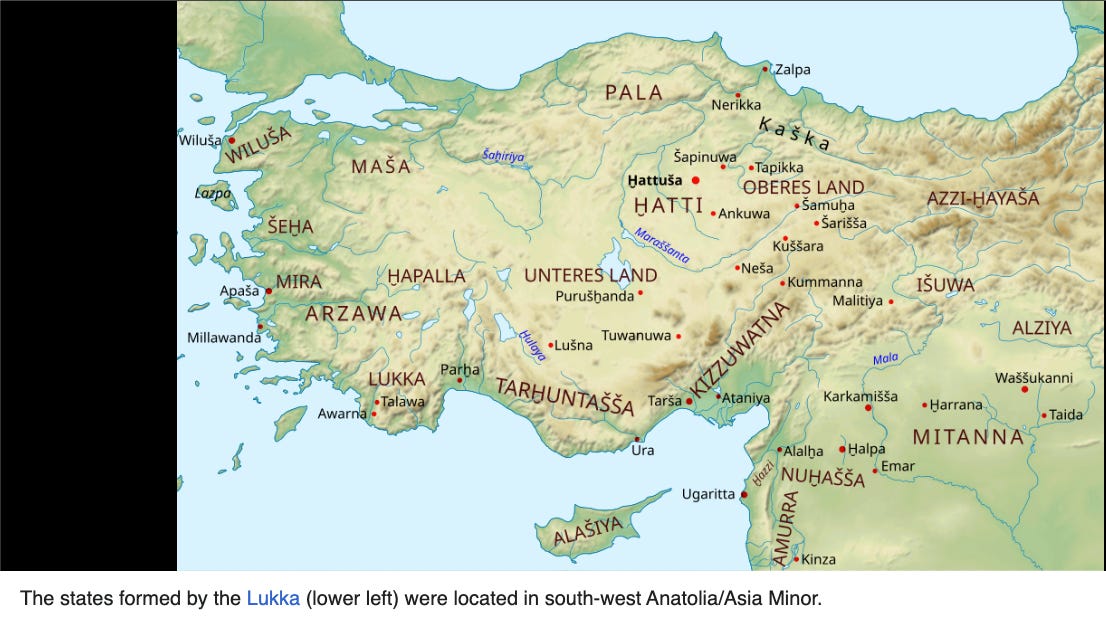
This is precisely the area that Celtic tin has been found on sunken ships, as seen in the above paper.
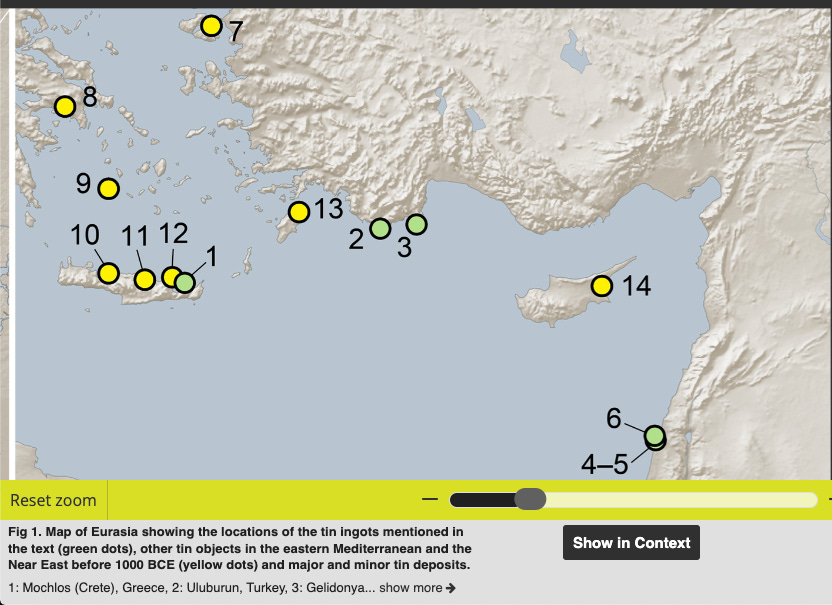
This indicates some ‘Insular Celtic’ trade or other involvement with the region, and the situation, at the time.
According to Warner et. al, in their 2010 Evidence for Early Bronze Age Tin and Gold Extraction in the Mourne Mountains, County Down, there is evidence of both gold and tin mining in Ireland as early as 2,500 BC.
This is interesting considering what Herodotus had to say about the islands in the north:
On this topic, Herodotus, the “Father of History/Lies”, wrote only the following:
Herodotus, Hist. 3.115.1–2 But concerning those in Europe that are the farthest away towards evening, I cannot speak with assurance; for I do not believe that there is a river called by foreigners Eridanus issuing into the northern sea, where our amber is said to come from, nor do I have any knowledge of Tin Islands
[Gk: Κασσιτερίδας, “Cassiterides”], where our tin is brought from… All we know is that our tin and amber come from the most distant parts.To add some context to Herodotus’ talk of “tin islands” it’s worth being aware that the above quote is followed by these two sentences:
Herodotus, Hist. 3.116.1: But in the north of Europe there is by far the most gold. In this matter again I cannot say with assurance how the gold is produced, but it is said that one-eyed men called Arimaspians steal it from griffins."
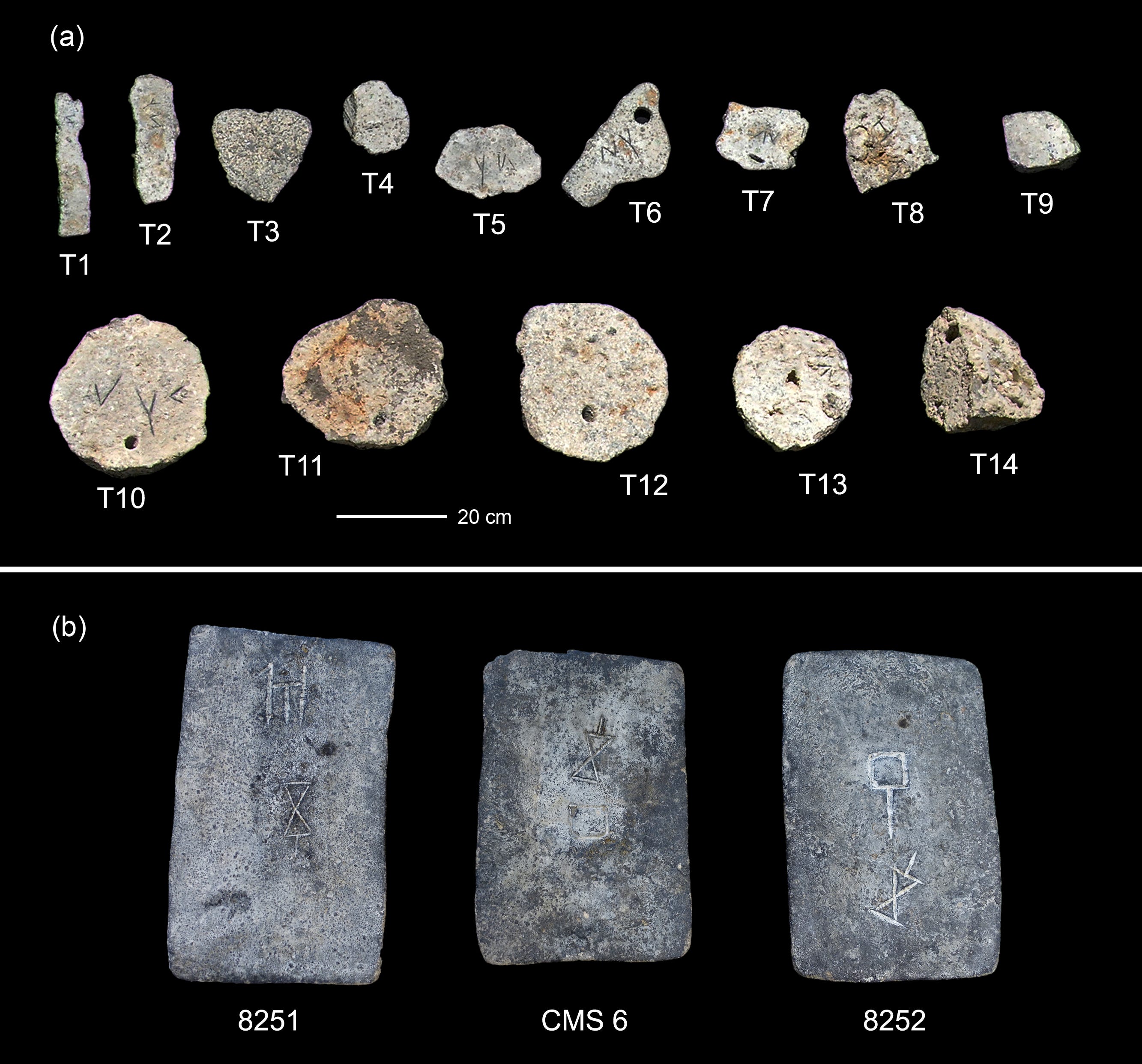
Fig 4. Metal cargos of the alleged ships that wrecked offshore the Israeli coast.
(a) Tin ingots from Hishuley Carmel, part of them with Cypro-Minoan marks; numbering corresponds to the original sample designation in Table 3.
(b) Three out of 30 tin ingots from Haifa with Cypro-Minoan inscriptions with their original label from the literature. Scale applies to all ingots on the figure (photos: E. Galili, Fig 4A modified and reprinted from [26] under a CC BY license, with permission from the International Journal of Nautical Archaeology, original copyright 2013). https://doi.org/10.1371/journal.pone.0218326.g004
Compare the markings on these tin inglots with the so-called “butterfly” motifs found on the architecture at the Ness of Brodgar. There are tantalising suggestions in there that evoke the “House of the Double-Axe” and the “Mistress of the Labyrinth” [‘bean an leasa’?] motifs in Minoan mythology. The Minoan/Canaanite, or Aegean/Levantine connection was well known at this point, with Minoan frescoes being found on Thera (the copper processing facility in Santorini, before the eruption in the mid-2nd millenium BC), Tel Dan and Tel Kabri.

The style, and seemingly the technical execution, of both sets of glyphs bear more than superficial similarities.
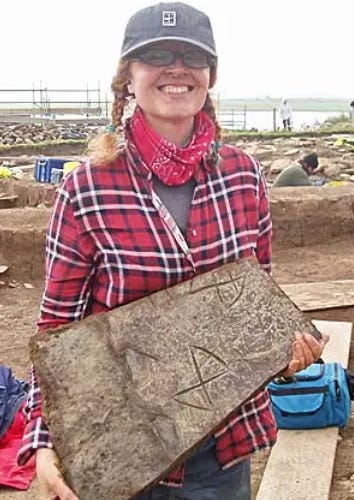
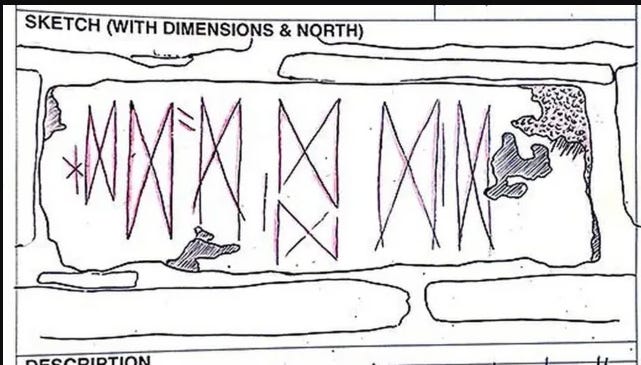
Image: https://www.bbc.com/news/uk-scotland-north-east-orkney-shetland-40653877
This stone was broken at the closure and burial of the complex, at which time, around 2,900 BC, a great feast was had, and scores of horses killed, shortly before an abrupt decline in activity in the ritual landscape that is the Orkneys and the Ness area, which seems to have been a centre of dynastic, aristocratic neolithic ritual activity for the West European Islands since at least the construction of Newgrange and Knowth c. 3,200 BC. At this time the construction of crannógs in the area ceases, until reoccupation of the Ornkeys again around 800 BC.
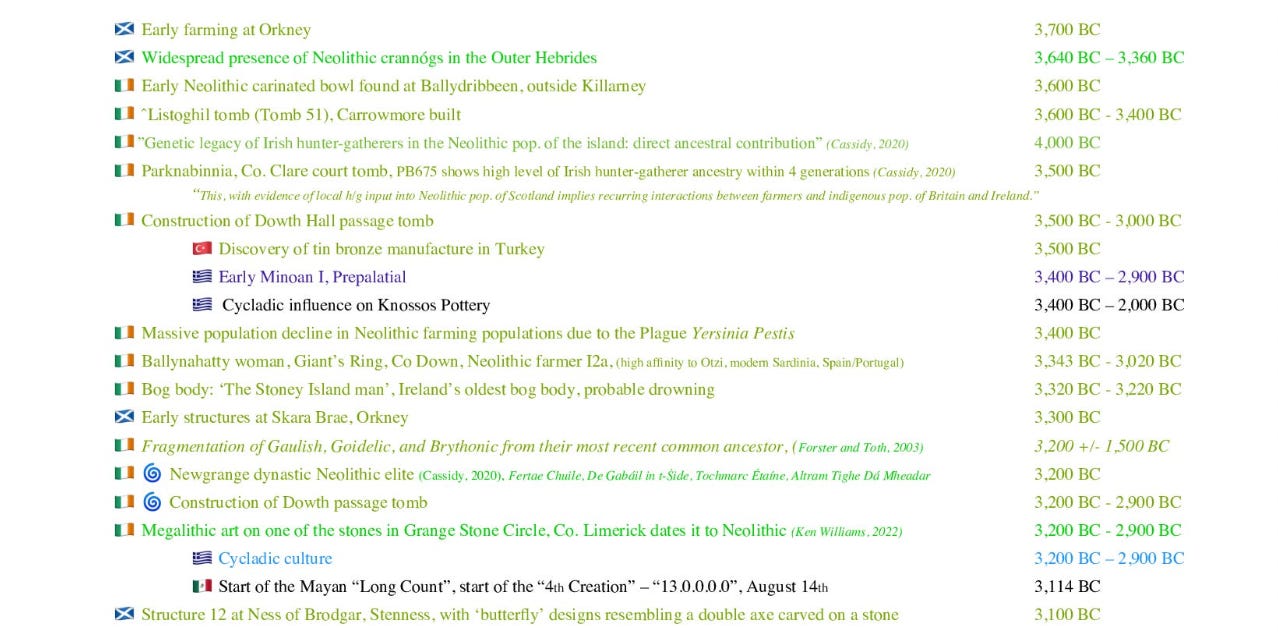

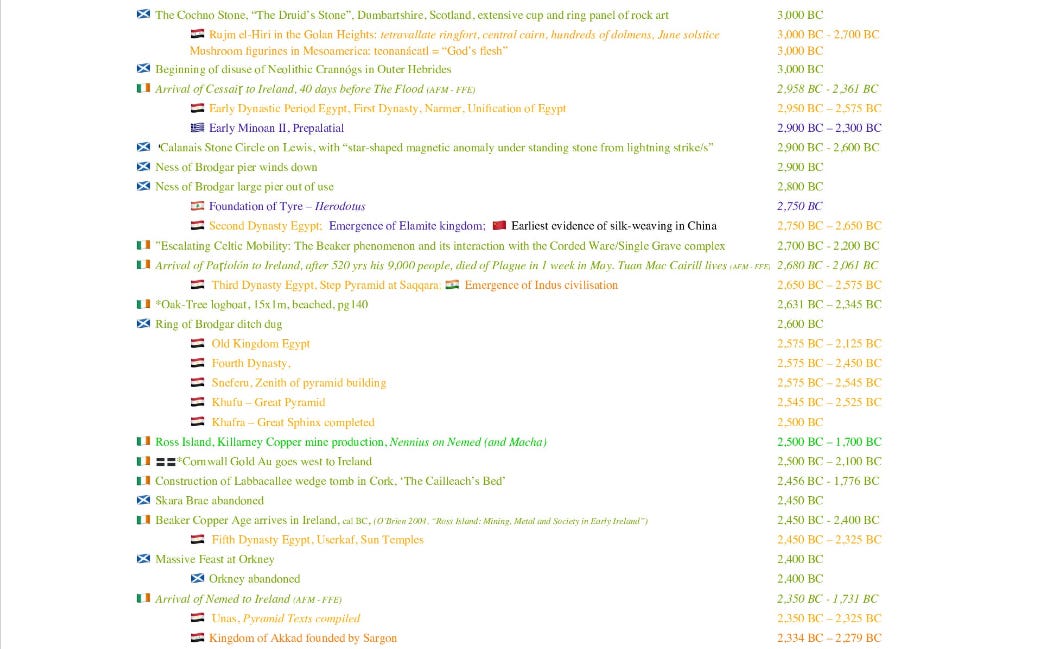
The shared pre-history of West and East
Around the 1,500s BC there were numerous eruptions of the volcano in Santorini, destroying the island and creating the caldera we see today. This interrupted the copper and bronze trade in the region as there was a copper processing facility on the island and its eruption led to several environmental and weather events (which some have even suggested to be the cause of the plagues and other events described in the book of Exodus). This precedes centuries of turmoil in the region around the eastern Mediterranean, known as the Bronze Age collapse, where there was famine, drought, weather disruptions and attacks by a confederation of tribes of unknown origin known as the 'Sea Peoples'. 87
The Minoan palace at Knossos was sacked 100 years later in 1,400 BC. In Britain the 'Penard Phase' of hillfort building was underway, 70 years later Tutankhamun was the Pharoh of Egypt, the height of the Olmecs around 1,310 BC and then, the West – East tin trade from at least 1,300 BC to 1,200 BC. Around this time Rathnagree hillfort was constructed. Egypt launched a major military campaign in the Levant. The 'Sea Peoples' emerge, destroy Mycenae in 1,200 BC and Troy, of the famous Trojan War in Homer's Illiad, falls in 1,184 BC.
The Mycenaean civilisation falls as Rathgall hillfort is raised in Ireland, during the 'Roscommon Phase' in 1,150 BC and Phoenician Gadir, modern Cadiz in Spain is founded in 1,110 BC. In 1,100 BC Dún Aonġus, one of the largest Bronze Age structures in Europe, is constructed. Excavations found “significant evidence of prehistoric metalwork”. Around this time the Greek Dark Ages start and the use of the Linear B script was lost. Due to the scarcity of tin they quickly adopted iron working.
Within 100 years, from around 1,000 BC to 700 BC Ireland enters what is known as the 'Dowris Phase', seemingly characterised by a “conspicuous accumulation of wealth and far-flung trade connections”. Phoenicians and Hebrews were trading gold and silver across the Mediterranean, founding trading centres in Spain, Sicily, Tunisia, and the Lebanon.
The large gold torcs appear around this time, along with the resumption of cɼannóg building in Scotland and Ireland, as well as reoccupation of the Ness of Brodgar from 800 BC.
By 700 BC, though, at the end of the 'Dowris Phase' you see “Celtic dislocation, isolation and the fragmentation of the Atlantic system” happening alongside the rise of the Halstatt culture in Austria and the adaptation of the Greek alphabet from Phoenician.
One may wonder at the cause of such a sudden fall from grace.
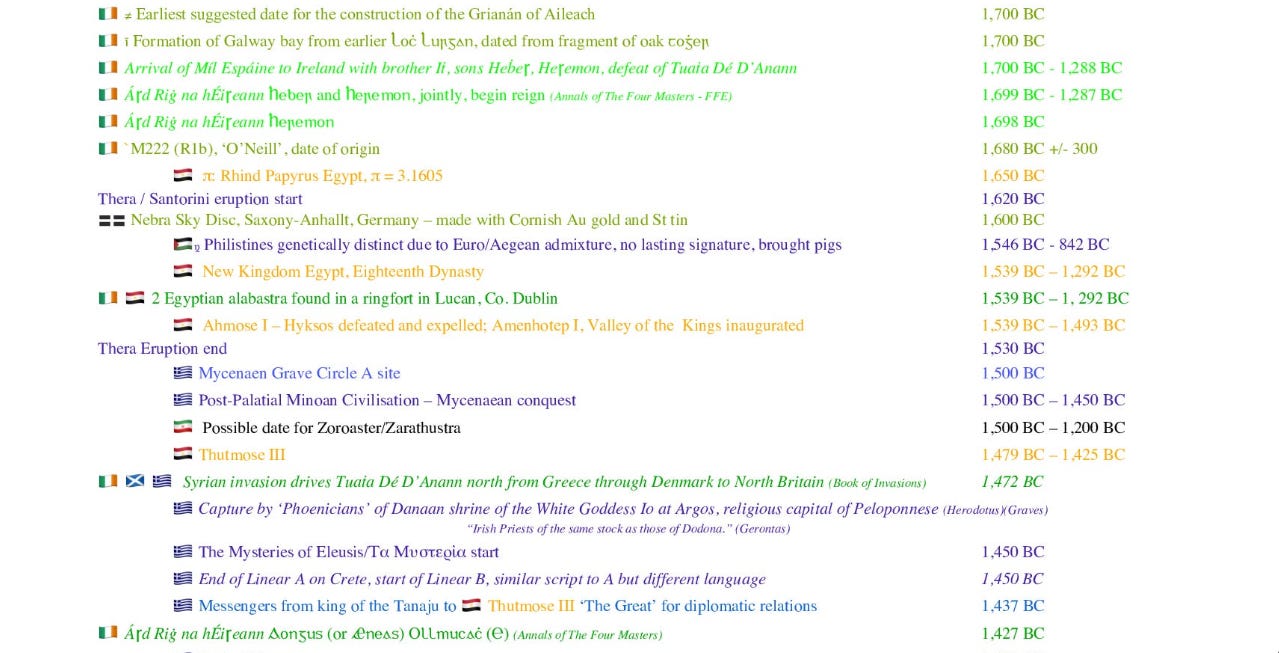
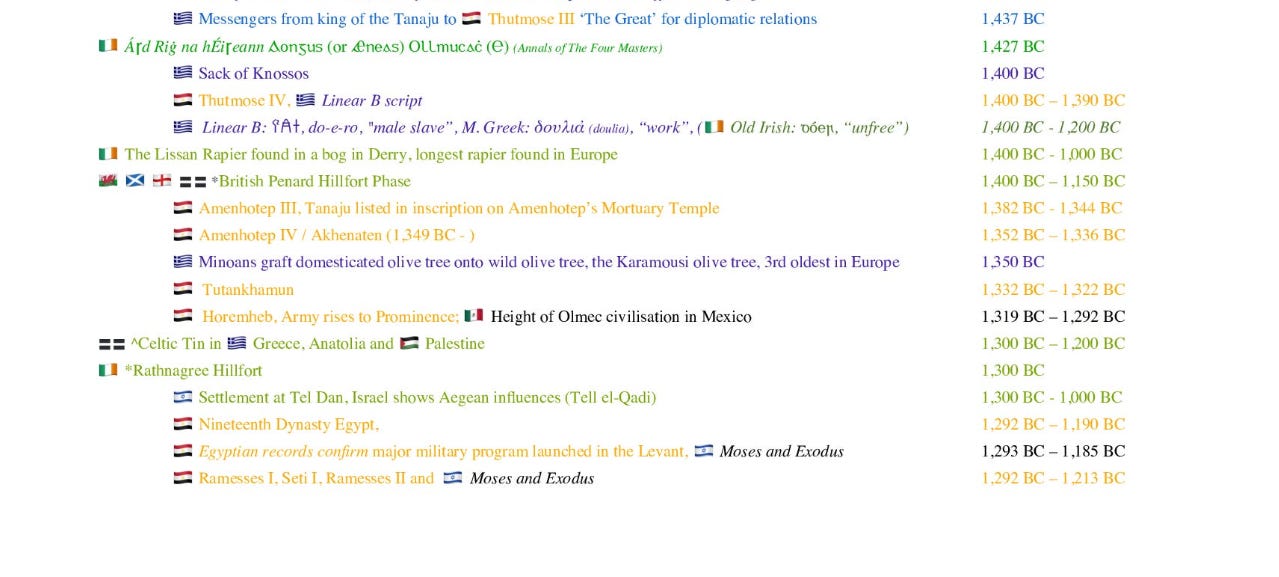
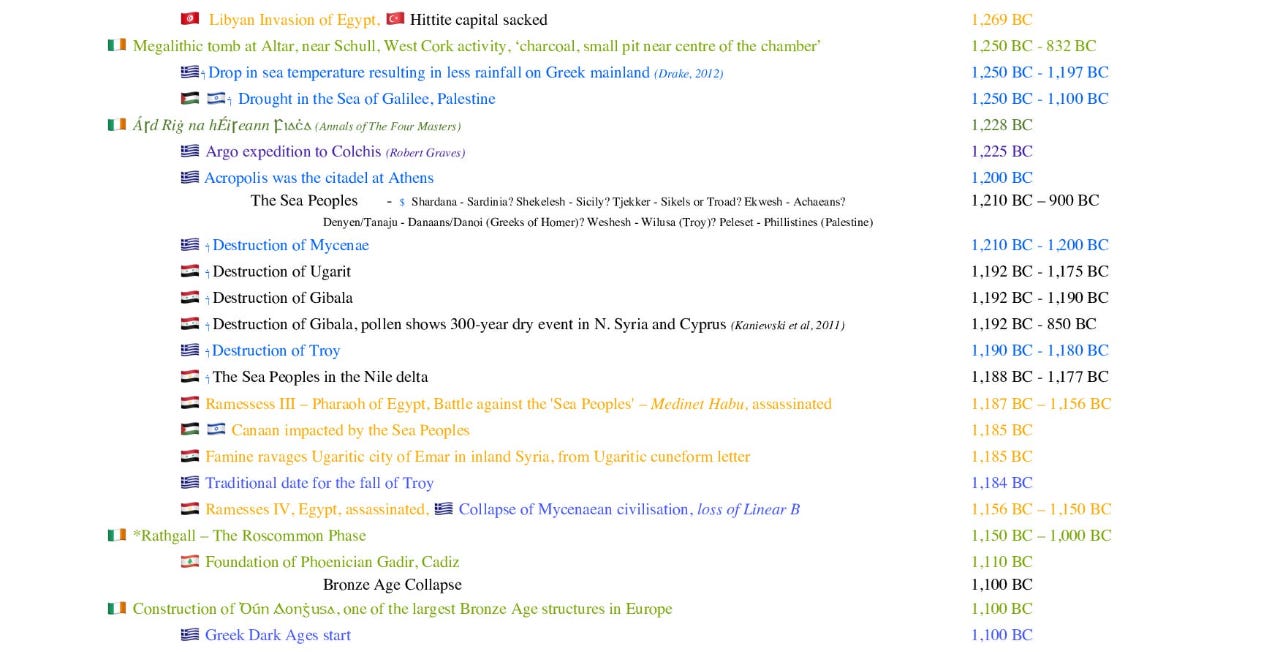
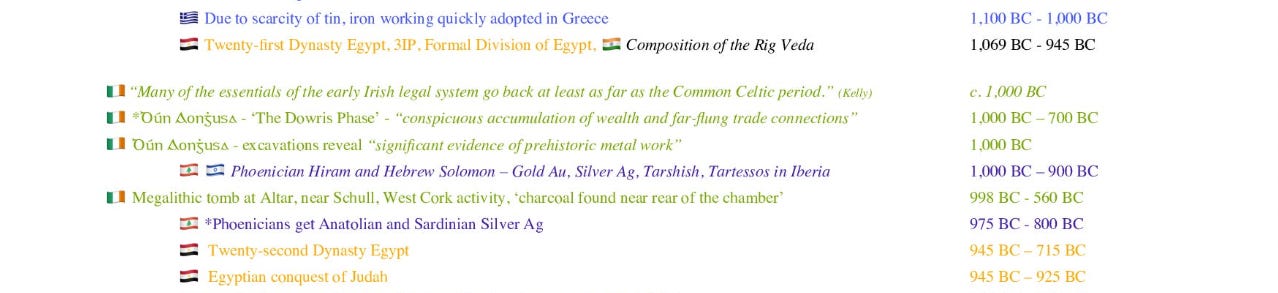
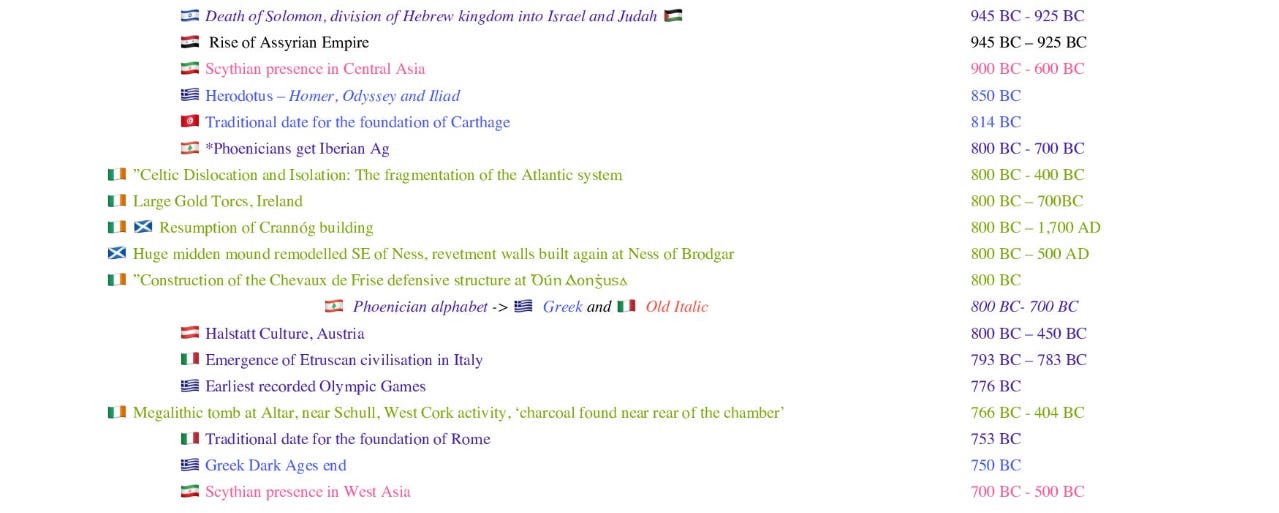
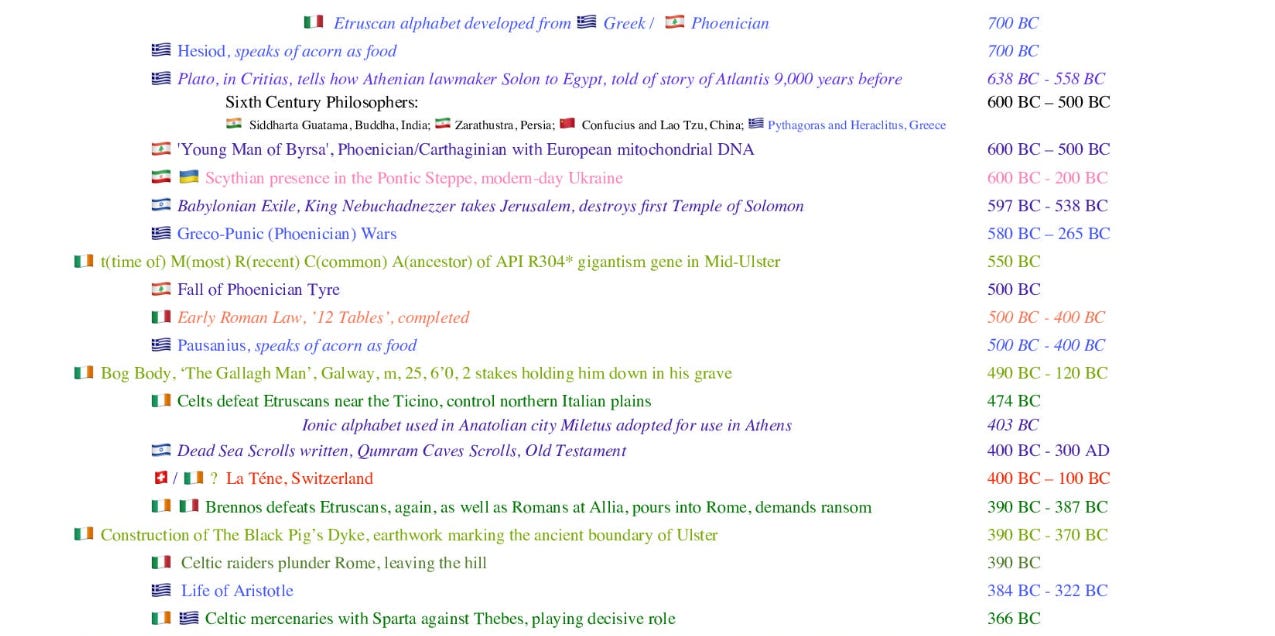
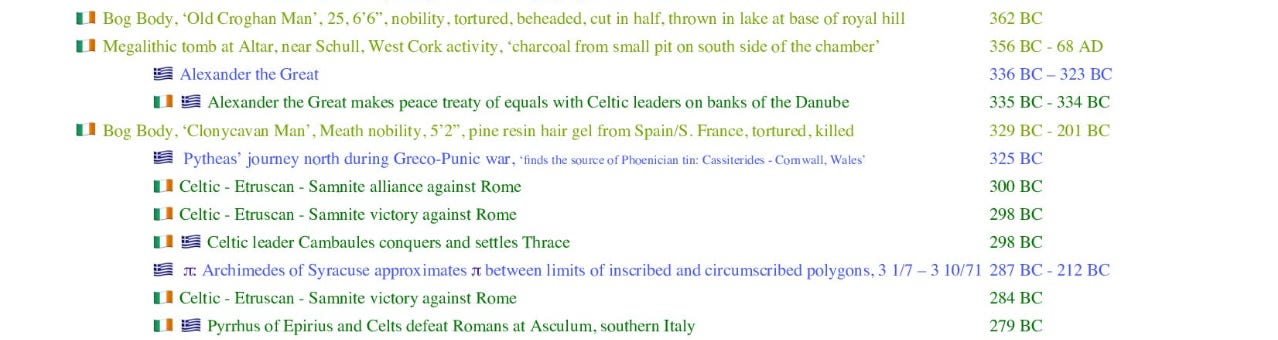
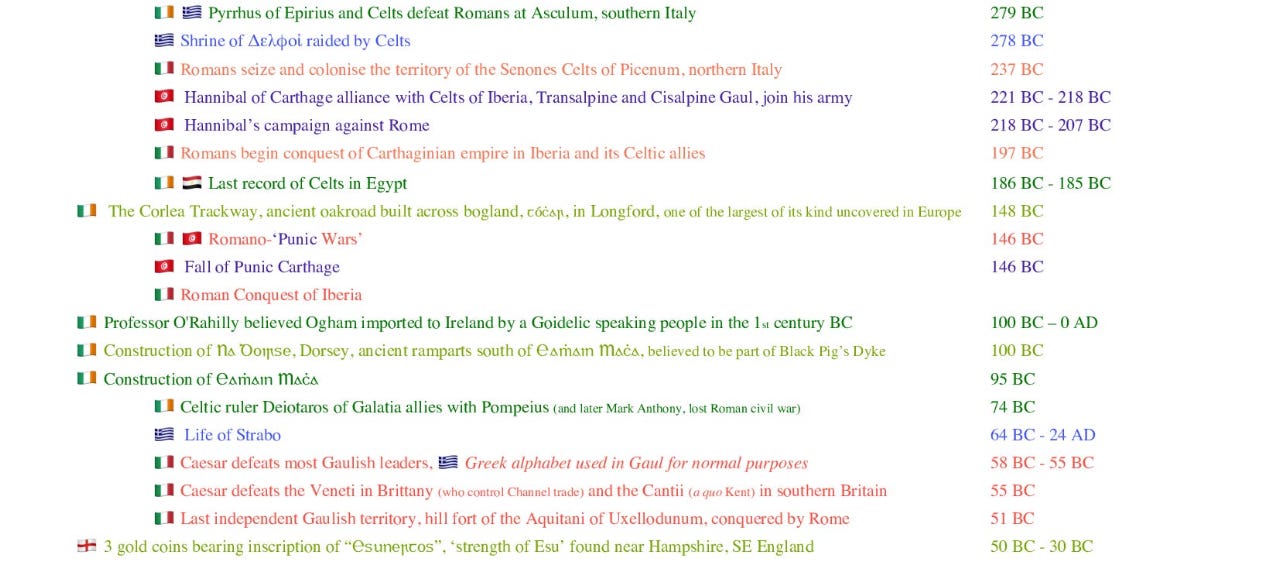
Timeline © Fiachra McKeever 2025
The distant north-west in the Greco-Roman psyche
During the centuries from 800 BC to 400 BC you see the flourishing of the Phoenicians. This is when their alphabet is adapted into Greek and Old Italic. The Etruscans emerge in Italy, then Rome is founded, and Classical civilisation blossoms with the sixth-century philospohers.
On the Islands there is a fragmentation of the Atlantic system, the Ness of Brodgar is reoccupied for the first time since 2,900 BC and crannóg building is resumed; the extensive defensive Cheveaux-de-Frise structure is constructed at Dún Aonġusa and the famous large gold torcs appear. This appears to show a Celtic-Atlantic pivot away, for one reason or another, from the continent and a seeming 'exile of the Islands', with archaeologists noting somewhat of a dark age in the years 800 BC to 400 BC, apparently possibly due to famine or disease, though that dark age could be said to extend as far as the Christianisation of Ireland from 100 AD – 400 AD.
Trouble abroad sets in with the Babylonians attacking the Hebrews, and Greece and Rome going to war with Phoenicia and Carthage from 580 BC to 200 BC.
Phoenician Tyre falls in 500 BC and the Celts in central Europe clash with the Etruscans and the Romans. La Tene Celts are present in Switzerland from 400 BC and massive defensive earthworks known as the Black Pig's Dyke are built near Eaṁain Maċa, a royal centre in Ulster. Alexander the Great emerges in 336 BC and makes a 'treaty of equals' with central European Celts in 335 BC.
Then in 325 BC the Greek Pytheas slips past the Phoenician-held Western Mediterranean as they were engaged in war with the Greeks off Italy, out through the pillars of Heracles (the strait of Gibraltar) and up the coast of the Atlantic to circumnavigate Ireland and Britain, and then 'finds the source of Phoenician tin'. The Celts raid the shrine of Delphi and Rome begins its conquest of the Carthaginian empire and its Celtic allies. Celts are removed from Egypt, Carthage falls and Eaṁain Maċa and Na Dóírse are constructed.
It is from this time period of pre-classical and classical civilisation that we have record of a distant land in the north known alternately as 'Hyperborea' or 'Thule'.88
I have had a number of conversations with a one Professor Apostolos Gerontas, who is a lecturer of the History and Philosophy of Science. Prof. Gerontas, a Greek native, has lectured in Greece, America, Norway and is currently lecturing in Germany. We have discussed the knowledge in the classical world of Ireland and the West European Isles. He says this is an “old story”, and that “many researchers that see a relationship between the words Milesians and Danaan with the Greek Miletus and the Danaoi of Homer.” He adds that it is “not improbable – the historical time matches.”
“To summarise, the Danaans of Greece had myths concerning an island of the Godess Iris, where priests of the same stock of the ones of Dodona served (“drys” in Greek is the oak tree, the holy tree of Zeus, that in Dodona it could speak = druids), and they claimed that the High Kings of Ierne (land of Iris = land of rainbow?) were of the blood of Argos. About Milesians, it is clearer. Miletus was destroyed by invasion, and its whole population migrated on ships. About 3000 of them got lost during the migration, and word was that they went for safety to a land of the Keltoi up North.”
“The ancient world was much more interconnected than we think. People travelled. Have you ever wondered about the similarities in culture, traditional dresses and even colour of the people between the lands? If you Google, you'll find that even the bagpipe has Greek origins.” 89
“Greek and all the Celtic languages belong in any case to the hindoeuropean family, so structural and linguistic similarities are expected. These similarities must have been noticed by the pre-classical Greeks, hence the myth of the Keltoi in the Greek mythology.” 90
“An interesting discussion that I am aware of, is the discussion concerning the lack of Greek artefacts and scripts in Ireland unearthed by archaeology so far. It is an interesting discussion because there aren't many corners of Europea where such a thing happens. To give an example: Greek short swords have been found as far up as Sweden, and Greek steles are present in Scandinavia as late as the 3rd century BC and all the way to the 13th AD. The artefacts verify the basic truth of the legends everywhere. With one exception: the British Isles. My theory is that something happened there – and Greekness became extremely unpopular.” 91
Incidentally, Prof. Barry Cunliffe in his 'Who Were the Celts' lecture at Oxford University says that until roughly 500 BC Ireland was part of the “Atlantic System”. Then for a few hundred years it was not, then it rejoined. He says “Ireland became a bit of a backwater for a few hundred years”, with possible depopulation, famine etc.
Further references in Greek mythology to Thule and Hyberborea in Prof. Gerontas and I's conversation include the story of Abaris the Hyperborean (Ἄβαρις Ὑπερβόρειος, Ábaris Hyperbóreios), son of Seuthes (Σεύθης), a legendary priest and healer who fled Hyperborea because of a plague. Of this Gerontas says:
“I know the story of Abaris. Read it in the original. Apropos, Abaris means “with no weight”, so I guess that was a nickname. It verifies that the two cultures had close contact, and at least to some level, some classes shared the religion. That does correlate both with the Danaans story and the Milesians. The relation of Apollo to some Hyperborea where he was traveling every year for three months is also well known (that is the reason that the temple of the Oracle in Delphi is dedicated to Apollo on the east side, but to Dionysus on the west side – for three months the Oracle job was done by Dionysus every year).”
Prof. Gerontas recommended that I read 'The White Goddess' by Robert Graves. He says that
“the white goddess is a must if you are interested in Celtic mythology and its origins. By the way, it turns out that the ancient Irish knew fully well where did the Danaans come from and accurately recorded it. I thought it was a plausible hypothesis, but actually is a verifiable fact. I warn however that it's not an easy book. The author was a poet, not a historian. Yet, his main thesis about the mythology and religion of the European pre-history is now the anthropological orthodoxy. So he did something right.”
Finally, I asked him to read a passage from the Táin Bó Ċuailgne, that seems to describe taurokatapsia 92, and whether or not it reminded him of the Minoan culture. The passage from a JSTOR paper is as follows:
“But there are some other remarkable circumstances in connection with the foregoing extract in particular, as well as with the whole of the curious manuscript from which it is taken, which go far to prove that everything relating to the visit of Mac Beag to the Boyne, had reference to the tenets of paganism, instead of being puerile romance. The whole tenor of the Táin Bó Ċuailgne is to record the supernatural attributes of the extraordinary bull called Donn Cuailgne, said to have been endowed with human understanding;- and to describe the protracted wars that ensued between the Ultonians and Connacians, owing to the former having refused to lend the animal to the celebrated Meidhbh, Queen of Connacht. Hence some have supposed, that the Ultonian bull was a Deity like the Apis of the Egyptians; and that this worship had been introduced into Ireland by the early colonists. Such an opinion would seem to be supported by the following passage:- “Ba do ḃuaḋaiḃ an Donn Cuailgne go mbíoḋ caoga mac ag cluiṫe fair gaċ nóna. Ba do ḃuaḋaiḃ an Duinn Cuailgne ailgne naċ laṁadaois bocana no bananuiḃ no geinte glinne toiġeaċt a naon tríoċa ceadfris. Ba do ḃuaḋaiḃ an Duinn Cuailgne cran dordan do ġní gaċ nóna ag teaċt air amnus a leasa ocus a ṁaġa; ba leor do ċeol ocus tríoċa cead Cuailgne.”
“It was one of the attributes of the Donn Cooley that fifth youths should perform exercises around him every noon; it was also one of his attributes to prevent hobgoblins and spectres, inhabiting sequestered glens, from entering the cantred in which he was; another attribute was to chant a cran dordan93 every noon when approaching his lios (habitation) and his field, which was fit music for the inhabitants of the North and the interior of the cantred of Cualigne.” These being only a few of the supernatural qualities ascribed to the Bull of Cuailnge, it would seem that he must have been held in as great veneration by the Ultonians, as Apis was by the Egyptians. It may be mentioned as a curious coincidence that the name of the place on the banks of the Boyne visited by Mac Beag, viz., Dún Mhic Neachtain the fort of the son of Neachtan, embodies the very name given (according to Macrobius) to the Egyptian Bull-Deity, Apis. “Taurum soli sacrum quwm Neton cognominant.” [Macrob. Tdb. 1 Cap. 21.] This word may recall to memory of some old term Neat still preserved in English, for an animal of the cow-kind, as in the expression “neat's foot”, “neat's tongue” &c.”
In response to the Irish-Minoan question, Prof. Gerontas said:
“It looks suspiciously Minoan.”
Many more similarities in the mythologies can be found in Remarkable Correspondence of Irish, Greek, and Oriental Legends by James O'Laverty.94 Furthermore, could “Mount Gabriel (Cnoc Osta in local Gaelic) on the Mizen Peninsula” be the “copper mines of the Oestymnides, of the Greeks?” 95 Who knows? One thing is certain, though, that the Romans owe a great deal to the Greeks (who in turn can allegedly thank the Phoenicians for their letters, mathematics, astronomy, grapes and olives) in terms of their intellectual and artistic culture: their pantheon is largely based on the Greek gods, their statues copies of Greek exemplars. As such, they would have been familiar with the Greek myths of Northern lands and, no doubt, would have been just as curious. The explorer Claudius Ptolemy made a famous map in 140 AD where he mapped the coastline, rivers, population names, settlements and 'regia', royal centres. The island is labeled 'Ivernia', with an eponymous population in the south-west known as the 'Iberni' near the western river 'Iernus' and their settlement 'Ivernis' in the south. The settlement has been suggested to be Kenmare, though it could be Killarney, possibly related to the copper-mines, or indeed, Cork city or its environs, possibly related to the West Cork mines and/or the natural harbour.
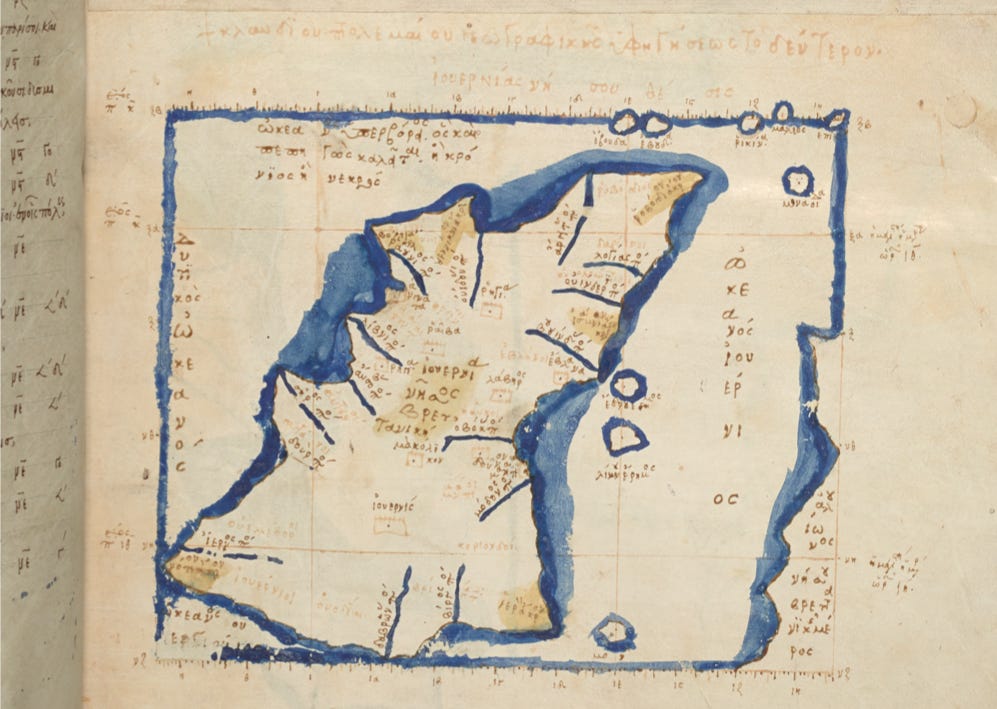
The Imperial dispossession of the Celts
“Almost all the Carthaginian manuscripts were committed to the flames, and the history of this brave and learned people has been written by their most bitter enemies, the Greeks and Romans. ” 96
Very little has been written, and even less has been said, on the subject of Hiberno-Roman interactions in the pre-Christian era. Even the change-over from prehistory to history with the advent of writing in this country by the Church and 'St. Patrick' 97 is littered with historical events intertwined with clearly mythological tales.98 That no more accurate an account of the first four centuries of the common era in Ireland (or indeed the preceding millennia) than what we have can be arrived at seems incredulous in the face of several millennia of writing from Spain to India, cultures with which Ireland is known to have had extensive connections in the millennia and centuries in question. If you believe this is the best we can do, I've a bridge to sell you.
A reoccupation of long-abandoned Neolithic and early Bronze Age sites from 800 BC and construction of defenses at and around Eṁain Maċa from 400 BC suggests a re-orientation of the Atlantic system in the wake of Rome's decisive Mediterranean conquest. By 95 BC, Phoenicia and Carthage have burned, fallen, and been razed. I have not come across any references to refugees but one could reasonably suggest that they fled to the more, at least temporarily, hospitable territories of their allies.
Ralph Moore of Trinity College Dublin published an article entitled Empire without End at the Ends of the Earth: Ireland and Thule in Roman Imperial Ideology detailing the Roman imperial ideology of being the rulers of the world, except that Ireland wasn't fully taken under their control, which undermined Roman claims of ultimate imperial supremacy.
Raoul McLaughlin of the Classical Association of Northern Ireland published The Roman Plan to Conquer Ireland: Rethinking the Campaign by Gnaeus Julius Agricola (AD 77-83). This thought-provoking piece quotes Roman imperial biographer Tacitus while he was in Britain and makes a case for a Roman military incursion into Ireland with the help of an exiled king who wanted to reclaim his throne.
In his article Tuathal Techtmar: A Myth or Ancient Literary Evidence for a Roman Invasion?, R. B. Warner of the Ulster Museum claims that indeed there does exist considerable evidence of such an incursion, with Tuaṫal Teċtmar being the aforementioned zealous exile.
The uncertain and controversial period of Christianisation and language shift is explored in some detail by Koch in The Conversion and the Transition from Primitive to Old Irish c. 367 – c. 637, and The Patrician problem and a possible solution, by M. Esposito, Cambridge University Press.
What is certain is that there was a man named Palladius who was sent to Ireland in 431 AD “to the Irish that believed in Christ”. In 367 AD, the 'barbarian conspiracy', a native Celtic uprising against the Romans in Britain that practically brought Roman Britain to its knees, occurs, with several raids and migrations during this period, e.g. Dési, Dyfed, etc. Arthurian legend dates to here, as does the appearance of oġam stones in Welsh/Irish Dyfed. Koch takes this time as the Terminus Post Quem, TPQ, the earliest that St. Patrick could have arrived as a slave, and the earliest early Old Irish language could have emerged from the previous 'Primitive Irish', also known as 'Old Celtic'.
The stories of St. Patrick, his Confessio and the Letter to Coroticus, were written centuries after he is supposed to have been here, in the 8th century (700-800) AD. Both Muirċú and Tíreċan's accounts of Patrick are included in the Book of Armagh in 807. No contemporary saint or religious figure has mentioned 'St.' Patrick nor his apparently violent mission.99
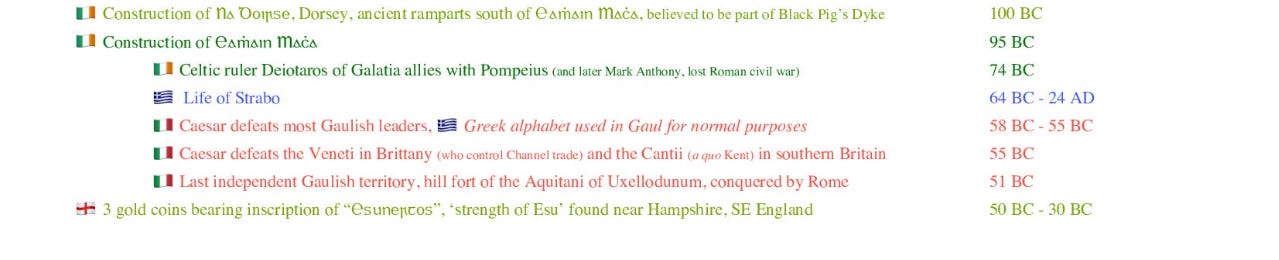
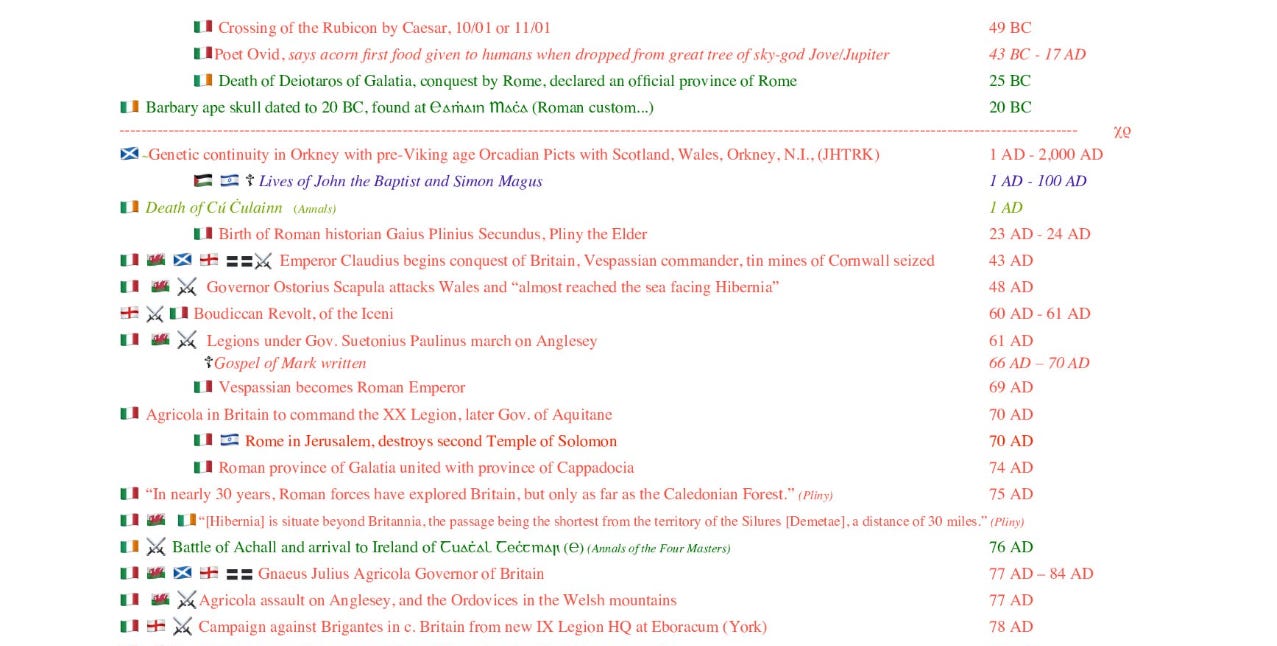
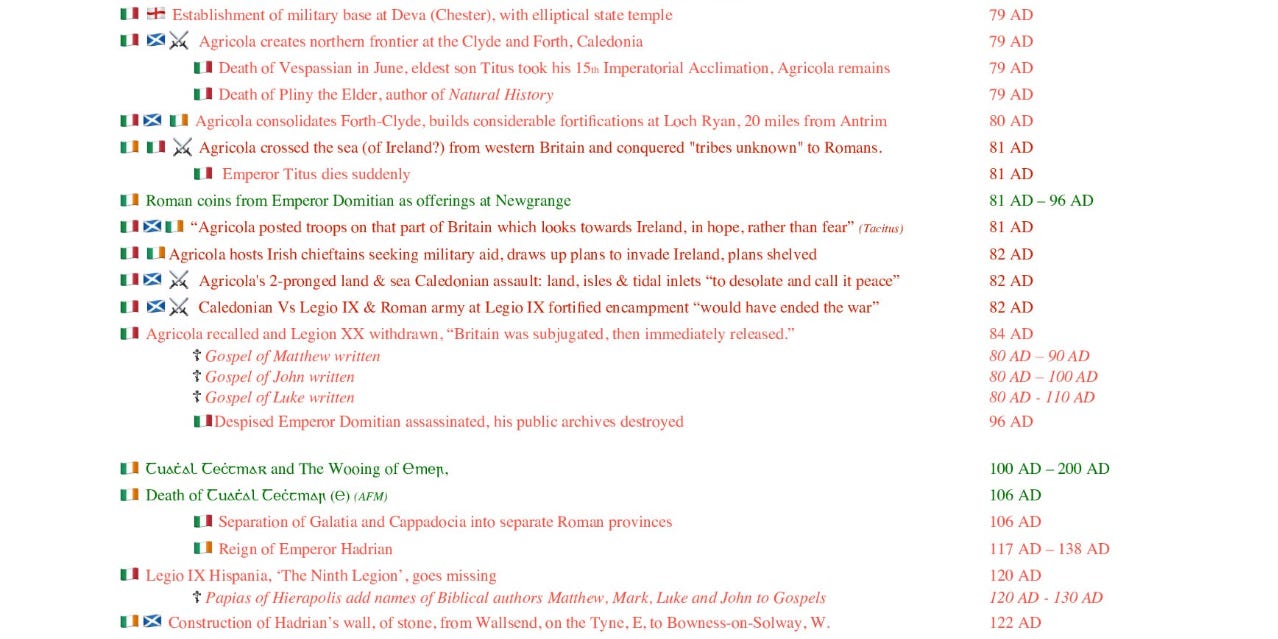

Oġam as a cypher for Latin based on Donatus’ Grammar…
Pelagius, and the semi-historical people…
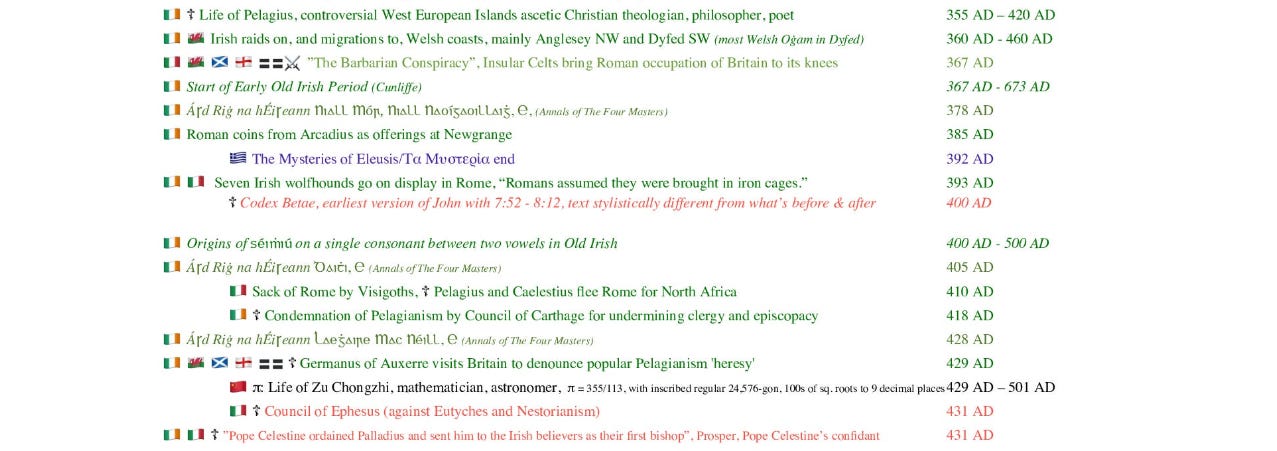
Palladius to Patrick…

Early Irish Law…
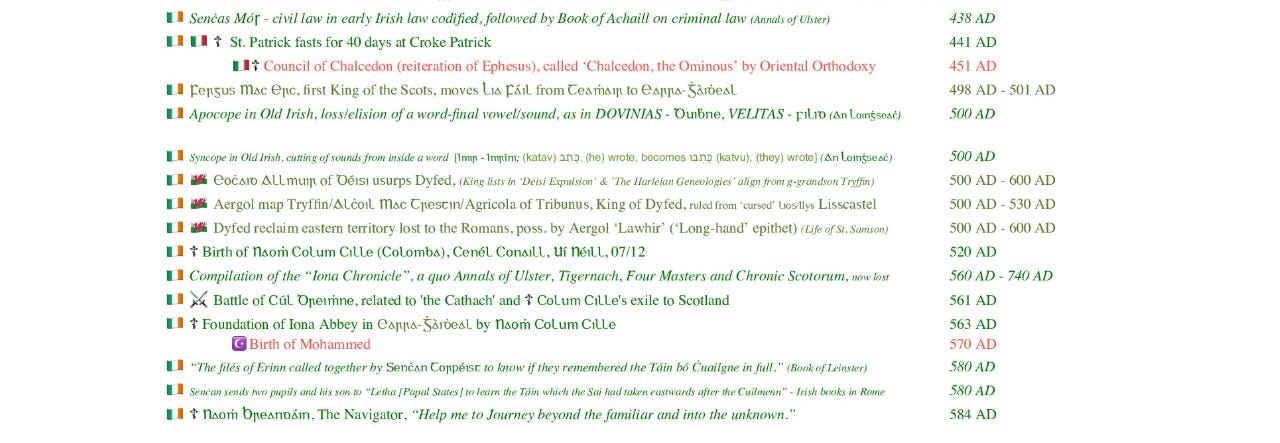
Timeline © Fiachra McKeever 2025
An Interesting Twist
While there are several examples in the Early Irish Law texts of aspects of law being similar to Old Testament Hebrew law and Hittite law (See Fergus Kelly’s “Early Irish Law”, the following is an interesting twist on this Celto-Semitic hypothesis, and appears in the Wednesday, July 11th, 1934 New York edition of the 'Jewish Daily Bulletin', published by the Jewish Telegraphic Agency (established 1917). The article reverses the idea that Semitic is a substratum in Celtic and suggests there may be a Celtic substratum in Semitic. The article in full:
Ancient Jews Spoke Gaelic, is New Theory
– Scot Paper Points Out Similarity of Names as 'Proof' –
(J.T.A. Special Correspondence)
EDINBURGH, June 30. - A theory has been advanced here in the Evening News to the effect that Gaelic was the language of the ancient Jews in Palestine.
“It is rather remarkable,” says the News article, “that throughout the Old and New Testament the language of the Jews is never once mentioned. The prophet Isaiah alone gives an indication when he states that the Jews spoke the language of Canaan (Isaiah ix, 18), and the question then arises as to what the language was spoken by the Canaanites?”
The author goes on to show the similarity between place-names in Palestine and Gaelic terms. “Og was king of the Amorites, and Endrei was his capital in Bashan. We are told by Josephus, the Jewish historian, that this town was also called Aadrei. In Scotland at the present day either of these words may be used to indicate ‘cattle king,’ a strong proof that the language of the Scots and the Amorites were the same.”
The article further states that “from the dawn of history the River Jordan has been known by its Gaelic name, Ard-Ban-Eas, meaning the high, white waterfall, or torrent. Lebanon in the Gaelic means the white solitude; Tiberias ”the well at the waterfall.”
By using similar examples the author feels that his point is made.
The article further points out that “Isaiah provides another powerful argument in favor of this contention: Let it be borne in mind that all the nations speaking a dialect of the Semitic language, such as Syriac, Hebrew, Aramic, Arabic, and several others, could, without difficulty, hold a conversation with each other, yet when Rabshakeh, the Assyrian general, was offering terms of surrender to the Jews, the Jewish officers made the following request: Speak, I pray thee, unto thy servants in the Syrian language, for we understand it, and speak not unto us in the Jew’s language in the ears of the people that are on the wall.”
One of the languages that comes under the heading of 'Canaanite' is Phoenician. Col. Vallency, a well-known Irish antiquarian from the 18th century, wrote a book titled 'Phoenician Ireland' to this effect also. The Phoenicians were the maritime power in the Mediterranean that emerged like a Phoenix from the fall of the Minoan and Mycenaean civilisations. They are said to have introduced (or reintroduced) to the Mediterranean survivors of the Bronze Age Collapse letters, mathematics, astronomy, agricultural techniques (See Carthaginian text by Magus, a 21 volume treatise on agriculture specially translated by the Romans after the fall of Carthage) and well as agricultural products the grape and the olive. Dr Caitlin Green, a “historian/archaeologist and writer whose professional interests lie in the history, archaeology, place-names and literature of late Roman and early medieval Britain”, who received her doctorate from the University of Oxford, discussed on a blog post of hers Some possible Phoenician/Punic names in Britain and Ireland 100.
“It is interesting to note that a Punic origin has also been tentatively suggested for three major island names in the region as well as a number of more minor island and coastal names, the names in question being Britain, Ireland and Thule...it is intriguing to observe that Phoenician/Punic etymologies are also available for both of these major island-names, giving the ‘tin land’ (pretan, ‘tin’) for Britain (*Pritan-) and the ‘copper island’ (*’i: weriju:, ‘island of copper’) for Éire/Ireland (*Īweryon), and that Richard Coates has argued that these suggestions cannot be casually dismissed, especially in light of the likely presence of other Proto-Semitic/Punic island- and coastal-names in the British Isles. Indeed, the fact that the suggested Phoenician/Punic roots of these two names would actually complement each other remarkably well and are, moreover, semantically credible—making reference to key material resources that were certainly available and exported from these islands in the pre-Roman period—would seem to be at least notable.(6) In this context, it is also worth observing that it has been recently independently argued from the available archaeological evidence that there existed a 'maritime' Atlantic network carrying metalwork and metal north from the Mediterranean/Iberia to Sweden via Britain in the Bronze Age and that, as part of this, 'ports in the British Isles acted as transit centres for copper from other parts of Europe as well as providing local tin ore', something that would obviously offer a potentially significant degree of support to the above idea of Britain being originally known as the 'tin land'.
This blog post has some very interesting references and notes, e.g.:
“For a brief discussion of the burial site on the Isle of Thanet, see C. R. Green, 'Some oxygen isotope evidence for long-distance migration to Britain from North Africa & southern Iberia, c.1100 BC–AD 800', 24 October 2015, blog post, online at http://www.caitlingreen.org/2015/10/oxygen-isotope-evidence.html, and 'A Mediterranean anchor stock of the fifth to mid-second century BC found off the coast of Britain', 29 August 2015, blog.”
There is a play written by an unknown Greek author in Greek, an altered copy by Plautus and a Latin translation wherein there is alleged to be a monologue by the Carthaginian Hanno in Carthaginian Punic. Vallency and others have claimed to produce a translation which demonstrates that Punic and Irish are one and the same language. Gratwick in 1971 101 rubbishes this idea, calling Vallency a charlatan, R. O'Conor a fraud and F. Soltau his dupe. Nevertheless, Gratwick admits that the Punic, or allegedly Punic speech was in the original Greek play, its later transcriber Plautus and then a Latin version.102 However, “whether Plautus or the Greek author first used a Punic speech to communicate this dramatic substance cannot be determined. It was one of the two.” 103 Vallency's version is quoted below, with a link to a digital version in the footnotes104. Vallency's footnotes in his book purport to include the 'Irish' words used in Hanno's speech which are obsolete in the current 'vulgar' speech.
“We will now collate this speech with the Irish.
Plautus:
Nyth al o nim ua lonuth sicorathissi me com syth (t)
Chim lach chumyth mum ys tyal mycthi barii im schi
Irish.
N’iaith all o nimh uath lonnaithe! socruidhse me com sith.
Omnipotent much dreaded Deity of this country! assuage my troubled mind.
Chimi lach chuinigh ! muini is toil, miocht beiridh iar mo scith
(thou) the support of feeble (u) captives ! being now exhausted with fatigue, of thy free will guide me to my children.
Plautus.
Lipho can ethyth by mithii ad aedan binuthii
Byr nar ob syllo homal o nim ! ubymis isyrthoho.
Irish.
Liomhtha can ati bi mitche ad éadan beannaithe,
O let my prayers be perfectly acceptable in thy sight,
Bior nar ob siladh umhal; o nimh ! ibhim a frotha [a ṡruṫaċa]!
An inexhaustible fountain to the humble; O Deity! let me drink of its streams !
The following is an insightful yet scathing critique of Vallency's work:105

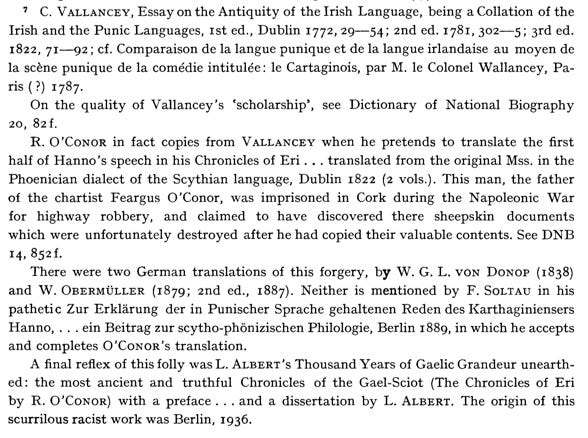
Vallency, regardless of such scathing criticism, expended a lot of effort on linguistic comparison, as the following informative paragraph details:
“In 1802 Vallancey brought out a prospect of a whole dictionary of Irish, designed throughout as an etymological dictionary. This work, too, has a long introduction which takes its starting point from the arguments of Vallancey’s colleague and, in a sense, kindred spirit, the Sanskritist Francis Wilford. Wilford believed he could demonstrate that Britain and Ireland had been mentioned in the Puranas, the cosmological writings of India; suvarna, the Sanskrit word for ‘gold’, corresponded to Hibernia, the name of Ireland, and even the name of St Patrick had not been unknown to the ancient Indian writers. Vallancey gratefully adopted Wilford’s suggestions and, building on them, he provided an Irish equivalent for almost every term in Sanskrit... Vallancey’s dictionary is thus not a simple reference work, but is enriched by continuous references not only to Sanskrit and Persian, some of which were indeed fully justified, but also to Hebrew, Arabic and Coptic-Egyptian. Separate treatises gave Vallancey the further option of incorporating even Japanese and Chinese into his nation. Perhaps the most important instrument used by Vallancey was the analysis of semantic fields. He deployed long commentaries on rubrics that collected terms linked by content to show that the great achievements of the Phoenicians, their most striking qualities – trade and navigation –, had left traces throughout the Irish language. The words for tin or glasswork, examples of which had been collected by men such as John Smith in his Galic Antiquities and William Stukeley, had Semitic analogies or were wholly identical and had spread from Ireland to all other European languages, as was demonstrated by the term gliunn for glass; the same applied to milk products, units of measurement and almost all available terms from the sphere of trade, and even for the names of months and terms for time.” 106
In Carthage and The Curragh
By far the most striking similarity, that may of course have absolutely nothing to do with any direct cultural contact between Gaels and Canaanite, is a story associated with St. Brigid, Naoṁ Briġde. The stories of the establishment of St. Brigid’s monastery in County Kildare and the stories of the foundation of Carthage are curiously close. In both cases a woman leaves her homeland and asks a foreign king (Leinster for Brigid, Berber for Dido) for a small tract of land, to which he replies with ‘as much as your cloak can cover’. In Brigid’s version, her cloak (Brat Ḃriġde) magically extends to cover the extent of the Curragh, Kildare; in Dido’s version, she cuts the hide into a spiral and encircles the hill of Byrsa, in Carthage. The word ‘byrsa’ means ‘oxhide’ ((Ancient Greek: βύρσα, "oxhide"), and bears an interesting similarity to ‘brat’.
In 2016, New Zealand’s University of Otago sequenced the first complete mitchondrial (maternally inherited) genome of a 2,500 year old Phoenician, named “the Young Man of Byrsa”.
An archaeology.wiki blog reports, in 2016:
“Ancient DNA study finds Phoenician from Carthage had European ancestry:
Interestingly, our analysis showed that Ariche’s mitochondrial genetic make-up most closely matches that of the sequence of a particular modern day individual from Portugal,” Professor Matisoo-Smith says.While the Phoenicians are thought to have originated from the area that is now Lebanon, their influence expanded across the Mediterranean and west to the Iberian Peninsula where they established settlements and trading posts. The city of Carthage in Tunisia, North Africa, was established as a Phoenician port by colonists from Lebanon and became the centre for later Phoenician (Punic) trade.
The researchers analysed the mitochondrial DNA of 47 modern Lebanese people and found none were of the U5b2c1 lineage.
Previous research has found that U5b2c1 was present in two ancient hunter-gatherers recovered from an archaeological site in north-western Spain, she says.
“While a wave of farming peoples from the Near East replaced these hunter-gatherers, some of their lineages may have persisted longer in the far south of the Iberian peninsula and on off-shore islands and were then transported to the melting pot of Carthage in North Africa via Phoenician and Punic trade networks.”
Professor Matisoo-Smith says Phoenician culture and trade had a significant impact on Western civilisation. For example, they introduced the first alphabetic writing system.
“However, we still know little about the Phoenicians themselves, except for the likely biased accounts by their Roman and Greek rivals — hopefully our findings and other continuing research will cast further light on the origins and impact of Phoenician peoples and their culture,” she says.
[https://www.archaeology.wiki/blog/2016/05/26/ancient-dna-study-finds-phoenician-carthage-european-ancestry/] [https://journals.plos.org/plosone/article?id=10.1371/journal.pone.0155046]
The association of the Phoenicians with magic extends back as far as their innovation in letters, which has given rise to the Hebrew, Greek, Arabic and Latin alphabets, among many others. The Greeks themselves, even after they had adapted the alphabet for their own use, referred to their alphabet as 'phoinikeia grammata', or 'Phoenician letters', and it and its origins were shrouded in mystery and magic even in the classical era, seen as having ultimately come from the magical arts of the gods. You will, however, notice them conspicuously absent from the terms Egypto-Greek, and Greco-Egyptian, meriting no more than a ‘-’ where they were:
“in the Hellenistic period a thousand years later, in the final centuries BC. As Egypt came within the Greek world and fell under the control of the Ptolemies, there was a certain amount of syncretism between Egyptian Thoth and Greek Hermes, as we see in Philo’s repeated glosses on the name of Taautos. Among some groups, this gave rise to a new figure or series of figures – Hermes Trismegistos – ‘Thrice-great Hermes’.”
This 'Thrice-great Hermes' and the magical, literary material associated and ascribed to this syncretic mythical figure is the foundation of the Western occult tradition:
“Combining aspects of Thoth, Hermes and even Moses, he appears as a scribe of the gods, master of knowledge – especially the obscure and arcane – and a powerful magician. His exact nature is shadowy: sometimes an immortal god, sometimes a series of mortal men, passing on their name and secret wisdom down the generations. Most importantly, he’s strongly associated with the production of literary works – by the second and third centuries BC there existed an entire ‘corpus hermeticum’ of Egypto-Greek wisdom literature dealing with philosophy, cosmology, alchemy, astrology and much else. This esoteric Hellenistic god-sage fits very well with Philo’s Taautos – indeed, Philo gives us one of our earliest attestations of the ‘Trismegistos’ epithet.” 107
But what, ultimately, is the truth of the situation concerning ancient Ireland's intercourse with the ancient Mediterranean, both spiritual and physical? As is so often the case, there are two sides to every story, and the truth is usually somewhere in the middle.
1Lúb, -úibe, d. -úib, pl. -a, f., a loop, a bend, angle, corner or recess ; a plait, fold or curl ; a maze or meander ; a stitch, in knitting ; power, control ; craft, deceit ; a difficulty ; a pretty maiden ; im' lúib, in my power ; an lúb iſtiġ do (or i), a great partiality or affection for ; i lúib an daṫaid, just forty (at cards) ; lúb laḋaɼ, by hook or crook.
2Séamas Baɼɼa Ó Súilleaḃáin, PhD., i gcóṁɼáḋ pɼíoḃáideaċ, 2020
3pg. 307. ſo-, good; do-, bad: ſoċaɼ/doċaɼ etc.
4Under “Sean”, pg 1005, top right of page, first third of column, Dinneen, 1927
5Under “Tuaṫa”, pg. 1267, Dinneen, 1927
6Anfaḋ, -aiḋ, m., storm, a tempest, a disturbance in the elements, esp. on sea ; fear, terror (pron. anaiṫe in M., which see ; in Mayo pron. anafa) ; le hanfaḋ ngaoiṫe, by a storm (F. F.), pg. 45
7https://www.symbols.com/symbol/copper
8 In the Banseanchas, a medieval collection of folklore concerning women, they are described as: “fair women of the Tuatha Dé Danand, a famous throng, clear voice of achievement, three fair daughters of Fiachra, and bright women of spirited speech.” "Banshenchus". www.maryjones.us. https://en.wikipedia.org/wiki/Ériu#cite_note-:0-4
9Pg 82
10pg. 799
11pg. 884
12Under “Tinn” and “Tinneaſ”, pg. 1209, Dinneen
13pg. 680
Footnotes and References
1Under “Tɼeo”, pg. 1250, Dinneen, 1927 ; poss. related to 'Tao', 道,which also means 'way, guidance'
Schuessler, Axel (2007). ABC Etymological Dictionary of Old Chinese. University of Hawaii Press.
2 “Asaɼlaide – g. id., pl., -ḋṫe, m. an astrologer, a magician, a conjurer (prop. astɼolaiḋeaċt)
Asaɼlaiḋeaċt, -a, f. (prop. astɼolaiḋeaċt), astrology, magic, divination by herbs, intoxication ;
tá asaɼlaiḋeaċt ag na daoiniḃ a ḃíonns ag cɼuinniuġaḋ luibeanna l'aġaiḋ leiġis,
the people who collect herbs for curing purposes practice divination (Aran).” p.62, Dinneen, 1927
3Under “Slánuġaḋ”, pg. 1050, 1051, Dinneen, 1927
4Tuan, whole, entire ; advanced (in years) ; name of the Rip Van Winkle, and old man of the sea of Irish mythology ; in full : Tuan Mac Caiɼill ó Ṫáṁlaċta i mBoiɼċe (Tallaght in the barony of Mourne), a descendant of the antediluvian race of Paɼṫalón who perished of plague and were interred acc. to legend at Táṁlaċt (Tallaght, Dublin), surviving the Flood and time by various transformations (stag, boar, sea eagle, salmon), eventually being converted by Colam Cille and passing immediately to Paradise (a syncretic incident), Dinneen, pg. 1265
5Under “Sean”, pg 1005, top right of page, first third of column, Dinneen, 1927
6Luaſc, g. luaiſce, pl. -a, f., a spring or swing, an oscillation ; the spring of a lock ; foɼ luaiſc luaiṁniġ ; m., Mayo. pg. 680
7'Distraint', “to take as pledge the property of another and keep it until they perform their obligations. Used to secure appearance in court, payment of rent, performance of services, etc.” https://thelawdictionary.org/distrain/
8Early Irish Law, Fergus Kelly, 1988, pg. 231
9Early Irish Law, Fergus Kelly, 1988, pg. 232
10pg. 23
11pg. 24
12pg. 25
13pg. 26
14Early Irish Law, Kelly, 1988, pg. 59-61
15(https://hal.sorbonne-universite.fr/hal-01305552/file/Singh_2016_European_Viscum.pdf)
16Early Irish Law, Kelly, 1988, pg. 58-59
17https://www.laphamsquarterly.org/magic-shows/w-b-yeats-magus
18The Gaelchló, (Irish script) rendition of “agus / is / 's”, “aguſ / iſ / 'ſ”, English and, is ⁊.
19See 'Law of Correspondance', C. Jung's “On Synchronicity”
20 pg. 159
21 pg. 149
22 https://www.archaeology.org/news/8318-191227-scotland-lightning-strike
23pg. 160
24pg. 609
25pg. 633
26It is worth noting that the division of time into the solar year seems to have been established in Ireland by the Neolithic: the Boheh Stone marks April and August, Newgrange marks the Winter Solstice and Lough Gur the Summer Solstice, c. 3,200 BC; though it could be that the Boheh Stone is the oldest. ('The Rolling Sun of Boheh', an observation of the setting Sun appearing to 'roll' down Croagh Patrick, from the position of the Boheh Stone, on April 18th and August 24th each year.)
27pg. 609
28Creedon's Atlas of Ireland, S1 E2, 25 mins
29pg. 634
30pg. 936
31pg. 937
32Cf. The Maltese Church of Our Lady of the Snows, Knisja tal-Madonna tas silġ
(Aglaiſ an Madonna na sneaċta!)
33pg. 636
34Dineen, pg. 864
35Cf. “In parts of Norland on St. John's Eve the bonfires are lit at cross-roads. The fuel consists of nine different sorts of woods, and the spectators cast into the flames a kind of toad-stool (Bäran) in order to counteract the powers of the Trolls and other evil spirits, who are believed to be abroad that night ; St. John's Eve, formerly called Balder's Balefires (Balder's Bǎlar), which are kindled at dusk on hills and eminences and throw a glare of light over the surrounding landscape [in Sweden].” Norse Balder = Balaɼ of Irish myth, Norse Loki = Luġ of Irish myth. Beal may be an earlier/later/alternate form of Balaɼ. Balaɼ/Baloɼ may be related to Goliath, as Luġ may be to David.
36pg. 617
37Under “Iniſ”, pg. 596, Dineen, 1927.
38pg. 1324
39https://en.wikipedia.org/wiki/Beli_Mawr
40pg. 761
41Cf. Galway Bay may have been a lake up until 1,700 BC. The bay is still known as Loċ Luɼgan. https://www.irishtimes.com/news/environment/ancient-oak-track-on-galway-coast-dated-to-1700-bc-1.1887271
42pg. 757
43 Pronounced variably 'BAY-el', or 'BAH-al', Semitic, Canaanite god related to the god Apollo.
44Teine éigin, rubbing sticks together for producing fire, Teine pg. 1200, Dinneen,
iſ teo aon ṗuṫ aṁáin de'n ġaoiṫ andeaſ 'ná teinte ceap an doṁain, one breath of the south wind has more heating power than all the block fires in the world (saying), pg. 1201
45Agaric: species of mushroom; 'Fly Agaric', Amanita Muscaria, is the red and white-spotted psychedelic mushroom of the forest. Cf. Paul Stamets' research on mushrooms, “Otzi the Iceman”, mesolithic mummy preserved in ice had an ember from a fire in a hard-conk mushroom pouch. Very old technology.
46Tuaṫal, -ail, m., a turn to the left, north or wrong direction; to the left, withershins (opp. direction to that of the sun's course) (opp. aɼ deiſeal) ; al. tuaiṫḃeal (the full form, Con. ; from tuaṫ, left and ſeal .i. suel or ſḃeal, a turn) ; note : driving a chariot withershins (ansols) round a fort was taken as a sign of hostility, cursing stones (cloċa bɼeaca) at Inishmurray, Sligo, are turned to the left to effect a curse, the prayer stations being visited in the direction of the sun (deiſeal), drops of water from a backward turning mill-wheel are used to cure whooping-cough in Sweden, the left turn being used to effect riddance in general ; al. tual. pg. 1268
47 https://www.sciencedirect.com/science/article/abs/pii/S0378874107004357
https://sci-hub.se/https://www.sciencedirect.com/science/article/abs/pii/S0378874107004357
48https://journals.lww.com/ijoo/fulltext/2018/24010/effect_of_smoke_from_medicinal_herbs_on_the.2.aspx
49pg. 622
50pg. 630
51pg. 632
52pg. 631
53Mary, Creedon's Atlas of Ireland, Series 2, Episode 2, 11 mins
54 https://www.ucc.ie/en/media/academic/seanmeanghaeilge/cdi/texts/Carey_Three-Things.pdf
55Under “Teinm”
59Under “Díċeadal”
61https://www.ucc.ie/en/media/academic/seanmeanghaeilge/cdi/texts/Carey_Three-Things.pdf
62Under “Iomaſ”
63Sofhis < so-, good + fis, knowledge ?, cf. sophia, Σοφία, wisdom
64https://www.ucc.ie/en/media/academic/seanmeanghaeilge/cdi/texts/Carey_Three-Things.pdf
66https://library.biblicalarchaeology.org/article/aegeans-in-israel-minoan-frescoes-at-tel-kabri/
67“Ann peth-Ann-ees preen peth-Ann-ees, then tha peth-Ann-ees o-Tan peth-Ann-ees”
68“The generic name is derived from Ancient Greek psilos (ψιλός) 'smooth, bare'
[ψιλός actually means high/tall, in Mod. Greek. ? Double check] and Byzantine Greek kubê (κύβη) 'head'.The specific epithet comes from Latin semi 'half, somewhat' and lanceata, from lanceolatus 'spear-shaped'” - wikipedia.org
69 https://www.magicmushroommap.com/map
70Indeed, according to Frazer, “the Huichol Indians of Mexico treat as a demi-god a species of cactus which throws the eater into a state of ecstasy.” pg. 23
71https://en.wikipedia.org/wiki/Cla%C3%ADomh_Solais
72The flaming sword guards the gates of the Garden of Eden after Adam and Eve were cast out.
73https://romanmagic.wordpress.com/tag/evil-eye/
74“in the special sense of cohabitation without marriage, which is also a common use of Ir. foaid 'spends the night', pg. 36
75pg. 45
76cf. Modern Irish tánag, ṫánaiġ mé 'I came', téanam 1 pl. 'come', pg.1320; cf. Greek φτάνω, phtano 'I arrive', noting loss in Goidelic of 'p' phoneme.
77Tuaṫal, -ail, m. male personal name, a tyrant (í.) ; Ó Tuaṫail, O'Toole ;
Inis Tuaṫail, Ireland, Tulaċ Tuaṫail, id. ; ċonnac mé caisleán Uí Ṫuaṫail agus an Tuaṫalaċ féin, I saw O'Toole's castle and the O'Toole himself (said by someone who has had a narrow escape ; cf. Murċaḋ ; pg. 1268
78Hewitt, S., 2016, The Question of a Hamito-Semitic Substratum in Insular Celtic and Celtic from the West, Celtic From the West 3, pg. 409
79Hewitt, S., 2016, The Question of a Hamito-Semitic Substratum in Insular Celtic and Celtic from the West, Celtic From the West 3, pg. 410
80Hewitt, S., 2016, The Question of a Hamito-Semitic Substratum in Insular Celtic and Celtic from the West, Celtic From the West 3, pg. 411
81Hewitt, S., 2016, The Question of a Hamito-Semitic Substratum in Insular Celtic and Celtic from the West, Celtic From the West 3, pg. 411
82Note lack of indefinite article in Arabic and Irish, its presence in English and Breton.
83Boṫ, f., a hut, booth, tent ; cell ; a cottage ; a tabernacle ; fian-ḃoṫ, hunting booth in the forest ; díol-ḃoṫ, a shop ; dim. Boṫóg, f., boṫán, boiṫín, m., pg. 112; ' ṫ ' voiced 'th' in Old Irish, not 'h', as in Modern Irish.
84Mullaċ, m., top, summit, head or ridge (of house), the head ; the chief of anything ;
ó ṁullaċ an ṁeaḋóin lae go cɼomaḋ duḃ na gɼéine, from high noon to sunset, pg. 773
85Mol, m., top, extremity of anything ; axis ; the name of a doorkeeper at Tara ;
(f., mol neaṁ-ċuṁscuiġṫe na talṁan, the earth's immovable mass), pg. 758.
Molc, m., timber, fuel, the sun, pg. 759. Mulċán, owl, barn owl, pg. 773, Mulċán pg 759
86 Berger et al., 2019 Isotope systematics and chemical composition of tin ingots from Mochlos (Crete) and other Late Bronze Age sites in the eastern Mediterranean Sea: An ultimate key to tin provenance? PLOS ONE, https://doi.org/10.1371/journal.pone.0218326
87 The tribes were: Shardana (Sardinians?), Shekelesh (Sicilians?) [Síoġair, Sisile, Sicily, 1338], Tjekker (Sikels or Troad?), Ekwesh (Achaeans?), Denyen/Tanaju, (Danaans/Danoi/Greeks of Homer?) Weshesh (Wilusa, ie.Troy?) and Peleset (Phillistines/Palestinians?).
88Tuaṫal, -ail, m. male personal name, a tyrant (í.) ; Ó Tuaṫail, O'Toole ;
Iniſ Tuaṫail, Ireland, Tulaċ Tuaṫail, id. ; ċonnac mé caiſleán Uí Ṫuaṫail aguſ an Tuaṫalaċ féin, I saw O'Toole's castle and the O'Toole himself (said by someone who has had a narrow escape ; cf. Muɼċaḋ ; pg. 1268
89The “askaulos” (bagpipe), http://kotsanas.com/gb/exh.php?exhibit=2103003
90“A summary here: https://en.m.wikipedia.org/wiki/Keltos. For further reference on genealogies, I do recommend this (The Library of Greek Mythology, by Apollodorus). A good translation, good intro and explanations, and extremely cheap.”
91 Possibly due to Roman purge of Byzantine tendencies from 330 AD (to 1453 AD), a period marking the Christianisation of Ireland, the emergence of Primitive Old Irish and ogham, and the establishment of the modern concept of 'Ireland' and 'Irish' with the 'introduction' of St. Patrick. Roman coins from Antioch and Constantinople around the start of the Byzantine era have been found in Ireland. https://sci-hub.se/https://www.jstor.org/stable/26246064
92Taurokatapsia: tauro – bull, katapsia – jumping over, Jumping over bulls, as depicted in Minoan Frescoes.
93“Cran dordan – a kind of music made by putting the hand to the mouth”
94https://www.jstor.org/stable/20563514
95https://www.pollfaoitalamh.ie/wp-content/uploads/2020/06/3-Ivernii-Ivernia-Ivernis-…..-and-the-Erinyes-winds-doth-blow.pdf
96“On the Antiquity of the Irish Language”, Charles Vallency, 1772, 1818, pg 23
97https://web.archive.org/web/20210623082821/https://williamamethven.com/blog/debunking-st-patrick/
98
🇮🇪 🇮🇹 ☦ St. Patrick/Palladius/Patricius [Vita Tripartita Sancti Patricii!] ☘️ 432 AD
🇮🇪🇮🇹 ☦ St. Patrick banishes Satan from a cave, who spits the 432 AD - 500 AD
Rock of Cashel to its current location in a rage
🇮🇪 🇮🇹 ☦ St. Patrick converts King of Munster to Christianity, Cashel 432 AD - 500 AD
99'Muiɼċú says Patrick cursed those who didn't accept his authority, slayed druids and princesses and burned their books - 180 in all'.
100https://www.caitlingreen.org/2016/12/punic-names-britain.html#fn7
101https://sci-hub.se/https://www.jstor.org/stable/4475664
102 (It is unknown whether the language in Hanno's speech is actually Punic or gibberish, though this is irrelevant, the audience can understand what is going on and the dramatic meaning can be communicated whether the audience understands Phoenician or not).
103https://sci-hub.se/https://www.jstor.org/stable/4475664, pg. 35
104https://ia601001.us.archive.org/10/items/b29350372/b29350372.pdf
105Hanno's Punic Speech in the Poenulus of Plautus, A.S. Gratwick, 1971, pp. 25-45
https://www.jstor.org/stable/4475664
106https://brill.com/display/book/edcoll/9789004378216/BP000042.xml?language=en
107https://crewsproject.wordpress.com/2017/07/20/ancient-sages-and-arcane-texts-the-myth-and-magic-of-the-phoenician-alphabet/
1Under “Teine”, pg. 1201, Dinneen
2'Tuſa' and 'Timċeall' are often reduced to just the one card, Tuſa, being you and your situation.
3pg. 1266
4pg 1214
5pg 1204
6pg. 1224
7pg. 1184
8Tea, g. id., f., the mythic foundress of Tara (gnly. considered to have arisen from the false etymology Teaṁaiɼ .i. Tea-ṁúɼ, Tea's house) ; al. té ; cf. perh. Loċ Téa, Lough Tay (Scotland and Wexford). pg. 1184
9pg. 1184
10pg. 1202
11pg. 1186, under 'Teaċt' (starts pg. 1185) and 'Téaċt'
12Under “Tuaṫa”, pg. 1267, Dinneen, 1927
13https://ia902600.us.archive.org/11/items/leborgablare04macauoft/leborgablare04macauoft.pdf
14Under “Solas”, pg. 1085, Dinneen, 1927
15Irish at Home or Gaeḋilg sa mBaile, Máiɼe Ní Ċeallaċáin, B.E., 1921, The Educational Company of Ireland, pg. 69
16https://en.wikipedia.org/wiki/Fragarach
17 The Táin: From the Irish epic Táin Bó Cuailnge. OUP Oxford. 26 September 2002. p. 5.
18https://mythicalireland.com/blogs/ancient-sites/the-lia-fail-myster-screeching-stone-of-tara-brought-by-the-tuatha-de-danann
19Under “Fál”, pg. 421, Dinneen, 1927
20https://en.wikipedia.org/wiki/Ollom_Fotla
21Under “Teaṁaiɼ”, pg. 1189, 1190, Dinneen 1927
22https://www.oxfordreference.com/display/10.1093/oi/authority.20110803100103672
23 This resonates with T.F O'Rahilly's envisioning of Luġ's weapon as symbolic of a “lightning-weapon”.
24Joyce, P. W. (Patrick Weston), 1827–1914, tr. "The Fate of the Children of Turenn; or, The Quest for the Eric-Fine", Old Celtic Romances (3rd ed., 1907) (reprint 1920) (https://en.wikipedia.org/wiki/Lugh#Possessions)
25https://en.wikipedia.org/wiki/Gáe_Bulg
26 Under “an t-”, pg. 48, Dinneen, 1927
27Séamas Baɼɼa Ó Súilleaḃáin, PhD., i gcóṁɼáḋ pɼíoḃáideaċ, 2020
28Under “Cuiɼeat”, pg.287, Dinneen 1927
29Under “Dáġḋa”, pg. 300, Dinneen, 1927
30Under “Móɼ-”, pg. 761, Dinneen, 1927
31Under “Aonġuſ”, pg. 53, Dinneen, 1927
32Under “Nuaḋa”, pg. 801, Dinneen 1927
33Under “Bóinn”, pg. 107, Dinneen 1927
34https://en.wikipedia.org/wiki/Tadg_mac_Nuadat
35Under “Taḋg”, pg. 1154, Dinneen 1927
36Under “Scota”, pg. 984, Dinneen, 1927
37Under “Gaeḋeal”, pg. 507, Dinneen, 1927
38Under “Luġ”, pg. 684, Dinneen, 1927
39https://en.wikipedia.org/wiki/Lugh
40Under “Cú”, pg. 277, Dinneen,1927
41Under “Úna”, pg. 1338, Dinneen, 1927
42https://en.wikipedia.org/wiki/Cú_Chulainn